
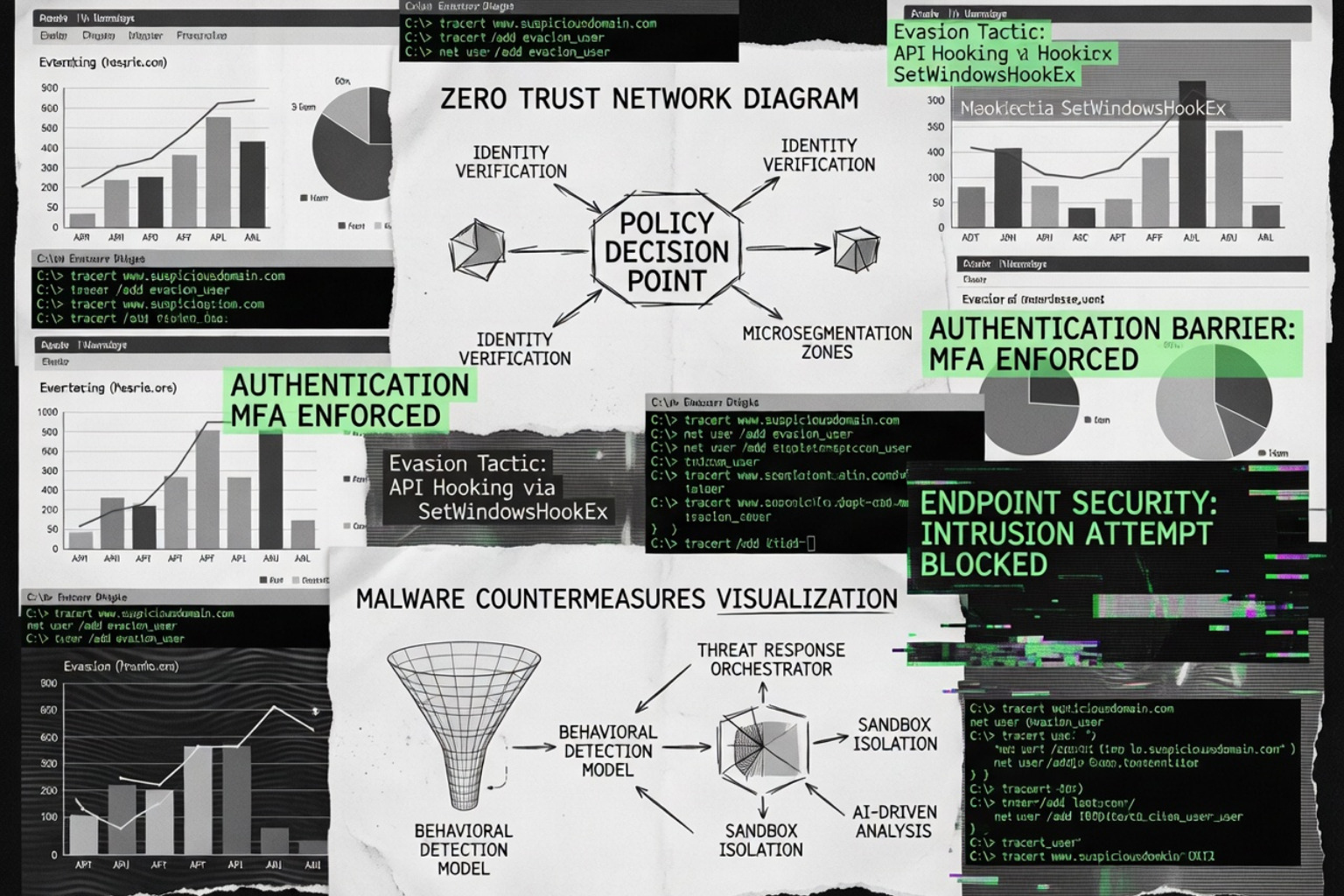
The Cat and Mouse Game of Malware Evasion and Countermeasures
Modern malware uses obfuscation, polymorphism, and anti-sandbox tricks to evade detection. Here are the countermeasures that actually work against them.

Malware evasion techniques countermeasures are the set of defensive strategies, tools, and architectural decisions that security teams use to detect and neutralize malware specifically engineered to stay hidden. Here's a fast-reference breakdown:
| Evasion Technique | What It Does | Key Countermeasure |
|---|---|---|
| Code obfuscation / packing | Hides malicious payload from static scanners | Entropy analysis, dynamic unpacking |
| Polymorphism / metamorphism | Mutates code to change file hash | Behavioral analysis, opcode signatures |
| Anti-sandbox / anti-VM | Detects analysis environments and goes dormant | Environment randomization, bare-metal analysis |
| Anti-debugging | Crashes or alters behavior under a debugger | Code emulation, out-of-guest instrumentation |
| Living Off the Land (LOL) | Abuses legitimate OS tools like PowerShell | Process lineage monitoring, LOLBin allowlisting |
| Process injection / fileless | Runs entirely in memory, no disk artifact | ETW kernel callbacks, in-memory YARA scanning |
| AI-driven / self-modifying | Adapts evasion logic in real time | Hardware attestation, explainable AI governance |
Every week, security teams face a hard truth: a well-resourced attacker isn't trying to overpower your defenses — they're trying to disappear inside them.
VirusTotal analyzes over 680,000 new malware samples every single day. The vast majority aren't novel families. They're re-packed, re-encrypted, or slightly mutated versions of known code — just different enough to slip past signature-based scanners while behaving identically once inside a network.
This is the defining problem of modern endpoint security. Traditional antivirus was built to recognize what malware looks like. But attackers figured out long ago that changing appearance is trivially easy. Recompile a binary in a different language, insert dead code, swap variable names, encrypt the payload until runtime — and suddenly a well-known threat becomes invisible to tools that rely on static fingerprints.
The result is an ongoing arms race. Defenders build better detection. Attackers build better evasion. Detection improves again. And so it goes.
What separates organizations that contain breaches quickly from those that don't isn't just the tools they use — it's how deeply they understand the evasion techniques those tools are designed to catch.
This guide breaks down the full evasion landscape as it stands in May 2026 — from classic obfuscation and sandbox evasion all the way to AI-driven, self-modifying malware — and maps each technique to concrete, actionable countermeasures.
Static Analysis Evasion: Obfuscation, Packing, and Polymorphism
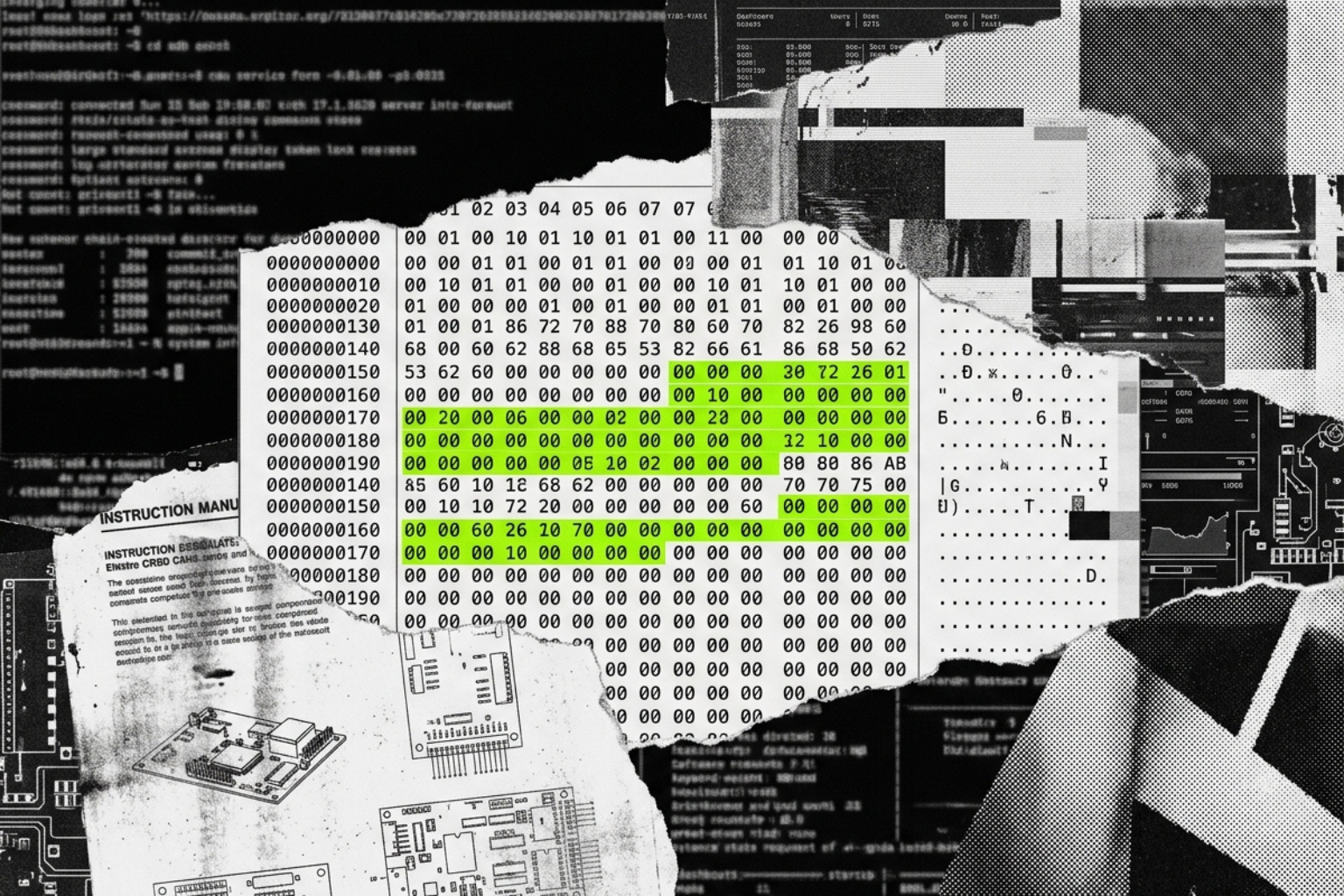
Static analysis is the process of inspecting a file without actually running it. It’s fast, efficient, and—unfortunately—the easiest for attackers to bypass. The goal of the attacker is to achieve "Fully UnDetectable" (FUD) status by ensuring the binary looks like gibberish to a scanner or, even better, like a legitimate system file.
The Mechanics of Camouflage
Malware authors use several core techniques to break static analysis:
- Code Obfuscation: This involves transforming the source or machine code to make it unintelligible to humans and automated tools. Techniques include dead-code insertion (adding useless instructions that never execute), register reassignment, and instruction substitution (replacing a simple
addwith a complex series of mathematical operations that yield the same result). - Runtime Packing: Tools like UPX or .netshrink compress the malicious executable into a "wrapper." When the file is opened, a small stub of code (the unpacker) decompresses the actual malware directly into memory. Static scanners only see the harmless-looking packer stub, not the payload.
- Encryption: The entire malicious payload is encrypted with a unique key. The key is only used at runtime to decrypt the code in the system's RAM, making the file on the disk appear as high-entropy random data.
Polymorphism vs. Metamorphism
While both involve mutation, they operate differently at a structural level. Scientific research on malware fingerprinting highlights how these mutations are designed to break traditional hashing.
| Feature | Polymorphic Malware | Metamorphic Malware |
|---|---|---|
| Core Method | Uses an encryption engine to change its "outer shell" each time. | Rewrites its own internal code and structure. |
| Code Body | The malicious payload remains static but is hidden. | The malicious payload itself is different in every version. |
| Detection Difficulty | Moderate; scanners can target the decryption routine. | High; there is no consistent "signature" to find. |
| Example | WannaCry (initial variants) | Storm Worm |
Bypassing Signature-Based Detection
Traditional antivirus relies on SHA-256 or MD5 hashes—digital fingerprints that uniquely identify a file. However, research shows that cryptographic hashing only identifies about 16% to 20% of malware variants in large-scale datasets.
Attackers use non-functional mutations, such as changing section names or virtual addresses in the Portable Executable (PE) header, to create a new hash. Some even use camouflage sections—parts of the file with zero entropy (all zeros)—to pad the file size and alter the hash without changing how the malware runs. To counter this, modern systems must use entropy analysis to identify suspicious "packed" regions and fuzzy hashing (like ssdeep) to find similarities between files even if their SHA-256 hashes are different.
Dynamic Analysis Evasion: Anti-Sandbox and Anti-Debugging
When static analysis fails, security researchers move the file to a sandbox—a controlled, isolated virtual environment—to watch what it does. Naturally, malware authors have developed "environment awareness" to detect when they are being watched.
Anti-VM and Environment Detection
Modern malware often acts like a "sleeper agent." Before executing its payload, it runs a series of checks to see if it’s in a virtual machine (VM). It might look for:
- Hypervisor Vendor Strings: Using the
CPUIDinstruction to check for "VMware," "VBox," or "QEMU." - Resource Profiling: Checking if the system has a realistic amount of RAM (e.g., more than 4GB) or a standard number of CPU cores. Many sandboxes are configured with minimal resources, which is a dead giveaway.
- Hardware Artifacts: Looking for specific MAC addresses or registry keys associated with virtualization drivers.
Anti-Debugging and Timing Attacks
Research on Android malware evasion shows that anti-debugging is now found in nearly 80% of evasive samples. Malware may use the IsDebuggerPresent API or monitor for hardware breakpoints to see if a human analyst is stepping through the code.
Timing attacks are particularly clever. A sandbox usually has a timeout (e.g., 2 or 5 minutes). The malware might simply "sleep" for 10 minutes before doing anything malicious. Alternatively, it might measure the time it takes to execute a simple instruction; if the execution is too slow (as it often is in emulated environments), the malware assumes it’s in a sandbox and terminates.
User Interaction Checks
Some malware won't "detonate" until it detects a human. It might monitor for mouse movements, specific keyboard patterns, or even the presence of common applications like Microsoft Word. If the mouse hasn't moved in five minutes, the malware assumes it's in an automated lab and stays benign.
Advanced Evasion Methods and How to Counter Them
As endpoint defenses have moved from simple AV to advanced EDR (Endpoint Detection and Response), attackers have moved deeper into the operating system.
Process Injection and Memory Maneuvers
Instead of running as a standalone process (which is easy to spot), malware "injects" its code into a legitimate process, like explorer.exe or svchost.exe.
- Process Hollowing: An attacker starts a legitimate process in a suspended state, "hollows out" its memory, and replaces it with malicious code.
- APC Injection: Using Asynchronous Procedure Calls to force a thread to execute malicious code.
- AtomBombing: A sophisticated technique that uses Windows "atom tables" to store and retrieve malicious code, bypassing many traditional injection monitors.
Operating at Ring 0 (the kernel level) allows malware to "lie" to the rest of the system. A rootkit at this level can intercept requests to list files and simply omit its own malicious files from the results. To counter this, organizations must understand Server Crime Types Threats And Prevention Strategies to protect the core of their infrastructure.
Living Off the Land (LOL) and Fileless Execution
One of the most effective ways to evade EDR is to use the tools already on the system—a strategy known as Living Off the Land (LOL). These LOLBins (like PowerShell, WMI, or certutil.exe) are trusted by the OS.
- Fileless Malware: This malware never touches the physical hard drive. It might exist as a script in the registry or a payload in volatile memory. Because there is no "file" to scan, traditional file-based defenses are useless.
- Countermeasure: To defend against this, teams need Comprehensive Cybersecurity Protecting Data And Defending Against Modern Threats that includes monitoring process lineage—identifying, for example, why a web browser is suddenly launching a PowerShell script with administrative privileges.
Proactive Detection Strategies
Modern EDR/XDR tools use Event Tracing for Windows (ETW) and kernel callbacks to monitor system activity in real-time. Even if a process is "unhooked" or uses a technique like BlindSide (using hardware breakpoints to hide execution), behavioral monitoring can flag the result of the action—such as unauthorized encryption of files or an unexpected connection to a Command and Control (C2) server. Utilizing The Ultimate Guide To Cybersecurity Tools For Modern Organizations can help teams select the right stack to gain this visibility.
The 2026 Frontier: AI-Driven and Self-Modifying Malware
As we look toward the remainder of 2026, the "Cat and Mouse" game has entered a new phase: Adversarial AI.
The Rise of Self-Modifying AI Malware
Traditional malware follows a script. AI-driven malware, however, can use reinforcement learning to adapt to its environment. Using frameworks like MalwareGym, attackers train agents to probe a defense system, observe the reaction, and modify their behavior to find a path through.
- Polymorphic Deep Neural Networks (PDNNs): These can alter their own internal weights and connections to avoid detection by memory forensics tools.
- JIT-Aware Evasion: According to Self-modifying AI malware detection evasion techniques in 2026 endpoint protection | Oracle-42 Intelligence, malware can now monitor the speed of the Just-In-Time (JIT) compiler to infer if it is being emulated.
- MalDQN Attacks: Research shows that adversarial attacks like MalDQN can reduce the accuracy of standard malware detection models from 86% down to 55% by injecting benign-looking actions that confuse the AI's "maliciousness" threshold.
Countering Self-Modifying AI Malware
To fight AI, we need hardware-rooted trust and explainable models.
- Hardware-Assisted Attestation: Technologies like Intel TDX or AMD SEV-SNP provide a "Trusted Execution Environment." They can verify the integrity of a process's memory at the hardware level, ensuring it hasn't been reconfigured by an AI mutation engine.
- Explainable AI (XAI): Instead of "black box" detection, XAI provides an audit trail for why a file was flagged, helping analysts distinguish between legitimate software updates and malicious neural reconfiguration.
- Continuous Runtime Integrity Verification (CRIV): This involves constantly checking the "state" of a process against its known good baseline.
For a deeper look at the tools leading this charge, see our review of the Best Cybersecurity Software Of 2026 Top 12 Tools For Endpoint Network Identity Protection.
Strategic Countermeasures: Building a Resilient Defense Architecture
No single tool can stop every evasive threat. Instead, organizations must adopt a resilience-centric architecture.
Layered Defense and Zero Trust
A Security Control The Foundation Of Modern Cybersecurity Defense relies on the principle of Zero Trust. Even if malware evades the initial endpoint scan, it should be stopped by:
- Network Segmentation: Preventing the malware from moving laterally.
- Identity and Access Management (IAM): Ensuring the malware can't escalate privileges even if it has a foothold.
- Micro-segmentation: Isolating workloads at the application level.
Proactive Threat Hunting and Validation
Don't wait for an alert. Threat hunting involves proactively searching for indicators of compromise (IOCs) and indicators of attack (IOAs) that might have slipped past automated systems. This includes:
- SIEM and SOAR: Centralizing logs to find correlations (e.g., an unusual login followed by a PowerShell execution).
- Continuous Validation: Using platforms like Cymulate to safely simulate the latest evasion techniques against your own production defenses.
- Employee Training: It works. One financial institution reported a 95% reduction in malware infections simply by training staff to recognize and report suspicious social engineering attempts.
Frequently Asked Questions about Malware Evasion
What is the difference between packing and encryption in malware?
Packing is a form of compression that hides the code structure, while encryption uses a mathematical key to transform the code into unreadable data. Both serve to hide the malicious payload from static scanners, but encryption requires a decryption key to be present (or fetched) at runtime.
How does fileless malware persist without a file on disk?
Fileless malware often uses "legitimate" storage areas like the Windows Registry, WMI event subscriptions, or scheduled tasks to store its initial script. When the system reboots, the OS itself runs the script, which then pulls the malicious payload back into memory.
Why is behavioral analysis more effective than signature-based detection?
Signatures are like a "Most Wanted" poster—they only work if you've seen the face before. Behavioral analysis is like a security guard watching for suspicious actions (like someone trying to pick a lock). An attacker can change their face (the hash), but they can't change the fact that they need to pick the lock (the malicious action) to get in.
Stay Ahead of Evolving Evasion Tactics
The "Cat and Mouse" game of malware evasion techniques countermeasures is not a battle that will be "won" and finished. It is a permanent state of the digital landscape. As we move further into 2026, the complexity of these threats—driven by AI and kernel-level exploits—requires a shift from a "detect and block" mindset to one of "resilience and response."
By combining advanced behavioral monitoring, hardware-rooted security, and continuous validation, organizations can out-engineer the attackers. Stay informed, stay proactive, and ensure your defense stack is ready for the next evolution by exploring our guide to the Best Cybersecurity Software for 2026.