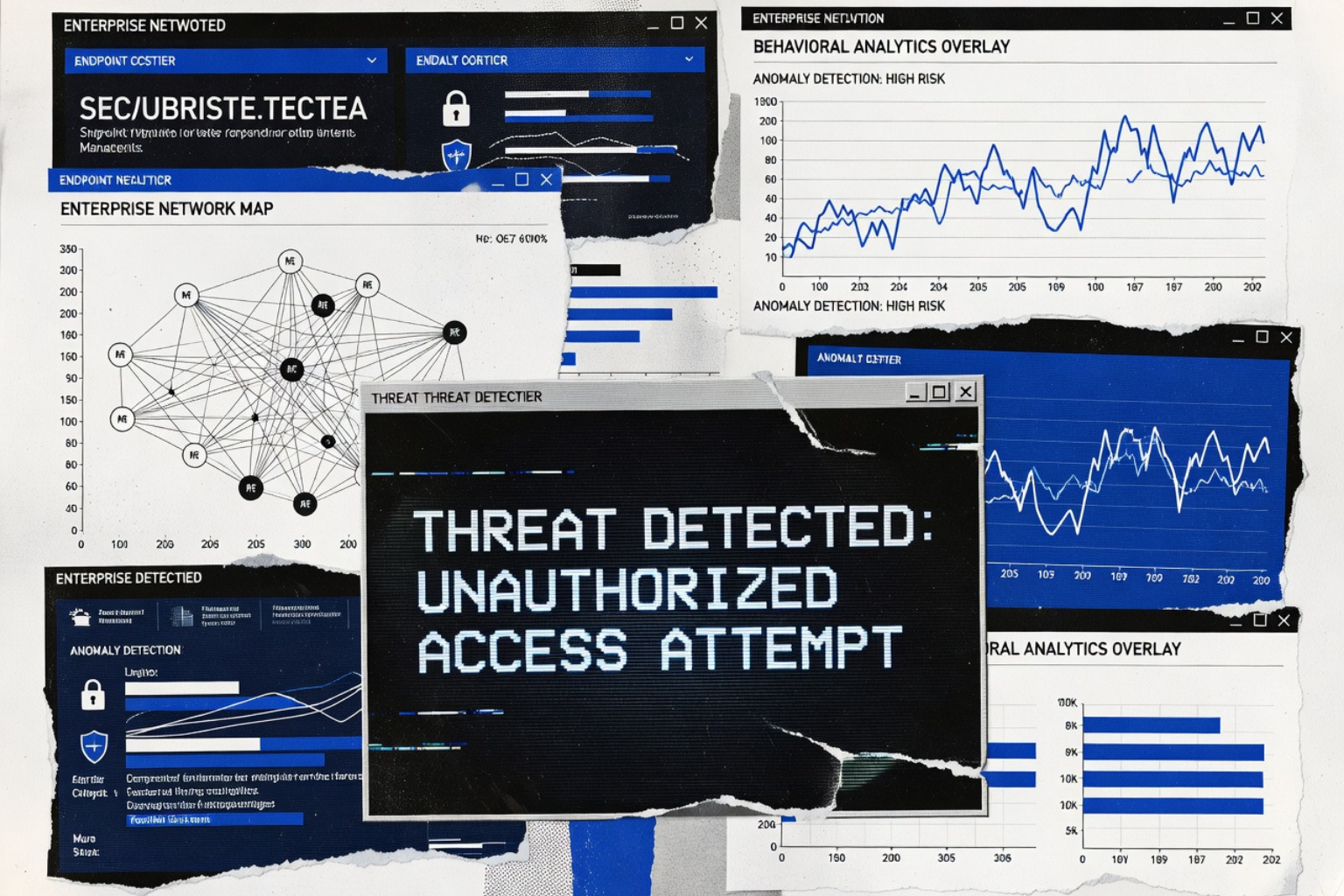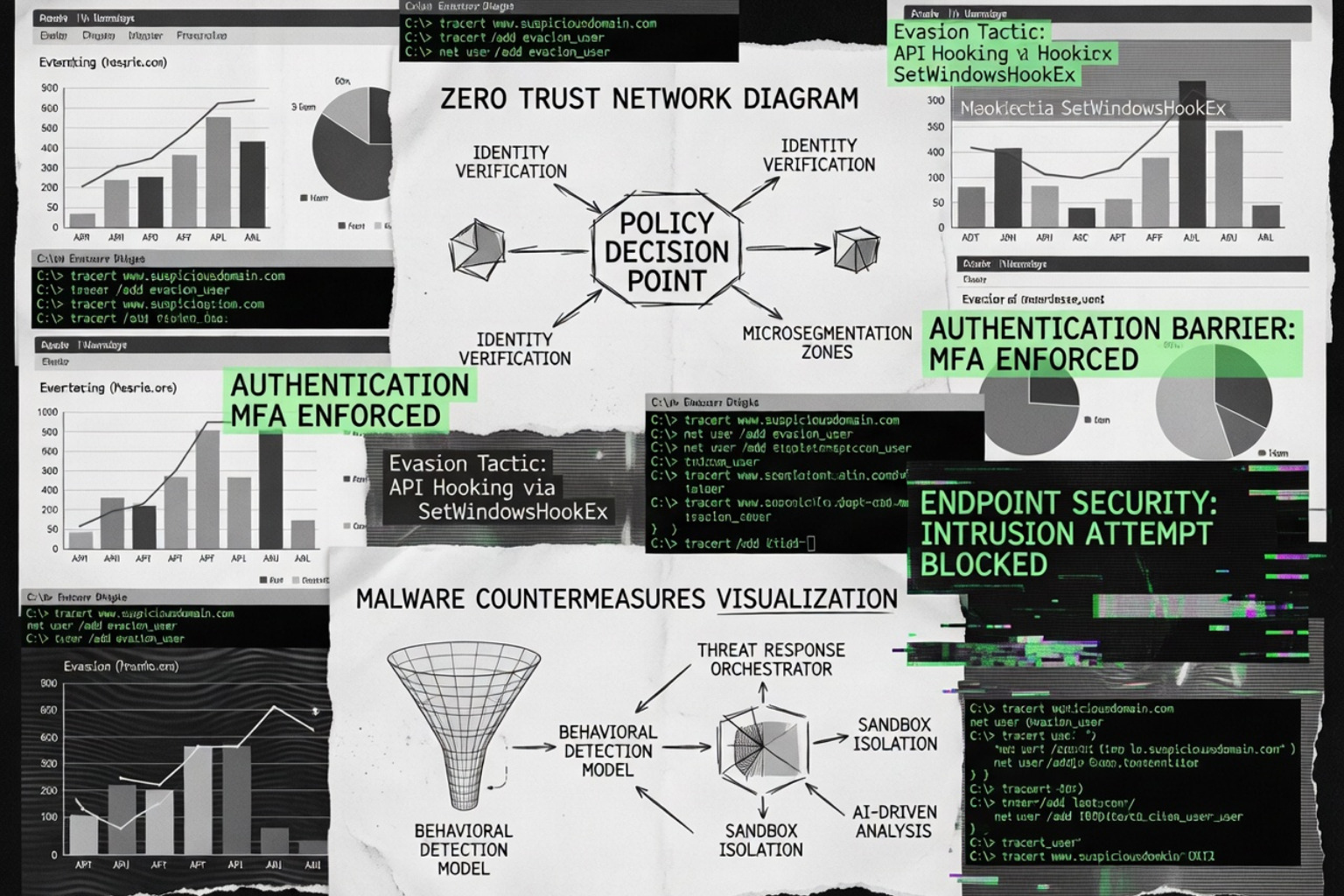
The Ultimate Guide to Advanced Endpoint Detection and Behavioral Analysis
Signature-based detection misses modern threats. This guide covers behavioral analysis, ML-powered EDR, XDR integration, and real-time threat intelligence.

Why Endpoint Detection Is Now Business-Critical
Advanced endpoint detection is the practice of continuously monitoring, analyzing, and responding to threats on end-user devices — laptops, servers, virtual machines, and IoT systems — using behavioral analysis, machine learning, and real-time telemetry rather than static signature matching.
In short, here's what you need to know:
- What it is: A security approach that identifies threats by what they do, not just what they look like
- What it replaces: Legacy antivirus that relies on known malware signatures — which 53% of ransomware victims had running when they were breached
- Core technologies: Behavioral analytics, ML-based detection, threat intelligence feeds, automated response, and forensic telemetry
- Key frameworks: Maps to MITRE ATT&CK M1040 (Behavior Prevention on Endpoint), NIST SP 800-61, and ISO 27001 Annex A controls
- Who needs it: Any organization with managed endpoints — which is every organization
The numbers tell a stark story. As of May 2026, roughly 70% of cyberattacks originate at endpoints, the average cost of a data breach sits at $4.88 million, and threat researchers are tracking nearly 400,000 new attack variants every single day. Meanwhile, the device surface organizations must defend keeps expanding — IoT alone is projected to reach 125 billion connected devices by 2030.
Traditional antivirus was built for a simpler era. It checks files against a list of known bad signatures. But modern attackers — particularly human-operated ransomware groups and nation-state actors — don't rely on known malware. They use fileless techniques, abuse legitimate system tools like PowerShell and WMI (known as "Living off the Land"), and exploit zero-day vulnerabilities that have no signature to match against.
The result is silent failure: attackers breach the perimeter, and without behavioral visibility, they can linger undetected for an average of 190 days before anyone notices. By then, the damage is done.
Advanced endpoint detection closes that gap — shifting the security posture from reactive signature matching to proactive behavioral monitoring, so threats are caught by what they do, even when they look legitimate.
The Evolution Beyond Traditional Antivirus
Traditional antivirus (AV) is essentially a digital bouncer with a "blackbook" of known troublemakers. If a file’s hash matches a known malicious signature, it's blocked. However, this method is fundamentally reactive. It requires a threat to be identified and cataloged elsewhere before your system can recognize it. In a landscape where nearly 400,000 new attack types emerge daily, a signature-based approach is mathematically destined to fail.
The shift toward advanced endpoint detection represents a transition from "who are you?" to "what are you doing?" This is where Anomaly Detection: The New Eyes of Cybersecurity comes into play. By establishing a baseline of "normal" behavior for a user or a machine, security tools can flag deviations that indicate a breach, even if the tools being used are technically legitimate.
From Heuristics to Machine Learning
Modern Advanced Endpoint Protection (AEP) utilizes several layers of analysis:
- Heuristic Analysis: Examining code for suspicious characteristics (e.g., a document trying to execute a hidden macro).
- Machine Learning (ML): Using algorithms to classify file attributes and behaviors based on millions of data points, allowing the system to predict if a file is malicious without a signature.
- Behavioral Analysis: Monitoring the execution of processes in real-time. For example, if a standard text editor suddenly starts encrypting files or making network connections to an unknown IP, behavioral analysis triggers an alert.
This is codified in frameworks like Behavior Prevention on Endpoint, Mitigation M1040 - Enterprise | MITRE ATT&CK®, which focuses on stopping malicious actions (like process injection or credential dumping) rather than just blocking specific files.
Implementing Block Mode for Active Response
A critical evolution in endpoint security is the ability to operate in "block mode." In many legacy environments, EDR (Endpoint Detection and Response) was purely an investigative tool—it told you that you had been hacked. Modern systems like Microsoft Defender for Endpoint allow for EDR in block mode, providing a safety net that remediates malicious artifacts even if they weren't caught by the primary antivirus.
By following the steps to Configure advanced features in Microsoft Defender for Endpoint, organizations can enable behavioral blocking. This means the system can kill a process mid-execution if it begins to exhibit ransomware-like behavior, such as rapid file renaming or unauthorized shadow copy deletion. This "safety net" approach is vital for organizations running third-party AVs that might lack sophisticated behavioral engines.
Leveraging Threat Intelligence Feeds
No endpoint is an island. Advanced detection thrives on global context. Real-time threat intelligence feeds from sources like the Cyber Threat Alliance or VirusTotal provide agents with up-to-the-minute data on emerging Indicators of Compromise (IOCs).
Furthermore, services like Endpoint Attack Notifications use hunter-trained AI to provide proactive notifications about human adversary intrusions. This helps Security Operations Centers (SOCs) distinguish between a generic piece of malware and a "hands-on-keyboard" attack by a motivated threat actor, drastically reducing the Mean Time to Detect (MTTD).
Core Components of Endpoint Detection and Response (EDR)
If AEP is the shield, EDR is the flight recorder. EDR solutions focus on what happens after a threat enters the network. They provide the visibility required to answer the three big questions: How did they get in? What did they touch? And how do we get them out?
Continuous Monitoring and Telemetry
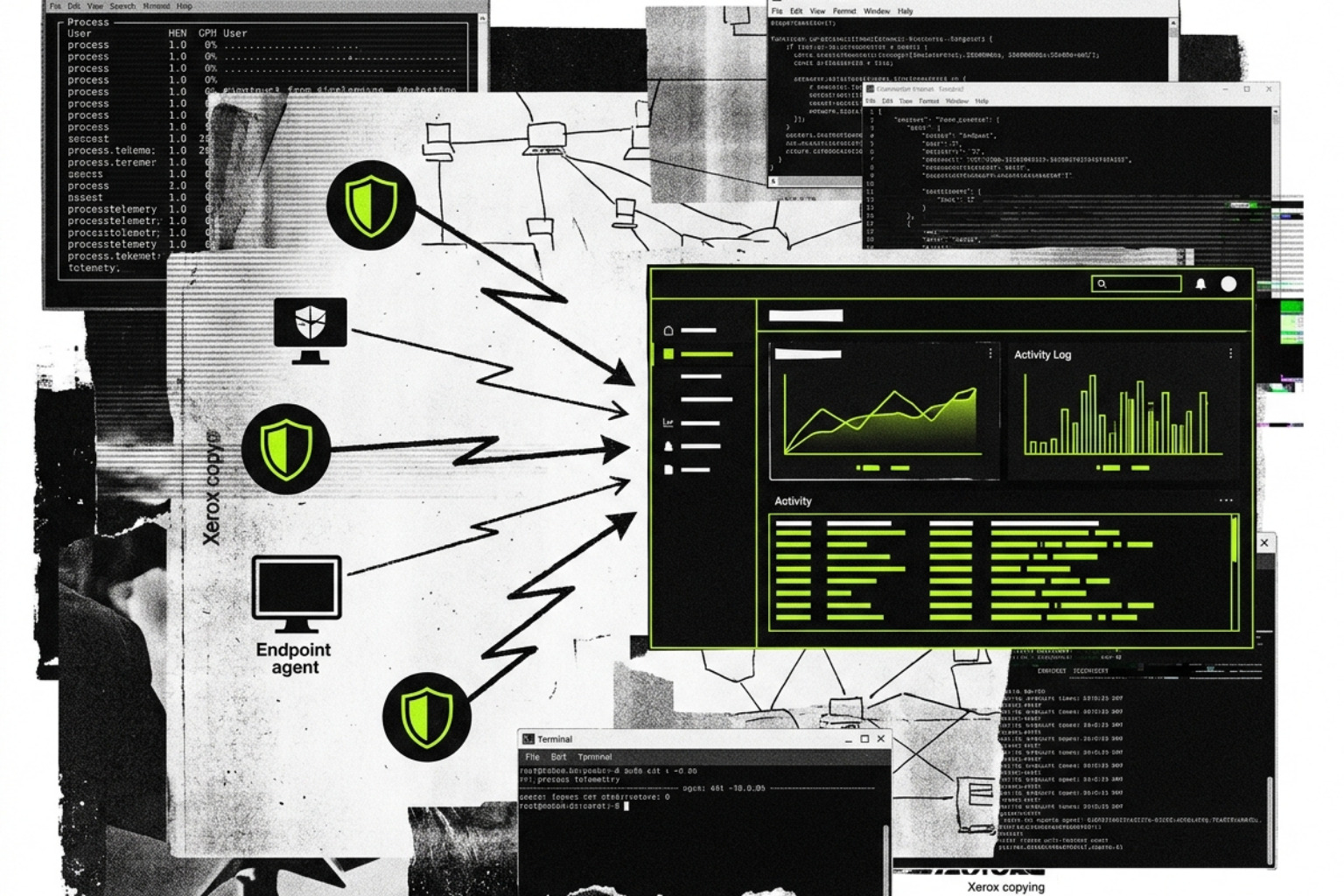
An EDR agent acts as a "DVR for the endpoint," continuously recording system events, process starts, registry changes, and network connections. This telemetry is aggregated in a centralized cloud console for analysis. This is a core part of the Best Cybersecurity Software For 2026, where AI-powered tools process trillions of events to find the proverbial needle in the haystack.
Indicators of Attack (IOA) vs. Indicators of Compromise (IOC)
- IOCs (Reactive): These are the "bread crumbs" left behind after an attack, such as a specific file hash or a known malicious IP address.
- IOAs (Proactive): These focus on the intent of the attacker. An IOA might be a sequence of events: a user opens an email attachment, which launches PowerShell, which then attempts to dump credentials from memory. None of these actions are inherently "malicious" on their own, but the sequence is a clear Indicator of Attack.
Automated Remediation and Network Containment
When a threat is detected, time is the enemy. Advanced EDR solutions can automatically:
- Isolate the Host: Cut off the infected machine's network access while maintaining a "thin pipe" for the security team to investigate.
- Kill Processes: Immediately terminate malicious execution threads.
- Roll Back Changes: In the case of ransomware, some EDRs can use local snapshots to restore encrypted files to their previous state.
Comparing EPP, EDR, and XDR Frameworks
The alphabet soup of cybersecurity can be confusing. Understanding the differences is essential for building a cohesive Endpoint Network Identity Protection strategy.
| Feature | EPP (Endpoint Protection Platform) | EDR (Endpoint Detection & Response) | XDR (Extended Detection & Response) |
|---|---|---|---|
| Primary Goal | Prevention (Block known threats) | Detection & Investigation | Cross-layer Visibility |
| Method | Signatures, Heuristics, ML | Behavioral Telemetry, Recording | Data Correlation (Network, Cloud, Email) |
| Response | Automatic Blocking | Manual/Automated Remediation | Orchestrated Workflows (SOAR) |
| Data Scope | Endpoint only | Endpoint only | Entire IT Ecosystem |
While EPP is designed to stop the "easy" 99% of attacks, EDR is there to catch the 1% that slip through. XDR (Extended Detection and Response) takes EDR a step further by correlating endpoint data with network logs, cloud activity, and identity providers to spot complex, multi-stage attacks.
Technical Implementation and Vendor Landscape
Implementing advanced endpoint detection requires more than just installing an agent. It requires a strategy that balances performance with security.
Single-Agent Architecture
One of the biggest hurdles in endpoint security is "agent fatigue." Organizations used to have one agent for AV, one for EDR, one for patching, and one for inventory. This crushed system performance. Modern leaders like CrowdStrike and SentinelOne have moved to a single-agent architecture. This lightweight approach ensures that security doesn't come at the cost of user productivity.
Vendor Highlights
- CrowdStrike Falcon: Known for its proprietary "Indicators of Attack" (IOA) and cloud-native architecture that processes trillions of events weekly.
- SentinelOne: Utilizes "Storylines" to automatically correlate related events into a single process tree, making root cause analysis (RCA) instantaneous for analysts.
- Elastic Security: Offers a unique resource-based pricing model and uses the Elastic Common Schema (ECS) to allow for deep searching across years of historical data.
- Microsoft Defender for Endpoint: Deeply integrated into the Windows ecosystem, offering specialized features like attack surface reduction (ASR) and tamper protection.
For technical teams, implementing specific detections is the next step. For instance, using Splunk to identify Attacker Tools On Endpoint allows for the detection of tools like Mimikatz or Netcat by monitoring process activity logs normalized through the Common Information Model (CIM).
Proactive Threat Hunting in Practice
Threat hunting is the practice of assuming a breach has already occurred and searching for evidence. Advanced endpoint tools facilitate this through:
- OSQuery: Allowing analysts to query endpoints like a database (e.g., "Show me all processes listening on port 4444").
- Living off the Land (LOTL) Monitoring: Tracking the abuse of legitimate tools. Attackers love PowerShell because it’s already there and trusted. Advanced detection monitors for unusual script blocks or encoded commands.
- Memory-Based Attack Detection: Identifying "fileless" malware that exists only in RAM, bypassing traditional disk-scanning tools.
Frequently Asked Questions
Can EDR replace traditional antivirus software?
In many modern environments, yes. Most EDR solutions now include EPP (prevention) capabilities. However, many organizations choose to keep a traditional AV as a secondary layer or use integrated suites that combine both. The key is ensuring that you have behavioral detection; a standalone legacy AV is no longer sufficient.
What is the difference between EDR and XDR?
Think of EDR as a specialist and XDR as a general contractor. EDR is deeply focused on the endpoint. XDR takes that endpoint data and mixes it with data from your firewall, your email gateway, and your cloud environments (AWS/Azure/GCP) to provide a unified "narrative" of an attack.
How does AI reduce alert fatigue in the SOC?
Alert fatigue is a major cause of burnout. AI reduces this by:
- Deduplication: Grouping 50 related alerts into a single "incident."
- Prioritization: Using risk scores to highlight the most critical threats.
- Automated Triage: Resolving known benign anomalies automatically so analysts can focus on novel threats.
Upgrade Your Endpoint Detection Strategy
As we move further into 2026, the complexity of the threat landscape makes advanced endpoint detection a non-negotiable component of enterprise security. With 15% of data breaches still traced back to compromised or missing devices, and a laptop being stolen every 53 seconds in the U.S., the physical and digital security of the endpoint must be unified.
The ROI of these systems is clear: organizations utilizing AI-driven prevention and detection technologies lower their breach costs by an average of $2.2 million. Beyond the financial metrics, these tools address the critical cybersecurity skills gap by acting as a "force multiplier" for overstretched IT teams.
By moving away from antiquated signature-based models and embracing behavioral analysis, single-agent architectures, and continuous monitoring, organizations can finally close the 190-day dwell time gap and outmaneuver modern adversaries. To explore more about the current landscape of tools, check out our guide on the Best Cybersecurity Software For 2026.