

10 Essential Malware Threat Intelligence Feeds to Follow
Threat intelligence feeds deliver IOCs, malicious domains, and file hashes in real time. These 10 feeds are essential for any SOC defending against malware.

Why Threat Intelligence Feeds Are Essential in 2026
Malware threat intelligence feeds are continuously updated data streams that deliver indicators of compromise (IoCs), malicious IP addresses, domains, file hashes, and attacker infrastructure details to security teams in near real-time.
Here are the most widely used feed types security teams rely on today:
| Feed Type | What It Provides | Common Format |
|---|---|---|
| Malware hash feeds | MD5, SHA-1, SHA-256 signatures of known malware | CSV, JSON, STIX |
| URL/domain feeds | Malware distribution and C2 domains | TXT, RPZ, STIX |
| IP reputation feeds | Botnet IPs, scanners, malicious hosts | CSV, TAXII, API |
| IoC aggregation feeds | Combined URLs, IPs, hashes, and domains | MISP, JSON, STIX |
| Vulnerability feeds | CVEs actively exploited in the wild | JSON, CSV |
The threat landscape in 2026 is moving faster than most security teams can manually track. According to CrowdStrike's 2025 Global Threat Report, the average adversary breakout time — the window between initial access and lateral movement — has dropped to just 48 minutes, with the fastest recorded attack completing in 51 seconds.
That leaves almost no room for reactive defense.
Malware feeds close that gap. By automating the flow of attacker intelligence directly into your SIEM, EDR, firewall, and DNS resolver, your defenses update continuously — without waiting for a human analyst to notice a new campaign.
This article covers 10 of the most valuable malware threat intelligence feeds available today, from community-driven open-source projects like MalwareBazaar to government-backed catalogs like the CISA Known Exploited Vulnerabilities list — along with how to integrate, evaluate, and operationalize them effectively.
What Threat Intel Feeds Are and How They Work
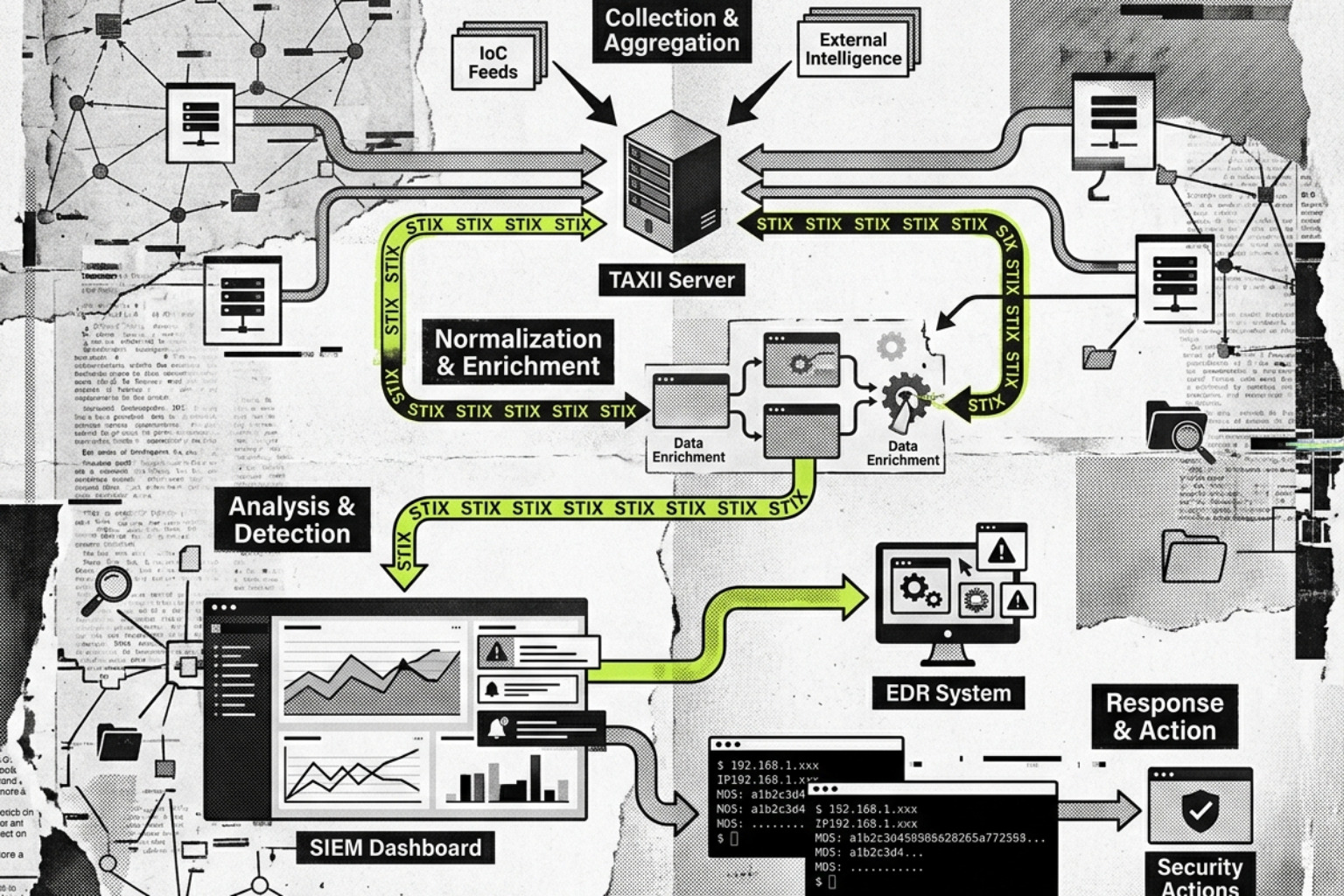
At its core, a malware threat intelligence feed is a machine-readable stream of data. However, there is a distinct difference between raw "threat data" and true "threat intelligence." While data might be a simple list of 10,000 IP addresses, intelligence provides the context: Why is this IP here? Which malware family is it associated with? What are its Tactics, Techniques, and Procedures (TTPs)?
For security practitioners, these feeds serve as the nervous system of a proactive defense. By integrating these feeds, teams can shift from a reactive posture to one that anticipates threats. This is critical for improving key performance metrics like Mean Time to Detection (MTTD) and Mean Time to Response (MTTR).
Modern feeds typically include several types of indicators:
- File Indicators: Hashes like MD5, SHA-1, and SHA-256 that identify specific malicious payloads.
- Network Indicators: Command and Control (C2) infrastructure, malicious URLs, and suspicious IP addresses.
- Behavioral Data: Registry keys modified by a virus or specific memory corruption patterns.
For a deeper dive into how this data fits into a broader strategy, see our Understanding Threat Intelligence A Practical Guide For Cyber Defense.
10 Essential Feeds to Monitor
The following feeds represent a mix of community-driven Open Source Intelligence (OSINT) and highly curated repositories. Each serves a specific niche in the security stack, from endpoint protection to DNS filtering.
1. MalwareBazaar (abuse.ch)
Operated by abuse.ch, MalwareBazaar is a project focused on sharing malware samples with the security community. It is an essential resource for researchers who need to stay updated on the latest file signatures.
- What it offers: A vast repository of malware samples indexed by SHA256 hashes.
- Key Feature: It allows users to hunt for specific malware families (such as Emotet, AgentTesla, or Formbook) using YARA rules.
- Integration: Security teams can use the API to automatically check if a suspicious file in their environment matches a known sample in the Bazaar.
2. URLhaus
Another project from abuse.ch, URLhaus focuses specifically on the distribution side of the malware lifecycle. It tracks URLs that are actively being used to host malware payloads.
- Utility: By using the URLhaus | Community API, organizations can automate the ingestion of malicious URLs into their web proxies or firewalls.
- Format Support: It provides specialized exports for Snort, Suricata, and ClamAV, making it highly versatile for network-level blocking.
- Update Frequency: Data is updated as frequently as every five minutes, which is vital for blocking short-lived distribution sites.
3. ThreatFox
ThreatFox is the go-to feed for Indicators of Compromise (IoCs). Unlike general malware repositories, ThreatFox focuses on the infrastructure used by botnets and malware campaigns.
- Data Types: It aggregates C2 IP addresses, port numbers, and domain names.
- Community Driven: It relies on a global network of researchers who contribute verified IoCs, ensuring high fidelity.
- Actionable Intelligence: Because it links IoCs to specific malware families, it provides the "why" behind an alert, assisting in incident triage.
4. Malvuln Intel
The Malvuln Intel – Malware Vulnerability Threat Intelligence Feed offers a unique perspective by focusing on vulnerabilities within the malware itself.
- Why it matters: Understanding vulnerabilities in malware (like buffer overflows or insecure communication protocols) can help researchers develop "vaccines" or better understand how to neutralize a threat in a sandbox environment.
- Integration: The feed is MISP-compatible, allowing for seamless ingestion into Malware Information Sharing Platforms.
5. TweetFeed
In the fast-moving world of cybersecurity, researchers often share their latest findings on social media before they hit official databases. Free IOC Feeds - Malware, Phishing & Ransomware (CSV/JSON/RSS) - TweetFeed captures this real-time data.
- Mechanism: It scrapes social media (X/Twitter) for IoCs shared by top-tier researchers, structuring them into machine-readable formats like CSV and JSON.
- Use Case: It is excellent for identifying "zero-day" phishing domains or emerging vishing (voice phishing) trends that haven't been indexed elsewhere yet.
6. isMalicious
For teams that need high-volume, aggregated data, Data Products - Threat Intelligence Feeds & Blocklists | isMalicious provides a robust platform.
- Scope: It indexes over 500 million IoCs from more than 50 different data sources.
- Specialized Lists: It offers Newly Registered Domain (NRD) lists, which are critical because a high percentage of new domains are used for malicious purposes within the first 24 hours of registration.
7. Malware Patrol
Malware Patrol specializes in transforming intelligence into active network defense. Their Malware Patrol | OSINT Threat Intelligence Data Feeds are designed specifically for integration with DNS firewalls.
- RPZ Support: They provide Response Policy Zone (RPZ) files, which allow DNS servers to block requests to malicious domains automatically.
- DGA Detection: The feed is particularly strong at identifying Domain Generation Algorithms (DGAs) used by ransomware families to bypass static blocklists.
8. MalShare
MalShare is a public malware repository that provides free access to thousands of malware samples.
- Researcher Focus: It is designed for those who need to perform deep behavioral analysis.
- API Access: It offers a simple API for looking up file hashes and downloading samples for analysis in a controlled sandbox.
9. AlienVault OTX (Open Threat Exchange)
AlienVault OTX is one of the world's largest open threat intelligence communities. It uses a "pulse" system where researchers share collections of IoCs related to specific threats or actors.
- Cross-Sector Visibility: Because it is community-driven, it provides a broad view of threats across different industries.
- Tags: You can follow specific tags like Tag/Threat Intelligence to stay updated on broad trends.
10. CISA Known Exploited Vulnerabilities (KEV)
While not a "malware feed" in the traditional sense, the CISA KEV catalog is perhaps the most important feed for vulnerability management.
- Focus: It lists CVEs that are confirmed to be exploited in the wild.
- Prioritization: Instead of trying to patch everything, teams use this feed to prioritize the 2–5% of vulnerabilities that attackers are actually using as initial access vectors.
Technical Integration: Leveraging STIX/TAXII and SIEM/EDR Workflows
To make malware threat intelligence feeds actionable, they must be integrated into your existing security stack. The industry standard for this is STIX (Structured Threat Information Expression) and TAXII (Trusted Automated Exchange of Intelligence Information).
- STIX: The language used to describe the "what" (e.g., this file hash belongs to this malware family).
- TAXII: The protocol used to "transport" that information from the provider to your system.
Comparison: Open-Source vs. Commercial Feeds
| Feature | Open-Source (OSINT) | Commercial Feeds |
|---|---|---|
| Cost | Free / Community-supported | Subscription-based |
| Volume | High, but can be noisy | Curated, high-fidelity |
| Context | Often limited to raw IoCs | Deep attribution and TTPs |
| SLA | None (Best effort) | Guaranteed uptime and support |
| False Positives | Higher; requires local tuning | Lower; pre-validated |
Integration Steps
- Deduplication: If you ingest five different feeds, you will likely see the same malicious IP in all of them. Use a Threat Intelligence Platform (TIP) or a SIEM to deduplicate these entries.
- Confidence Scoring: Not all feeds are equal. Assign a higher "confidence score" to a feed like MalwareBazaar than to an unvalidated social media scrape.
- Automation (SOAR): Create playbooks that trigger when a high-confidence indicator is found. For example, if a "High Risk IP" from Malware Patrol | Cyber Threat Intelligence appears in your logs, the SOAR can automatically update your firewall rules to block it.
Evaluating Feed Quality: Accuracy, Timeliness, and Context
Consuming too much data can be as dangerous as having no data at all. "Alert fatigue" occurs when security teams are overwhelmed by low-quality indicators that turn out to be false positives.
To evaluate a feed, consider these three pillars:
- Accuracy: Does the feed frequently flag legitimate services? High-quality feeds often use whitelists, like the Tranco Top 1M, to ensure they don't accidentally block Google or Amazon.
- Timeliness: In an era where Cloudflare processes 71 million HTTP requests per second to identify attack patterns, a feed that updates once a day is already obsolete. Real-time or hourly updates are the baseline for 2026.
- Context: A raw hash tells you a file is bad. A high-quality feed tells you it’s a specific version of the BlackCat ransomware, used by a specific China-nexus adversary, targeting the healthcare sector.
Frequently Asked Questions
What are the best free threat intelligence feeds?
The "big three" for most security teams are the projects under the abuse.ch umbrella: MalwareBazaar, URLhaus, and ThreatFox. For those looking for social media-driven insights, TweetFeed is an excellent addition. If you need a broad community perspective, AlienVault OTX is the industry standard.
How do commercial feeds differ from open-source alternatives?
Commercial feeds typically offer lower false-positive rates because the data is human-curated by professional threat analysts. They also provide "attribution"—identifying the specific threat actor (e.g., Fancy Bear or Lazarus Group) behind an attack—which is rarely found in free OSINT feeds.
How do I reduce false positives from threat feeds?
Start by using a "whitelist" of known good domains and IPs. You should also implement "aging out" logic: an IP address that was used for a botnet yesterday might be assigned to a legitimate user today. Finally, only automate blocking for indicators that appear in multiple reputable sources (multi-source correlation).
Build Your Threat Intelligence Pipeline
In 2026, the speed of the "enterprising adversary" means that manual defense is no longer viable. Malware threat intelligence feeds provide the automated, real-time insights necessary to protect modern enterprise infrastructure. By combining the breadth of open-source feeds with the depth of curated intelligence, security teams can significantly reduce their breakout time and stay ahead of evolving threats.
For more information on the tools that can help you manage these feeds, check out our guide on the Best Cybersecurity Software for 2026: Top Tools for Network Security, Endpoint Protection, and AI-Power.