Best Security Solution of 2026: Cybersecurity Platforms and Strategies for Modern Enterprises
The top cybersecurity security solutions of 2026 — covering endpoint protection, SIEM, identity platforms, and the layered defenses IT teams use to protect against ransomware, phishing, and credential attacks.

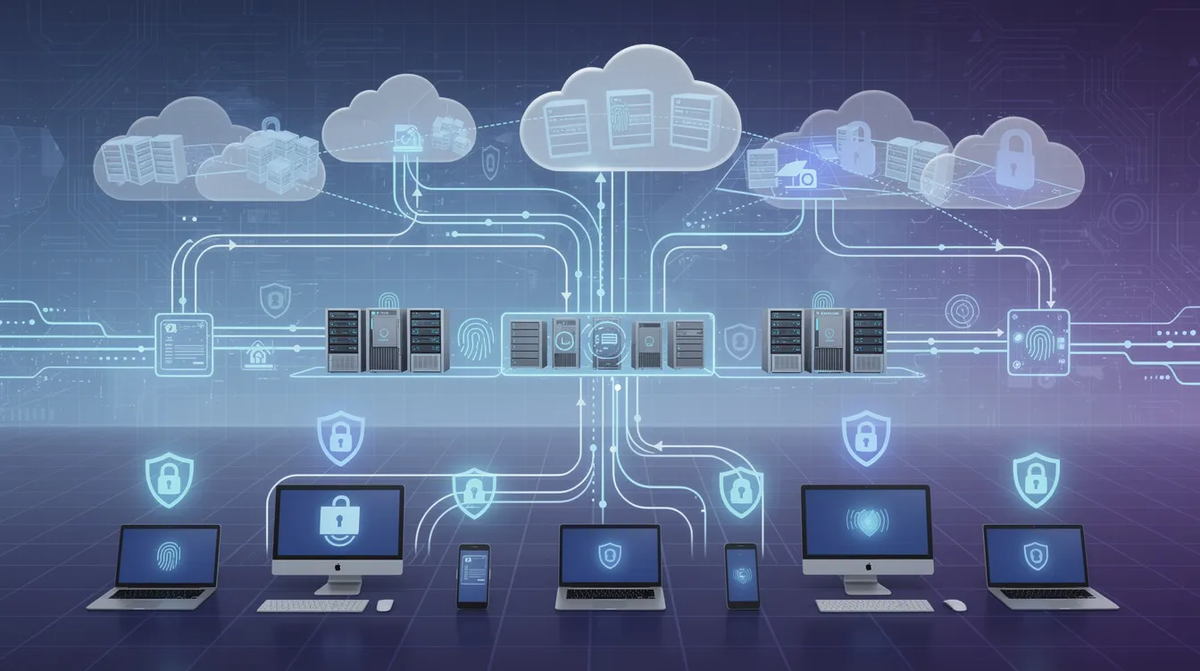
Organizations today face an expanding landscape of cyber threats targeting networks, cloud infrastructure, and sensitive information. A modern security solution must provide complete visibility across networks, cloud environments, endpoints, and user access. This guide is tailored for IT leaders, security professionals, and decision-makers seeking to protect their organizations in 2026. It covers the best cybersecurity platforms and strategies for modern enterprises, including data, network, cloud, and access security solutions. According to the 2026 Cybersecurity Forecast by Google Cloud, the rise of "agentic AI" and sophisticated nation-state actors makes robust security solutions more critical than ever to ensure business continuity.
The rise of remote work, multi-cloud environments, and connected devices has increased the number of systems that must be protected. IT security solutions include a set of tools, technologies, and processes designed to protect digital assets and networks from unauthorized access, theft, damage, or disruption. The primary goal of IT security solutions is to safeguard the confidentiality of critical data and systems within an organization.
Enterprise security strategies now require layered protection across networks, devices, applications, and users. Business security solutions include a layered approach combining physical protection and digital cybersecurity. Business security solutions include a layered approach combining physical protection and digital cybersecurity. Layered security measures ensure that if one security measure fails, others will be in place to stop a breach.
Modern security solutions deliver comprehensive protection for applications, APIs, microservices, and SaaS platforms, ensuring all components and threat vectors within the application ecosystem are safeguarded.
Security Solution
A modern security solution must provide complete visibility across networks, cloud environments, endpoints, and user access. IT security solutions are designed to protect digital assets and networks from unauthorized access, theft, damage, or disruption. These solutions may also include risk assessments, security audits, and policies and procedures to ensure compliance with industry standards and regulations. IT security solutions may include risk assessments, security audits, and policies and procedures to ensure compliance with industry standards and regulations.
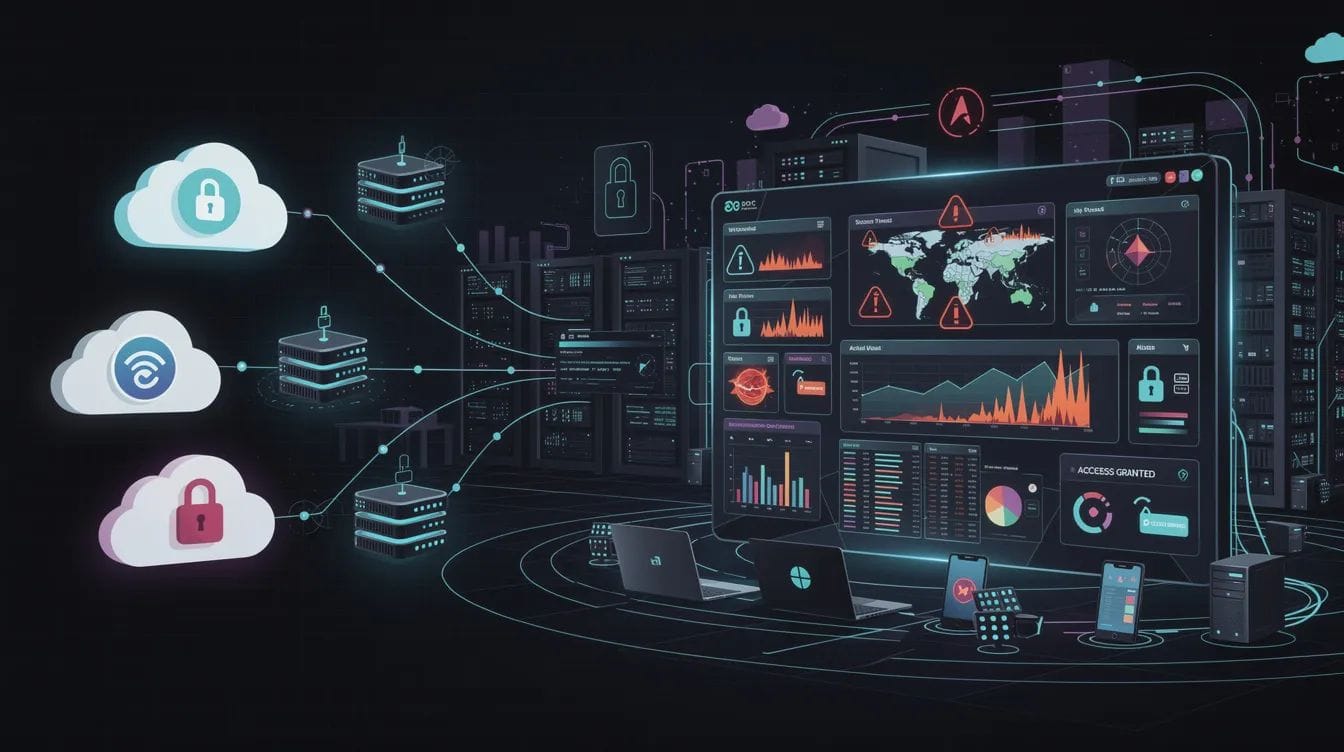
Enterprise security management encompasses the configuration, deployment, and monitoring of security policies across several environments and security tools. There are several categories of IT security solutions that help secure overall IT assets.
Cybersecurity solutions today include capabilities such as:
- Real-time monitoring and anomaly detection
- AI-powered detection and response
- Secure authentication and access control systems
- Security information and event management platforms
- Endpoint security and cloud security solutions
- Additional capabilities like automated policies and adaptive authentication
A modern security platform integrates these features to provide real-time protection and visibility for critical workloads across cloud and on-premises environments. Threat prevention solutions help organizations detect and prevent known advanced threats and vulnerabilities. Automated Intrusion Detection Systems (IDS) offer faster response times than manual physical checks.
Additionally, High-quality technical support is essential for helping organizations resolve issues and maximize the value of their security solutions. With a strong security solution in place, organizations can move forward to address the foundational elements of cybersecurity.
Introduction to Cybersecurity
Cybersecurity is a foundational element of modern enterprise technology, designed to protect organizations from an ever-growing array of cyber threats. As digital transformation accelerates, businesses rely on a complex web of systems, data, and services that require robust protection, best addressed through a comprehensive cybersecurity strategy. Cybersecurity solutions encompass a wide range of tools and processes that work together to prevent unauthorized access, data theft, and system disruptions.
The primary objective is to ensure the confidentiality, integrity, and availability of critical data and IT systems, providing organizations with the visibility and control needed to safeguard their digital assets. With cyber threats constantly evolving, it is essential for organizations to implement comprehensive cybersecurity solutions that deliver real-time protection and maintain secure access across all environments. For the latest insights on shifting defensive paradigms, the SANS Institute provides deep-dive research into emerging threats and professional training standards for 2026.
After establishing a cybersecurity foundation, organizations must focus on protecting their most valuable asset: data.
Data Security
Data security focuses on protecting digital information from unauthorized access, theft, or damage throughout its lifecycle. Data security protects digital information from unauthorized access, theft, or damage during its entire lifecycle.Sensitive data management solutions help organizations identify and manage various types of sensitive data.
Data security solutions include:
- Encryption technologies
- Access control mechanisms
- Data backup and recovery solutions
- Data loss prevention (DLP) systems
- Security information and event management (SIEM) systems
Specialized security measures for databases are critical for protecting sensitive data and ensuring compliance in both on-premise and cloud environments. Encryption ensures sensitive information is unreadable to unauthorized users. DLP systems monitor and prevent the unauthorized transmission of sensitive data outside of an organization. Automated backups of critical data protect against ransomware and data loss.
Data governance processes help organizations manage the entire data lifecycle to maintain data availability, integrity, and usability. Data compliance processes help organizations ensure that protected information is properly organized, managed, and handled according to the relevant regulatory requirements. With data security measures in place, organizations must also consider how to protect the networks that connect their systems.
Network Security
Effective network security requires both technology and organizational processes. Effective security policies and procedures, such as regular security audits and user training, are essential for network security.
Employee training is key, as human error is responsible for 70-85% of breaches. In parallel, organizations should use anomaly detection in cybersecurity to identify unusual behavior that may indicate compromised accounts or insider threats, and regular employee training can reduce risks from phishing and social engineering attacks.
Organizations also need visibility into potential threats across multiple systems and devices. Threat detection tools use machine learning and anomaly detection to identify unusual behavior across enterprise networks. Regular patch management automates software updates to close security gaps within 14 days after release. Once network security fundamentals are established, organizations can implement specific solutions to further strengthen their defenses.
Network Security Solutions
Network security solutions protect the infrastructure that connects enterprise systems and devices. As part of the broader landscape of cybersecurity tools for modern organizations, network security solutions are designed to protect computer networks and their associated systems from unauthorized access, attacks, and other forms of security threats.
These solutions typically include software components and policies and procedures implemented to ensure the integrity, confidentiality, and accessibility of network resources. Network security solutions can also be deployed on premise, allowing organizations to maintain greater control over their data and devices.
Network security solutions are used to:
- Monitor and control network traffic
- Identify and respond to security threats
- Authenticate and authorize network users
- Protect sensitive data from unauthorized access or theft
A business-grade firewall should include intrusion detection to monitor and block unauthorized traffic. Implementing effective security policies and procedures, such as regular security audits, user training and awareness programs, and incident response plans, is essential for network security.
SolarWinds Network Configuration Manager simplifies network configuration management and compliance across hybrid networks. AppViewX AUTOMATION+ is a network security management solution designed to help IT teams address application issues and streamline network changes.
With network security solutions in place, organizations must also address the unique challenges of securing cloud environments.
Cloud Security Solutions
As organizations adopt cloud platforms, cloud security solutions play a central role in protecting applications and data. These capabilities fit within a broader comprehensive guide to cybersecurity, as cloud security solutions refer to a set of technologies and practices designed to protect data, applications, and infrastructure hosted on cloud platforms.
Cloud security solutions aim to ensure the confidentiality and integrity of cloud-based resources by addressing various security risks associated with cloud computing.
Key features of cloud security solutions include:
- Cloud security posture management for continuous monitoring and remediation of misconfigurations
- Cloud workload protection for VMs, containers, and serverless functions
- Integration of network and cloud security for unified protection
- Multi-cloud compliance to achieve regulatory requirements across platforms
Solutions like Orca Security connect to cloud environments to deliver coverage across all cloud risks. Proofpoint provides threat protection for cloud-based services and applications. Forcepoint offers cloud security solutions that provide visibility into cloud environments and protect sensitive information. Additionally, leading organizations frequently consult the Cloud Security Alliance (CSA) for the most up-to-date best practices regarding secure cloud architectures and multi-cloud management.
With cloud security addressed, organizations must ensure secure access for users and devices across all environments.
Secure Access
Secure access is fundamental to modern cybersecurity. Identity and Access Management solutions are systems designed to manage user identities, authentication, and authorization across an organization’s systems and applications.
IAM Solutions
IAM solutions help control access to sensitive data and resources by ensuring that only authorized users can access them. An Identity and Access Management guide typically covers how a centralized identity management system stores and manages user identities and access privileges. Self-service capabilities enable users to manage their own access and initiate security workflows without IT intervention, improving efficiency and compliance.
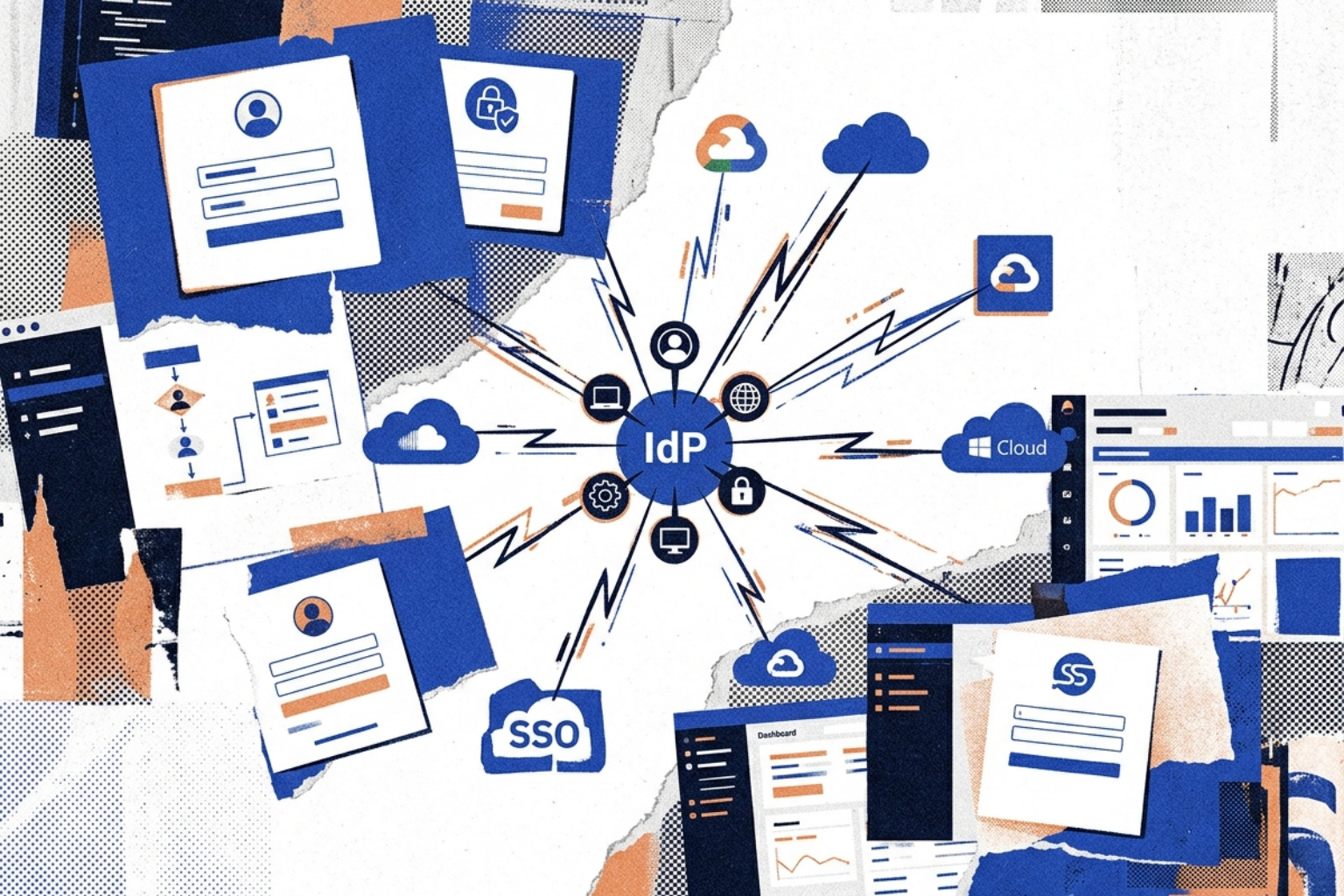
IAM solutions provide a single sign-on capability, allowing users to authenticate once and then gain access to multiple systems and applications without entering credentials repeatedly, which is a core feature of many modern IAM tools for enterprises.
Multi-Factor Authentication
Multi-Factor Authentication (MFA) is the most critical and cost-effective defense against unauthorized access. IAM solutions support a wide range of secure authentication methods, and a comprehensive guide to multi-factor authentication shows how MFA can protect users without disrupting their work.
Zero Trust Model
Zero trust is a security model that enforces strict access controls. At the most basic level, Zero Trust security architecture means applying strict authentication across granular user types. The goal of zero trust is to ensure that all corporate assets distributed throughout various locations are covered. For the gold standard in vendor-neutral architecture, NIST Special Publication 800-207 serves as the primary reference for implementing Zero Trust in 2026.
With secure access controls in place, organizations can focus on protecting their cloud resources and infrastructure.
Cloud Security
Cloud Security Strategies
Modern cloud security strategies must protect both applications and infrastructure in dynamic environments. Cloud security solutions help protect cloud-based resources from a range of threats.
The risk of security threats and data breaches has increased with the shift to remote work and bring-your-own-device policies.
Endpoint Security Integration
Organizations leverage endpoint security to enforce zero trust across cloud infrastructure and corporate networks.
Cloud security tools provide more visibility into cloud resources, detect threats in real time, and automate remediation of security risks. With cloud security strategies established, organizations must also secure the endpoints that connect to their networks.
Endpoint Security
Endpoint security protects devices such as laptops, desktops, servers, and mobile devices connected to enterprise networks. Endpoint security solutions are designed to protect endpoints from security threats. These solutions involve deploying software agents on endpoints to detect, prevent, and respond to real-time security threats. Endpoint Detection and Response is necessary because traditional antivirus software is insufficient.
IT admins can monitor endpoint activity and respond to real-time security incidents through endpoint security solutions. Microsoft Endpoint Manager provides tools for secure remote work by granting employees access to resources from any device. Ivanti Endpoint Manager enables organizations to manage devices from any location and automate provisioning and software deployment.
With endpoint security in place, organizations must also monitor and protect their cloud infrastructure.
Cloud Infrastructure
Protecting cloud infrastructure requires continuous monitoring and automated threat detection. Security platforms analyze security events, monitor user behavior, and detect potential threats across cloud environments.
Security Information and Event Management systems analyze security events and alerts to detect and respond to potential security threats. Advanced monitoring systems improve detection capabilities and enable organizations to detect threats earlier. Real-time monitoring allows security operations teams to identify external attacks and suspicious activity across multiple systems.
After securing cloud infrastructure, organizations must manage access to all enterprise systems and resources.
Access Management
Access management solutions control who can access enterprise systems and resources, and effective user access management is critical to ensuring that only authorized users can reach sensitive applications and data.
The Principle of Least Privilege limits data access to employees who need it for their jobs. IAM solutions offer user provisioning and de-provisioning capabilities that allow administrators to manage user accounts and access privileges efficiently.
Platforms like Okta are widely trusted to secure digital interactions with employees and customers. OneLogin provides a comprehensive IAM solution for managing users and applications.
The RSA Unified Identity Platform helps organizations prevent risks, detect threats, and evolve beyond IAM.
Some organizations also adopt passwordless authentication technologies that simplify secure access for users. EveryKey is an example of this approach. It enables access through proximity and presence, allowing devices to unlock when a trusted phone is nearby. This creates a natural access experience while still confirming identity continuously. In environments adopting Zero Trust architecture, that kind of presence-based access can simplify authentication while keeping identity verification strong.
With access management in place, organizations must also secure their cloud environments holistically.
Cloud Environment
Organizations operating in a cloud environment must manage security across multiple platforms and services. Cloud security platforms deliver centralized visibility across multi-cloud environments. These tools analyze network activity, detect threats, and enforce security policies across cloud infrastructure.
Integration between security tools enables organizations to manage security operations through a single platform with automation capabilities. After securing the cloud environment, organizations should implement robust access control systems for both physical and digital assets.
Access Control
Access control systems protect both physical and digital environments. Access security control systems use keycards, biometric scanners, and smart locks to restrict entry to facilities and data centers. Combining AI with physical security measures maximizes effectiveness in preventing security breaches. High-definition cameras with analytics provide real-time monitoring across business environments.
Environmental monitoring for fire, smoke, and water leaks is also essential for business continuity. Effective business security integrates physical systems with behavioral AI for threat detection. With access control established, organizations must ensure secure communication across all channels.
Secure Communication
In today’s interconnected business environment, secure communication is essential to defend against data breaches and cyber attacks. Organizations must protect sensitive data as it moves between users, devices, and systems. Encryption is a key technology, transforming sensitive information into an unreadable format that only authorized users can access. Secure protocols such as HTTPS and SFTP add another layer of protection, ensuring that data in transit remains confidential and tamper-proof.
Access control systems, including multi-factor authentication, verify the identity of users and devices before granting access to sensitive information, reducing the risk of unauthorized access. By implementing these secure communication measures, organizations can protect intellectual property, maintain the privacy of sensitive data, and ensure that only trusted users and devices can access critical business information.
With secure communication in place, organizations must continuously remediate risks to maintain a strong security posture.
Remediate Risks
Application Security Remediation
Organizations must continuously remediate risks across their infrastructure to maintain a strong security posture.
Application security processes and tools help organizations discover, fix, and continuously remediate application security threats, and they work best when integrated with an enterprise identity manager that centralizes user governance across applications.
Automated security platforms identify non-compliant configurations, detect potential threats, and automate remediation tasks. Automation tools reduce manual administrative tasks and help security teams focus on more complex risks.
By remediating risks, organizations can improve their detection and response capabilities.
Detection and Response

AI-Powered Detection
Detection and response capabilities are critical for modern cybersecurity operations. AI-powered detection and response tools analyze massive volumes of security data to detect anomalies and cyber threats.
Security Operations
Security platforms use machine learning and automation to identify unusual behavior across networks, devices, and cloud systems. Security operations teams rely on these platforms to detect threats quickly, investigate incidents, and contain attacks before they escalate into major data breaches.
With strong detection and response in place, organizations must focus on maintaining control and governance.
Control and Governance
Effective control and governance are vital for maintaining a strong security posture and ensuring compliance with industry standards. Organizations must establish and enforce security policies that define how sensitive data and critical information are accessed, managed, and protected.
Access management and identity management solutions help prevent unauthorized access to business systems and sensitive data, while continuous monitoring enables organizations to detect threats in real time.
Governance involves overseeing security operations, managing risks, and ensuring that all systems and processes align with regulatory requirements. By prioritizing control and governance, organizations can remediate risks quickly, prevent data breaches, and protect their business operations from evolving security threats.
This comprehensive approach ensures that critical information remains secure and that the organization is prepared to respond to potential risks and compliance challenges.
Conclusion
Modern enterprises require a comprehensive security solution that combines data security, network security, cloud protection, and identity management.
Organizations that invest in layered cybersecurity solutions gain complete visibility into their systems, detect threats earlier, and respond more effectively to cyber attacks.
The most effective security strategies combine advanced technologies, automated monitoring, employee training, and strong access controls to protect sensitive information and critical business systems.
As cyber threats continue to evolve, businesses must adopt integrated security platforms that protect networks, cloud environments, and users while maintaining the flexibility needed for modern digital operations.
FAQ
What is a security solution in cybersecurity?
A security solution refers to a set of technologies, processes, and tools designed to protect digital assets, networks, applications, and data from cyber threats.
Why are security solutions important for businesses?
Security solutions help organizations prevent cyber attacks, protect sensitive data, maintain regulatory compliance, and ensure business continuity.
What are the main types of cybersecurity solutions?
The main categories of cybersecurity solutions include:
- Network security solutions
- Cloud security solutions
- Endpoint security
- Identity and access management
- Data security solutions
What is the primary goal of IT security solutions?
The primary goal of IT security solutions is to safeguard the confidentiality of critical data and systems within an organization.
What role does Zero Trust play in modern security?
Zero trust is a security model that enforces strict access controls and continuous authentication to protect corporate assets across distributed environments.
How do AI-powered security platforms help organizations?
AI-powered security tools use machine learning to detect anomalies, identify cyber threats, automate responses, and improve overall security posture.