How Federated Identity Management Systems Connect Your Digital World
Federated identity management lets users log in once and access services across organizational boundaries. Here's how the protocols and trust models work.

The Password Problem That's Breaking Enterprise Security
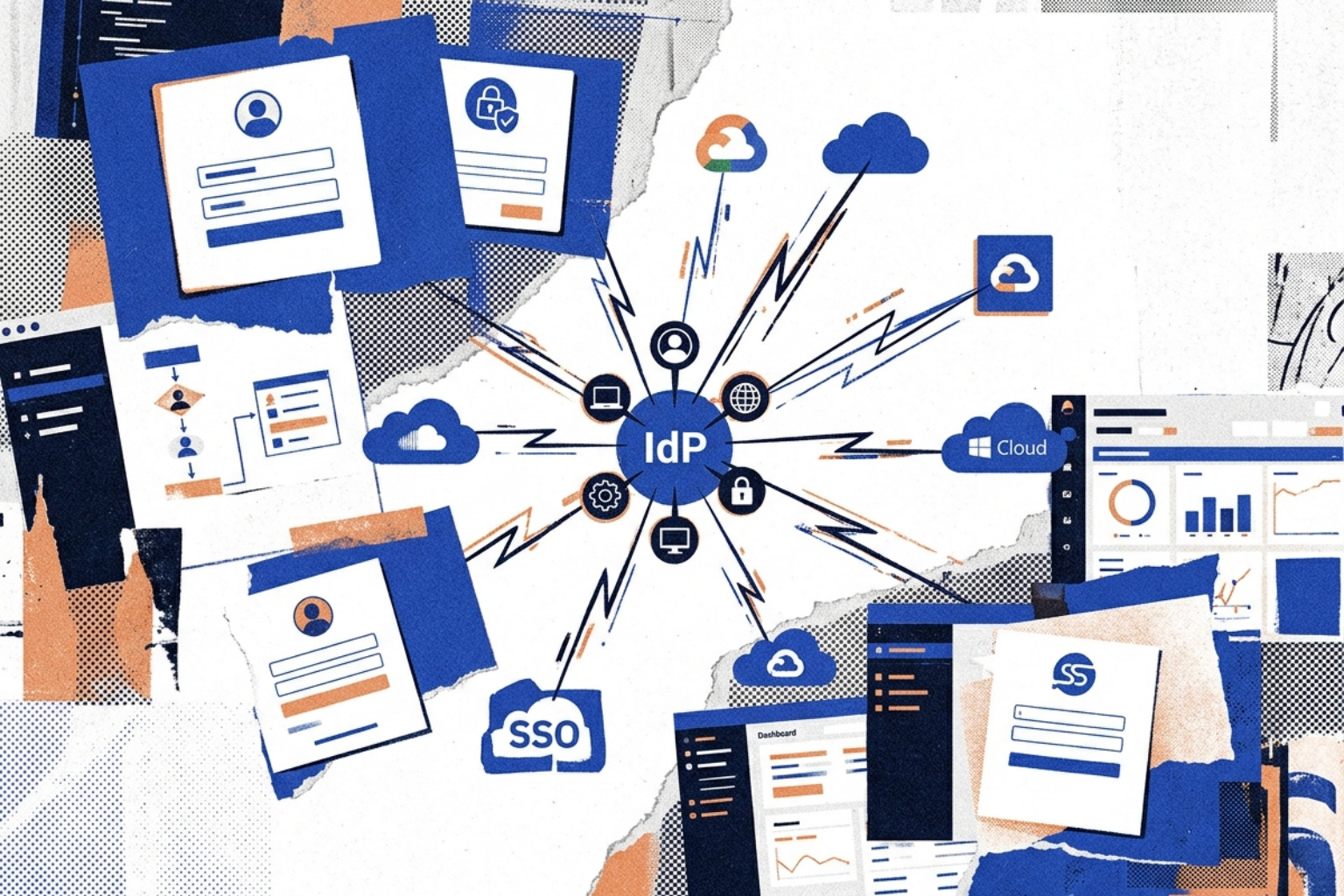
Federated Identity Management systems are frameworks that let users authenticate once with a trusted Identity Provider (IdP) and gain access to multiple applications and services across different organizations — without creating separate credentials for each one.
Here's the core idea at a glance:
| Concept | What It Means |
|---|---|
| Identity Provider (IdP) | The system that verifies who you are |
| Service Provider (SP) | The application or service you want to access |
| Federation | The trust agreement between the IdP and SP |
| Token | A cryptographically signed credential passed between them |
| Result | One login, access across many systems and organizations |
The scale of the problem FIM solves is easy to underestimate. The average employee manages 191 passwords across workplace tools, partner portals, SaaS apps, and legacy systems. The average person is expected to remember at least 100 different passwords at any given time. In the enterprise specifically, that number sits around 87 passwords per person.
That's not just a usability headache. It's a security crisis.
When people manage dozens of credentials, they reuse passwords, write them down, or choose weak ones. Each of those behaviors creates exploitable gaps — and attackers know it. Credential-based attacks remain one of the most common initial access vectors in enterprise breaches.
Federated Identity Management addresses this at the architecture level. Rather than each application managing its own authentication, a single trusted authority handles identity verification and passes a signed, time-limited token to any connected service. The user logs in once. The systems talk to each other. Access is granted — securely and auditably — without the user (or IT) managing a sprawling collection of credentials.
As of May 2026, with enterprise application stacks growing larger and hybrid work environments blurring organizational boundaries, FIM has moved from a "nice to have" to a foundational piece of enterprise identity strategy.
What is Federated Identity Management (FIM)?
At its core, Federated Identity Management (FIM) is a trust-based arrangement between multiple enterprises or domains. It allows these entities to use the same identification data to access all networks within the "federation." Think of it as a digital passport system: your home country (the IdP) verifies your identity and issues a passport (the token), which other countries (the Service Providers) trust to let you across their borders.
This concept relies on the idea of identity portability. Instead of your identity being locked inside a single database at Company A, it becomes a portable set of attributes that can be verified by Company B. This is essential for modern business, where you might need to grant a contractor access to your Slack channel using their own company’s credentials, or allow an employee to log into a market research tool using their corporate email.
In technical terms, we talk about trust domains. A federation bridges these domains, allowing the "Asserting Party" (the system vouching for the user) to communicate with the "Relying Party" (the system providing the resource). By crossing these administrative boundaries, FIM eliminates the need for redundant user administration.
For a deeper dive into the foundational components, check out The Full Guide To Federated Identity Manager And Federated Identity Management.
The 7 Laws of Identity
To understand why FIM is built the way it is, we look to the "7 Laws of Identity," a set of principles originally proposed by Kim Cameron to define a system that is both secure and user-centric. These laws act as the philosophical North Star for Federated Identity Management systems:
- User Control and Consent: Users should only be involved in identity exchanges with their full knowledge and consent.
- Minimal Disclosure for a Constrained Use: Only the smallest amount of information necessary for a transaction should be shared (e.g., "the user is over 18" rather than their full date of birth).
- Justification: Data should only be shared with parties that have a legitimate, proven need for it.
- Directed Identity: To prevent cross-site tracking, a system should use "private identifiers" so that different Service Providers cannot easily collude to build a permanent profile of a user.
- Competition: Users should be able to choose between multiple identity providers.
- Human Integration: The system must protect the human user, ensuring the UI is clear and prevents phishing.
- Consistency: The user experience should be simple and consistent across all platforms.
Adhering to these laws helps organizations build systems that respect privacy while maintaining high security. You can explore how these laws fit into broader strategies in our Identity And Access Management Iam The Complete Guide To Security Access And Credential Management.
How FIM Works in Practice
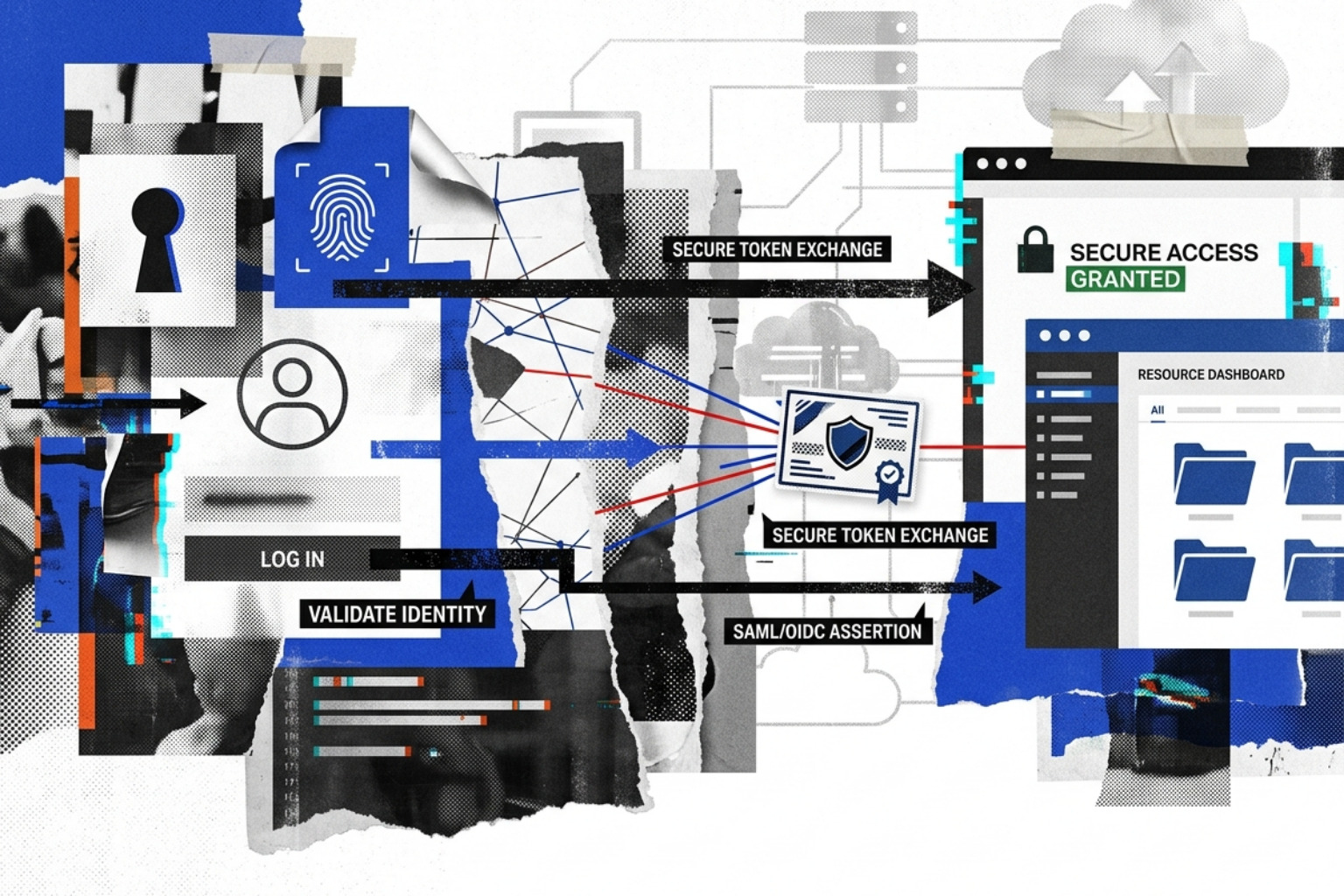
The actual "magic" of FIM happens through a structured exchange often called a "handshake." It generally follows this flow:
- Access Attempt: A user tries to access a Service Provider (SP), like a cloud-based HR portal.
- Redirection: The SP sees the user isn't logged in and redirects them to their chosen Identity Provider (IdP).
- Authentication: The user logs into the IdP (using MFA, a password, or a biometric passkey).
- Token Generation: The IdP creates a "token"—a digital package containing identity assertions (e.g., "This is Jane Doe, and she is an editor").
- Cryptographic Signing: The IdP signs this token with a private key to prove it hasn't been tampered with.
- Token Exchange: The user’s browser passes this signed token back to the SP.
- Validation and Authorization: The SP verifies the signature using the IdP’s public key. If it checks out, the SP grants access based on the roles defined in the token.
This process ensures that the SP never actually sees the user’s password. They only see a "vouch" from a source they already trust. For more on managing these flows at scale, see Identity Manager Centralizing User Access And Governance In The Enterprise.
The Architecture Behind Federation
Modern FIM isn't a single piece of software; it's an ecosystem built on open standards. By using standardized protocols, organizations avoid vendor lock-in and ensure that different systems can "talk" to each other regardless of whether they are on-premise or in the cloud.
Key Protocols and Standards
- SAML 2.0 (Security Assertion Markup Language): The veteran of the group. It uses XML to exchange authentication and authorization data. It’s widely used in enterprise environments for web-based SSO.
- OAuth 2.0: Not technically an authentication protocol, but an authorization framework. It’s what allows an app to "access your Google Calendar" without knowing your Google password.
- OpenID Connect (OIDC): A thin layer of identity sitting on top of OAuth 2.0. It uses JSON Web Tokens (JWT) and is the preferred choice for modern mobile and native applications because it's more lightweight than SAML.
- SCIM (System for Cross-domain Identity Management): While SAML/OIDC handle the login, SCIM handles the "provisioning." It automates the exchange of user identity information between different domains, ensuring that when an employee is hired or fired in the central system, their accounts are automatically created or deleted in all connected SaaS apps. Learn more at Cross Domain Identity Management Automating And Securing User Provisioning With Scim.
- FedCM (Federated Credential Management): A newer browser-level API designed to preserve privacy. As browsers phase out third-party cookies (which older federation methods sometimes relied on), FedCM provides a more secure, browser-mediated way for users to sign in via IdPs.
Identity Brokerage and Technical Stacks
In complex environments, organizations often use an Identity Broker. This acts as a middleman that can translate between different protocols. For example, a broker could allow a user to log in via an old LDAP directory (the IdP) and then "translate" that identity into a SAML assertion for a modern cloud app.
Projects like Dex act as OIDC wrappers for other IdPs, making them ideal for Kubernetes environments. Meanwhile, Gluu provides high-performance, open-source stacks for organizations that need to handle billions of requests with microsecond latency.
How FIM Differs from SSO
While people often use the terms interchangeably, Single Sign-On (SSO) and Federated Identity Management (FIM) are not the same thing. SSO is a capability, while FIM is the architecture that enables it across different organizations.
| Feature | Single Sign-On (SSO) | Federated Identity Management (FIM) |
|---|---|---|
| Scope | Usually a single domain or organization. | Multiple domains and external organizations. |
| Trust | Trust is implicit within the internal network. | Trust is explicitly negotiated via legal and technical agreements. |
| User Data | Stored in one central directory. | Can be distributed across multiple IdPs. |
| Example | Logging into your corporate email and then being automatically logged into the internal payroll app. | Logging into a partner's portal using your own company's credentials. |
For a deep dive into SSO implementation, see Single Sign On Best Practices Simplifying Secure Access Across The Enterprise and Why Enterprises Need A Single Sign On Sso Portal.
Security Benefits and Implementation Challenges
Implementing Federated Identity Management systems is a classic trade-off: you gain massive security and usability benefits, but you also introduce a "Single Point of Failure" that must be guarded with extreme care.
The Security Upside
- Reduced Attack Surface: By centralizing authentication, you only have one "front door" to defend. Instead of securing 100 different apps, you focus your highest security measures (like hardware-based MFA) on the IdP.
- Centralized Offboarding: This is perhaps the biggest security win. When an employee leaves, you disable their account in the IdP, and they instantly lose access to every federated application. No more "zombie accounts" lingering in forgotten SaaS tools.
- Zero Trust Alignment: FIM is a cornerstone of Zero Trust. It allows for "Continuous Authentication," where the system can re-verify a user's identity and device health every time they move between federated apps.
- Passwordless and Passkeys: FIM makes it easier to roll out modern authentication. You can enable Passkeys at the IdP level, giving users a biometric, phishing-resistant login experience across all their apps without those apps needing to support Passkeys natively.
Check out the Identity Access Management Solutions Best Iam Platforms And Strategies For 2026 for more on these modern strategies.
The Challenges
- Single Point of Failure (SPOF): If your IdP goes down, nobody can work. This makes high availability and clustering (using tools like Keycloak) non-negotiable.
- Token Theft: If an attacker steals a valid session token, they can impersonate the user without ever needing a password. This requires implementing short token lifespans and "Token Binding."
- Legacy Integration: Not every application supports SAML or OIDC. Integrating "non-federated" legacy apps often requires custom work or "Identity Brokerage" tools.
- Policy Consistency: Ensuring that all members of a federation agree on security levels (e.g., "everyone must use MFA") can be a complex legal and administrative hurdle.
See our review of the Best Iam Solutions Of 2026 to see how different vendors handle these hurdles.
Compliance and Government Standards
FIM is heavily driven by regulatory requirements. Governments were early adopters because they needed to share data across agencies securely.
- NIST SP 800-63: The definitive guide for digital identity guidelines in the US.
- FedRAMP: A standardized approach to security assessment for cloud products. If you're a SaaS provider wanting to work with the US government, your FIM setup must be FedRAMP compliant.
- HSPD-12 (Homeland Security Presidential Directive 12): A 2004 mandate that required a common, secure identification standard for federal employees and contractors, which helped jumpstart the development of modern federation.
- GDPR and HIPAA: These regulations require strict control over who can access personal and health data. FIM’s ability to provide "Minimal Disclosure" (sharing only what is needed) is a major help for compliance.
For more on managing customer identities under these regulations, read the Customer Identity And Access Management Guide.
Best Practices for Deploying Federation
- Enforce Strong MFA at the IdP: Since the IdP is your most critical asset, protect it with more than just a password. FIDO2/WebAuthn hardware keys are the gold standard.
- Apply the Principle of Least Privilege: Use the "Minimal Disclosure" law. Don't send a user's entire profile in a SAML assertion if the app only needs their email address.
- Regular Auditing: Centralized authentication means centralized logs. Use these to spot anomalies, such as "impossible travel" (a user logging in from New York and then London 10 minutes later).
- Establish Clear Legal Agreements: Federation is a "Community of Trust." Ensure you have legally sound agreements defining who is responsible if an identity is compromised.
- Standardize on OIDC/OAuth 2.0: While SAML is still relevant, OIDC is the future. It's easier to implement, more mobile-friendly, and has better library support.
Stay ahead of the curve with our guide on Leading Iam Solutions 2025 2026 Identity And Access Platforms Shaping The Future Of Enterprise Secur.
Real-World Use Cases and Open-Source Solutions
Federated identity isn't just a theoretical framework; it's the engine behind some of the most complex IT maneuvers in modern business.
Use Case: Mergers and Acquisitions (M&A)
When Company A buys Company B, IT is usually tasked with giving thousands of new employees access to internal systems overnight. Setting up a federation between the two companies' Active Directory forests is much faster and more secure than manually migrating thousands of accounts.
Use Case: Supply Chain Security
A large manufacturer (like an automaker) might have thousands of suppliers. By using FIM, the manufacturer can let supplier employees log into their parts-ordering portal using their own company credentials. If a supplier employee is fired, they lose access to the manufacturer's portal automatically.
Open-Source Powerhouses
If you're looking to build your own FIM infrastructure without the "vendor tax," several open-source projects lead the way:
- Shibboleth: Born in academia, Shibboleth is one of the most widely deployed FIM systems in the world, specifically designed for multi-site federations.
- Keycloak: A powerful, modern IAM solution that supports OIDC, SAML, and OAuth 2.0 out of the box. It includes a user-friendly admin console and handles everything from social login to fine-grained authorization.
- Dex: A "federated OpenID Connect provider" that acts as a portal to other identity providers. It’s the go-to choice for adding authentication to Kubernetes.
For those still managing legacy Microsoft environments, you might find our guide on Forefront Identity Manager A Complete Guide To Microsoft S Legacy Identity Platform useful for understanding how we got here.
Frequently Asked Questions about FIM
Does FIM replace the need for a local directory?
No. You still need a "source of truth" (like Active Directory, LDAP, or a cloud directory) where your user data lives. FIM is the layer that allows you to share that data securely with other systems.
How does FIM handle session revocation across different domains?
This is one of the harder problems in federation. While disabling an account in the IdP prevents new logins, an existing session in a Service Provider might stay active until the token expires. Modern standards like "OpenID Connect Back-Channel Logout" are designed to solve this by sending a "logout" signal from the IdP to all active SPs.
What is the "NASCAR problem" in identity federation?
The "NASCAR problem" refers to a login page that is cluttered with dozens of social login buttons (Google, Facebook, Apple, LinkedIn, etc.), making it look like a sponsored race car. This creates a poor user experience and can lead to "account fragmentation" where users forget which provider they used to sign up. Tools like FedCM aim to solve this by moving the provider selection into the browser UI.
Connect Your Identity Infrastructure
In the hyper-connected enterprise of 2026, the traditional "walled garden" approach to identity is dead. Federated Identity Management systems provide the bridge needed to navigate a world where employees, partners, and customers all require seamless, secure access across different organizational boundaries.
By moving away from a sprawl of 191 passwords and toward a centralized, trust-based architecture, organizations can finally resolve the tension between user convenience and security resilience. Whether you are navigating a complex merger or simply trying to secure your SaaS stack, FIM is the foundational technology that makes a "one login" world possible.
For a final look at how to integrate these concepts into your broader security posture, revisit our Identity And Access Management Iam The Complete Guide To Security Access And Credential Management.