Building a Layered Defense Strategy to Guard Your Enterprise
One security tool isn't a strategy. Learn how to stack independent controls from perimeter to data core so that no single failure means total compromise.

Why a Single Line of Defense No Longer Cuts It
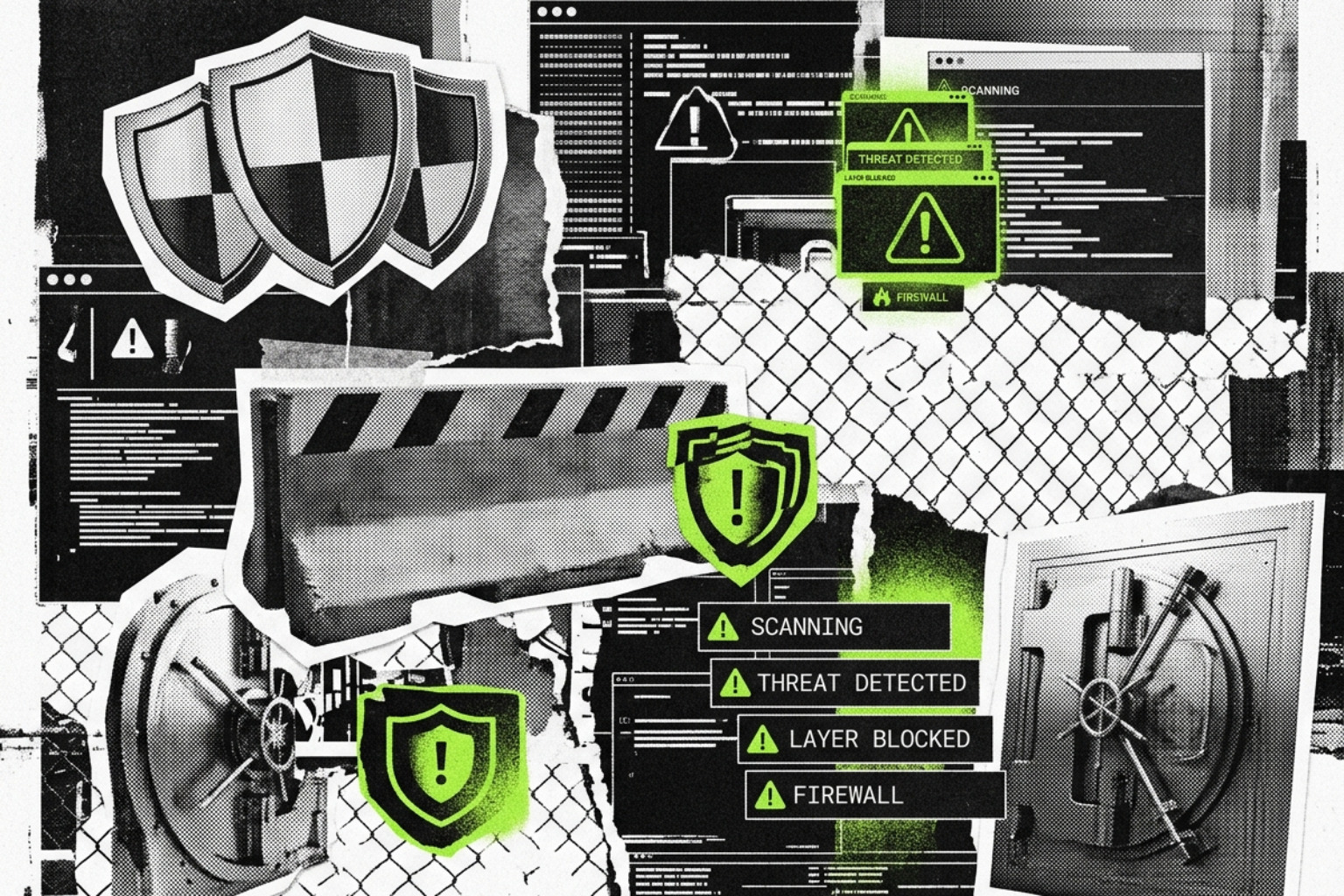
Malware protection layered defense — the practice of stacking multiple, independent security controls so that if one fails, the next one holds — is the baseline standard for any enterprise serious about resilience in 2026.
Here's the core idea at a glance:
| Layer | What It Protects Against | Example Controls |
|---|---|---|
| Perimeter | External intrusion, network-based attacks | Firewall, IDS/IPS, DPI |
| Endpoint | Malware execution on devices | NGAV, EDR, application whitelisting |
| Identity | Credential theft, privilege abuse | MFA, least privilege, JIT access |
| Application | Exploit delivery, code injection | Patching, secure SDLC, sandboxing |
| Data | Exfiltration, ransomware encryption | Encryption, immutable backups |
| Human | Phishing, social engineering | Security awareness training, simulations |
The numbers make the case bluntly. Every day, roughly 560,000 new malware variants are detected. Ransomware hits an organization somewhere on the planet every 15 seconds. And 95% of data breaches trace back to some form of human error — meaning no purely technical solution will ever be enough on its own.
Traditional perimeter-focused security assumed a hard outer edge you could defend. That model is effectively dead. Remote work, cloud infrastructure, SaaS sprawl, and IoT have dissolved the boundary. Attackers now operate in multi-stage chains — phishing for initial access, stealing credentials, moving laterally, escalating privileges, and then deploying ransomware — often across days or weeks before detection.
The National Security Agency originally adapted the defense-in-depth concept from military strategy: a weaker force doesn't rely on a single fortification. It creates multiple barriers, each buying time for the next. In cybersecurity, that translates to overlapping controls where no single point of failure can compromise everything.
Think of it as the Swiss Cheese Model applied to security — individual layers have holes, but stack enough of them and the holes stop lining up.
This guide walks through how to build, prioritize, and operationalize that stack across every layer of your enterprise environment.
The Architecture of Defense-in-Depth
Building a resilient posture isn't about buying every tool on the market; it’s about strategic alignment with recognized frameworks. In May 2026, the NIST Cybersecurity Framework 2.0 provides the primary scaffolding, emphasizing a shift from just "Protecting" to "Detecting, Responding, and Recovering."
Frameworks as a Blueprint
To avoid "security by accident," organizations utilize NIST SP 800-53 or the CIS Critical Security Controls. These frameworks advocate for Essential Pillars Of Cybersecurity Every Organization Should Know, ensuring that defenses are not just technical, but also administrative and physical.
- Administrative Safeguards: These include the policies that govern how people interact with systems. Think of them as the "rules of engagement." Without a policy requiring immediate account termination for departing employees, even the best firewall won't stop a disgruntled ex-staffer with active credentials.
- Physical Security: Often the "forgotten layer." If an attacker can walk into a server room with a USB drive, your digital encryption is moot. Modern defense-in-depth includes CCTV, biometric access to data centers, and even hardware-level protections like disabled USB ports on sensitive terminals.
- Control Diversity: This is the "don't put all your eggs in one basket" principle. If you use the same vendor for your firewall, your endpoint protection, and your cloud security, a single vulnerability in that vendor's code could blind your entire stack. Diversity creates a more complex gauntlet for attackers to run.
By focusing on Defense in depth (computing)), you reduce the total attack surface. You aren't just trying to keep the bad guys out; you are making the environment so hostile to their movements that they eventually get caught.
Technical Controls: From Perimeter to Data Core
The technical layer is where the "heavy lifting" of malware protection layered defense occurs. As we navigate 2026, the distinction between traditional tools and modern intelligent systems has never been sharper.
The Evolution of Endpoint Protection
Traditional antivirus (AV) is essentially a library of "Wanted" posters. If the malware's signature isn't in the library, it walks right through the front door. With 560,000 new threats daily, those libraries are perpetually out of date, often suffering from a 24 to 72-hour detection gap.
| Feature | Traditional AV | Next-Gen AV (NGAV) | Endpoint Detection & Response (EDR) |
|---|---|---|---|
| Detection Basis | File Signatures | Behavioral Patterns/AI | Telemetry & Forensics |
| Response | Delete/Quarantine | Block Execution | Isolate Host/Rollback |
| Focus | Known Malware | Unknown/Zero-Day | Post-Breach Activity |
Modern strategies prioritize Best Cybersecurity Software For 2026 Top Tools For Network Security Endpoint Protection And Ai Power, integrating Application Whitelisting and Anti-executable technology. These tools operate on a "Deny by Default" basis. Instead of trying to identify every "bad" program, they only allow "good" programs to run. If an unauthorized script tries to execute in the /temp folder, it is killed instantly, regardless of whether it has a known signature.
Hardening the Network Fabric
Defense in Depth: multilayer cybersecurity protection strategy requires moving beyond the simple "inside vs. outside" firewall.
- Micro-segmentation: This divides the network into small, isolated zones. If a workstation in Marketing is infected, micro-segmentation prevents the malware from "hopping" over to the Finance servers.
- Deep Packet Inspection (DPI): Modern routers and firewalls now act as active sensors, looking inside encrypted traffic to find hidden command-and-control (C2) communications.
- IDS/IPS: Intrusion Detection and Prevention systems act as the "security guards" of the network, flagging anomalous traffic patterns that suggest a brute-force attack or data exfiltration attempt.
As noted in The Importance of Layered Security in Protecting Against Modern Cyber Threats, these layers must work in synergy. The network catches what the endpoint misses, and the data layer—through encryption—ensures that even if the other layers fail, the stolen information is useless to the thief.
Optimizing Layered Defense for Zero Trust
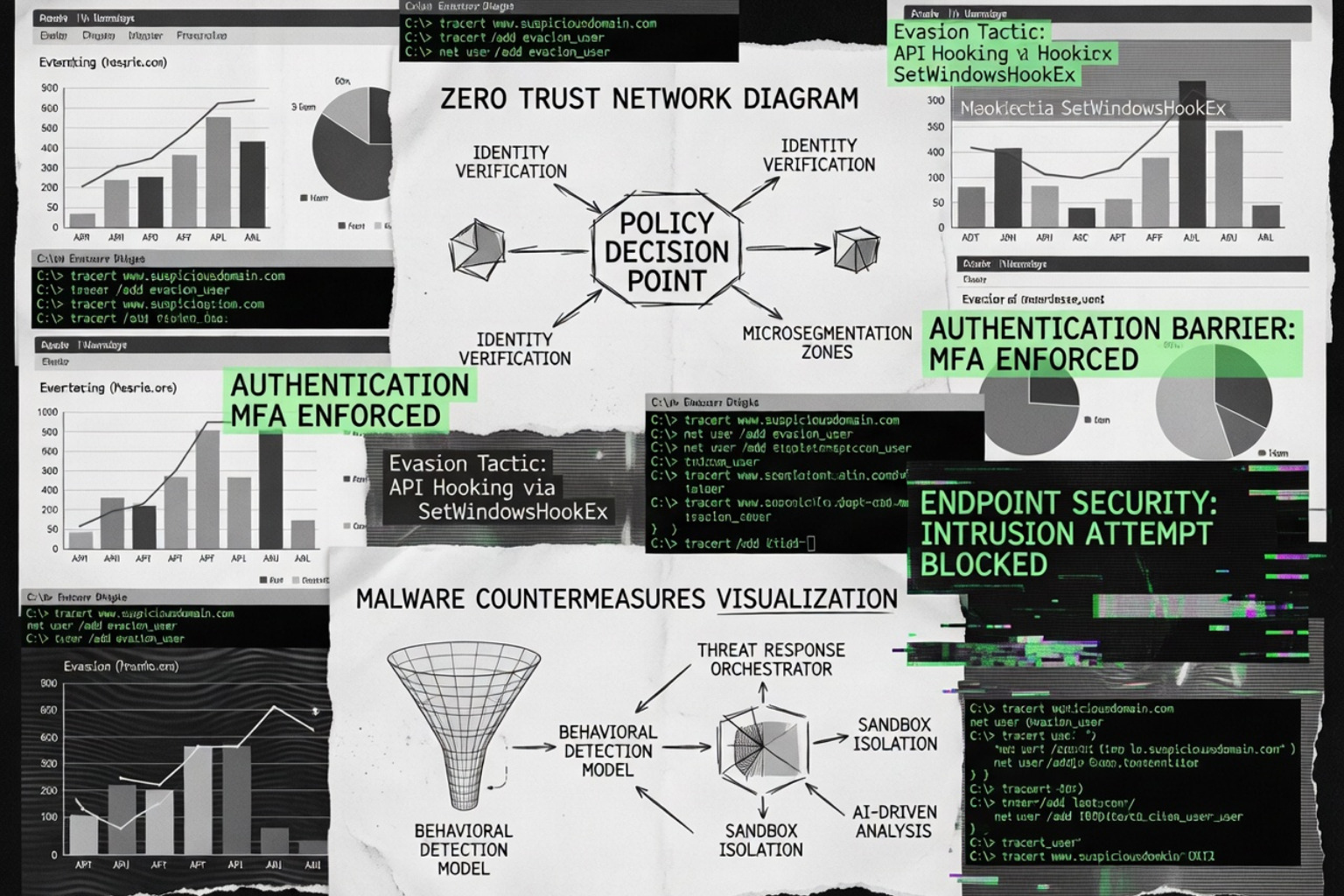
The "Assume Breach" mindset is the heart of Zero Trust Security Building A Stronger Future With Zero Trust Architecture. In this model, location is not a proxy for trust. Just because a device is "on the office Wi-Fi" doesn't mean it gets access to the database.
- IAM & Least Privilege: Users only get the minimum access necessary for their job. A graphic designer doesn't need admin rights to the SQL server.
- Multi-factor Authentication (MFA): Enabling MFA can block over 99.9% of account compromise attacks. In 2026, we've moved beyond SMS codes to biometric and FIDO2-compliant hardware keys to resist sophisticated "man-in-the-middle" phishing.
- Just-In-Time (JIT) Access: Admin privileges are granted only when needed and for a limited duration, shrinking the window of opportunity for attackers who manage to steal a privileged credential.
Advanced Detection and Response: Beyond Signatures
In an era where "Living off the Land" (LotL) attacks use legitimate tools like PowerShell to carry out malicious acts, signature-based defense is a sieve. Over 56% of ransomware attacks in 2024 utilized PowerShell, which traditional AV often ignores because it is a "trusted" system tool.
The Rise of Behavioral Analytics
To counter fileless malware and zero-day exploits, organizations deploy User and Entity Behavior Analytics (UEBA). These systems establish a "baseline" of normal behavior. If an HR manager who usually accesses five files a day suddenly starts downloading 5,000 files at 3:00 AM from a Bulgarian IP address, UEBA flags it as a high-risk anomaly.
Best Cybersecurity Software Of 2026 Top 12 Tools For Endpoint Network Identity Protection highlights the importance of Security Orchestration, Automation, and Response (SOAR). When a threat is detected, SOAR doesn't wait for a human to wake up. It can automatically isolate the infected laptop, revoke the user's credentials, and trigger a snapshot of the affected files in seconds.
Deception Technology: Setting the Trap
Advanced malware protection layered defense uses "Honeypots" and decoy data. These are fake servers or files designed to look like high-value targets. Because no legitimate user has a reason to touch them, any interaction is a 100% guaranteed indicator of malicious activity. This gives defenders "early warning" before the attacker reaches actual production data.
Integrating AI into Your Defense Layers
Artificial Intelligence isn't just a buzzword; it's a force multiplier. According to the Defense in Depth AI Cybersecurity: Complete Guide 2026, unified AI platforms can reduce "alert noise" by up to 88%.
By correlating real-time telemetry from the network, endpoints, and cloud, AI can see the "story" of an attack. It connects a suspicious login in the cloud to a strange PowerShell script on a laptop, mapping the activity directly to the MITRE ATT&CK framework. This allows for Multi-layered Approach to Security | Kaspersky that is proactive rather than reactive.
As explored in The Ultimate Guide To Cybersecurity Tools For Modern Organizations, these AI models use predictive analysis to stop malware before it executes by recognizing the "DNA" of malicious intent in code, even if that specific file has never been seen before.
Operationalizing Resilience: Human and Administrative Layers
You can have the most expensive AI-driven firewall in the world, but it won't matter if an employee clicks "Enable Macros" on a fake invoice. With 95% of breaches involving human error, the "Human Layer" is often the thinnest, yet most critical.
The Vulnerability Management Cycle
Security is a marathon, not a sprint. Cybersecurity Comprehensive Guide To Digital Protection And Security Strategies emphasizes that Vulnerability Management and rapid Patching Cycles are non-negotiable. Attackers love "n-day" exploits—vulnerabilities that have a patch available but haven't been applied by the target organization yet.
Training for the Modern Threat
Static, once-a-year "don't click links" training is ineffective. Modern Security Control The Foundation Of Modern Cybersecurity Defense strategies involve:
- Continuous Phishing Simulations: Sending "safe" fake phishing emails to staff to identify who needs extra coaching.
- Gamified Learning: Short, engaging modules that keep security top-of-mind.
- Reporting Culture: Making it easy for employees to report suspicious emails without fear of "getting in trouble."
The Last Line: Immutable Backups
If all else fails and ransomware encrypts your environment, your last line of defense is your backup. But modern malware specifically targets backups to prevent recovery. The 3-2-1-1-0 backup rule is the gold standard for 2026:
- 3 copies of data.
- 2 different media types.
- 1 copy off-site.
- 1 copy Immutable (cannot be changed or deleted for a set period).
- 0 errors (verified by regular restore testing).
Frequently Asked Questions
How does layered defense stop fileless malware?
Fileless malware lives in a system's RAM and uses legitimate tools like PowerShell or WMI to execute. A layered approach stops this by:
- Endpoint Monitoring: Logging PowerShell script blocks to see what the code is actually doing.
- Behavioral Analysis: Flagging when a system tool starts behaving like a malicious actor (e.g., trying to reach out to an unknown IP).
- Least Privilege: Ensuring the user account running the script doesn't have the permissions to encrypt the whole drive.
Why is traditional antivirus insufficient in 2026?
Traditional AV relies on "blacklisting" known files. Modern malware is polymorphic, meaning it changes its own code every time it spreads so its signature is always new. Additionally, Zero-day exploits target vulnerabilities that the software vendor doesn't even know exist yet, meaning there is no signature to detect until after the damage is done.
What is the difference between layered security and defense in depth?
While often used interchangeably, there is a nuance explained in Cybersecurity Methodologies Every Organization Should Understand:
- Layered Security typically refers to the technical stack of tools (Firewall + AV + MFA).
- Defense in Depth is a more holistic strategy that includes the technical tools plus administrative policies, physical security, and organizational response mindsets. It's the difference between having a lock on your door and having a comprehensive home security plan.
Implement Defense-in-Depth Before the Next Breach
Building a malware protection layered defense is not a "set it and forget it" project. It requires a continuous strategic assessment of your current posture and a ruthless prioritization of the layers that protect your most high-value assets.
Complexity is the enemy of security. The goal isn't to have the most tools, but to have the most integrated tools. When your identity provider talks to your endpoint agent, and your endpoint agent talks to your network firewall, you create a unified front that can withstand the multi-stage attacks of the modern era.
Stay informed, stay patched, and remember: in cybersecurity, redundancy isn't a waste—it's your best friend. For more technical deep-dives into the latest defensive tech, explore our More info about 2026 cybersecurity tools on the Unlocked platform.