Best IAM Solutions of 2026: Top Identity & Access Management Platforms Compared
We compared Okta, Microsoft Entra ID, CyberArk, Ping Identity, SailPoint, and JumpCloud across SSO, MFA, governance, and pricing. See which IAM platform fits your organization — updated 2026.


Introduction to Identity and Access Management
Identity and access management (IAM) solutions are essential for organizations striving to secure their digital environments and manage user identities effectively. IAM refers to the technologies and processes that manage user identities and control access to systems, applications, and data. For readers unfamiliar with the term, IAM provides the framework for verifying identities and ensuring that only authorized users can access sensitive resources.
This guide is designed for businesses, IT leaders, and security professionals seeking to understand, evaluate, and implement the best IAM solutions for businesses. We will cover the leading IAM platforms, core IAM functions, key features, implementation strategies, and the benefits of adopting IAM in modern organizations. As digital transformation accelerates and remote work becomes the norm, IAM matters more than ever for protecting sensitive data, ensuring regulatory compliance, and enabling secure, efficient access across hybrid and cloud environments.
The primary functions of IAM include identity lifecycle management, authentication, and authorization, which help minimize risks associated with excessive privileges. By establishing a centralized approach to access governance, IAM significantly reduces an organization's attack surface and helps prevent unauthorized intrusions that can lead to costly data breaches. According to the Cybersecurity & Infrastructure Security Agency (CISA), robust IAM practices are a cornerstone of any modern federal or private sector security posture.
With this foundational context, we can now explore the trends and needs driving the adoption of IAM in modern organizations.
Why IAM Matters for Modern Organizations
Identity and access management (IAM) solutions are essential for organizations striving to secure their digital environments and manage user identities effectively. As companies expand into cloud environments, remote work, and distributed applications, the ability to manage user access and protect sensitive data has become a central component of enterprise security strategy. For those searching for the best IAM solutions for businesses, understanding the scope and impact of IAM is crucial.

IAM tools help organizations keep control by scaling with the business and centralizing how access is granted, monitored, and secured. IAM tools act as the unsung heroes of modern working, providing the control and oversight needed to ensure that only authorized users access the right resources at the right time.
The explosion of remote work and digital transformation has increased the need for IAM tools to manage access and protect sensitive information. With businesses operating across hybrid infrastructures and multiple applications, modern IAM solutions provide the framework needed to verify user identities, enforce security policies, and reduce the risk of data breaches.
With this understanding of IAM's importance, let's examine the top IAM solutions available for businesses today.
Best IAM Solutions for Businesses
Organizations searching for the best IAM solutions for businesses typically evaluate platforms that can manage identities, control access, and integrate with existing systems. API access management is also a critical capability for enterprises needing to secure and control access to applications and APIs.
In 2026, Okta, Microsoft Entra ID, and Ping Identity are leaders in the IAM landscape focusing on cloud integration, governance, and hybrid support. Top IAM solutions for 2026 include:
- Microsoft Entra ID: Deep integration with Microsoft 365 and Azure, seamless bridging between on-prem Active Directory and cloud identities.
- Okta: Recognized for ease of use, rapid connections to thousands of SaaS applications, and extensive third-party app integrations.
- Ping Identity: Excels in high customization for complex hybrid IT infrastructures and secure authentication.
- CyberArk: Enterprise-grade privileged access management tools designed to secure privileged accounts and critical systems.
- SailPoint: Leader in identity governance, focusing on AI-driven analytics to manage user access and compliance.
- JumpCloud: 'Directory-as-a-service' model combining IAM with device management, ideal for small-to-mid-sized organizations and remote teams.
- IBM Security Verify: Manages identities across hybrid cloud environments with advanced identity governance capabilities.
- Oracle IAM: Scalable identity lifecycle management and access control solutions for large enterprises.
- AWS IAM: Enables administrators to control user access to resources within Amazon Web Services environments.
- OneLogin: Cloud-based IAM platform providing a unified portal for users to access both cloud and on-premises applications.
Platforms like Workforce Identity Cloud offer comprehensive identity, access, and application integration capabilities for organizations managing hybrid and cloud environments. Research from Gartner consistently highlights these vendors for their ability to execute and completeness of vision in the Magic Quadrant for Access Management.
Choosing the best platform requires understanding how IAM tools manage identities, authentication, and access privileges across corporate systems. When evaluating IAM platforms, it's important to note that compliance alignment features in IAM tools help organizations meet regulatory requirements through automated reviews and reporting.
The primary functions of IAM include identity lifecycle management, authentication, and authorization, which help minimize risks associated with excessive privileges.
Organizations aiming to enhance their security should adopt an IAM solution tailored to their specific needs.
With these leading platforms in mind, it's important to understand the core functions and features that define effective IAM solutions.
Access Management
Access management ensures that employees, partners, and customers can securely access the resources they need without exposing sensitive data to unauthorized users.
IAM tools provide a robust framework to ensure that only authorized users access sensitive data and critical systems while also streamlining employee requirements and boosting productivity.
Effective access management solutions typically include:
- User authentication mechanisms to verify identities
- Role-based access control policies
- Identity governance and access certifications
- Access requests and automated approvals
- Privileged access management for high-risk accounts
- Centralized user management for streamlined onboarding, de-provisioning, and administration of user identities across multiple applications and environments
IAM solutions also provide reliable access logs and controls, making it easier for organizations to meet strict data security and privacy regulations.
Adaptive access controls in IAM solutions evaluate user context and risk to determine appropriate access levels. Adaptive/Risk-Based Authentication adjusts security requirements based on user behavior, device compliance, and location.
These mechanisms help organizations reduce security risks while improving operational efficiency across workforce identity systems.
Understanding access management is key to leveraging the full potential of IAM solutions, so let's explore how modern IAM platforms deliver these capabilities.
IAM Solutions
Modern IAM solutions go far beyond simple login management. They provide a centralized framework for managing identities across the entire organization.
IAM tools provide centralized identity management, which helps organizations control who has access to applications and data.
IAM tools often include features for automated user provisioning and deprovisioning to streamline access management. Identity lifecycle management is a core function of IAM, involving the creation, updating, and deletion of user identities.
Many IAM solutions support integration with existing systems and applications to ensure seamless user access.
Integration capabilities enable IAM tools to work seamlessly with existing SaaS tools and cloud infrastructures. This ability to manage identities across systems is essential as organizations increasingly rely on multiple applications and identity providers. For instance, Okta’s Integration Network provides a vast library of pre-built integrations to speed up this process.
With a solid understanding of IAM solutions, let's look at how access management IAM capabilities further enhance security and user experience.
Access Management IAM
Access management IAM capabilities ensure that organizations can regulate how user accounts interact with applications, systems, and data.
IAM tools provide multi-factor authentication (MFA) to enhance security by requiring additional verification beyond just a password. Multi-factor authentication significantly reduces the likelihood of compromised credentials being used to gain unauthorized access.
Single sign-on (SSO) allows users to access multiple applications with a single set of credentials, reducing password fatigue and should follow single sign-on best practices to maintain strong security.
IAM solutions can significantly reduce the likelihood of users relying on weak or default passwords, effectively minimizing the associated risks.
Role-based access control (RBAC) is commonly used in IAM systems to assign access rights based on job functions.
These features allow businesses to enforce security policies while still maintaining a smooth user experience across applications.
As organizations move to the cloud, understanding how IAM supports cloud environments is the next step.
Cloud Environments
The shift toward cloud environments has dramatically expanded the number of identities and access points organizations must manage.
IAM tools help organizations keep control by scaling with the business and centralizing how access is granted, monitored, and secured.
- AWS Identity and Access Management (IAM) enables administrators to control user access to resources within Amazon Web Services environments.
- Microsoft Entra IAM is designed to address the complexities of modern digital environments and builds on the capabilities of Azure Active Directory.
- Microsoft Entra ID provides seamless bridging between on-prem Active Directory and cloud identities.
Organizations operating hybrid infrastructure need IAM tools that can manage identities across both cloud services and on-premises directory services.
With cloud adoption on the rise, access management software becomes a critical component for IT teams.
Access Management Software
Access management software enables IT teams to manage user access privileges across multiple applications and systems from a centralized interface.
Key features of modern access management and identity manager software include:
- Identity federation for external identity providers
- User provisioning and automated user provisioning workflows
- Access governance and identity governance tools
- Password management and user self-service portals
- Access certifications for compliance auditing
IAM solutions help organizations comply with regulatory requirements by enforcing security policies and providing audit trails for user activities.
Detailed logs and automated reporting are critical for regulatory compliance standards like GDPR and HIPAA.
IAM solutions provide reliable access logs and controls that make it easier to meet strict data security and privacy regulations.
With these software capabilities in place, organizations can further enhance their security posture using specialized access management tools.
Access Management Tools
Access management tools help organizations manage user identities and regulate access privileges across corporate infrastructure.
These tools help security teams:
- Control access to critical systems
- Protect sensitive data and sensitive information
- Manage privileged accounts and privileged identity management workflows
- Monitor user behavior to detect anomalies
- Maintain centralized identity management across the enterprise
The integration of non-human identities, such as service accounts and AI agents, is becoming crucial in modern IAM solutions to manage the expanding attack surface.
With robust tools in place, organizations can leverage advanced IAM features to further strengthen their security.
IAM Tools
Modern IAM tools provide organizations with a comprehensive identity security framework.
Core capabilities typically include:
- User lifecycle management and automated user provisioning
- Privileged access management tools
- Risk-based authentication and adaptive multi-factor access
- Access governance and access certifications
- Directory services integration with existing identity providers
Passwordless and factor authentication is becoming a significant trend in IAM technology, enhancing security and user experience by eliminating the need for traditional passwords.
Zero trust frameworks are increasingly being adopted in IAM technology, requiring continuous verification of user identities and access rights.
AI-driven identity management solutions are emerging as a key trend, utilizing machine learning to enhance identity security and automate identity governance processes.
Just-in-time (JIT) access is a growing trend in IAM, allowing users to receive permissions only when needed and for a limited time, aligning with secure IAM in a zero trust world.
With these advanced tools and trends, organizations can build a comprehensive access management strategy.
Access Management Solutions
The most effective access management solutions combine identity management, access control, and security policies into a unified system.
Organizations should evaluate several factors before selecting a platform:
- Evaluating your organization's size and user base is fundamental when choosing an IAM solution.
- Defining security objectives and resource needs is crucial for selecting the right IAM solution.
- Assessing integration capabilities with existing systems is essential when choosing an IAM solution.
- Organizations should consider whether they have the necessary financial, human, and technical resources to implement and manage the IAM system effectively.
- Organizations should evaluate the total cost of ownership, not just the license price, when selecting an IAM solution.
The best IAM investments are those that grow with your organization and adapt to future needs, supporting a comprehensive identity and access management strategy.
The best IAM solution is contingent on an organization's size and its primary operational environment (cloud, hybrid, Microsoft-centric).
With these considerations in mind, let's look at how IAM solutions manage customer identities.
Customer Identity
Customer identity solutions manage authentication and access for external users interacting with applications and digital platforms.
Customer identity platforms often include:
- Customer identity cloud services
- Identity federation for partner logins
- Risk-based authentication
- Fine-grained access control for applications
These tools ensure that authorized users can access services while protecting customer data from unauthorized users and malicious actors.
Understanding customer identity management is essential for organizations serving external users, and now we turn to specific IAM platforms and their unique strengths.
Azure AD
Azure AD, now known as Microsoft Entra ID, remains one of the most widely adopted IAM platforms for enterprise environments.
Microsoft Entra ID is best for organizations in the Microsoft ecosystem, offering deep integration with M365 and Azure.
Microsoft Entra ID is often included in existing Microsoft licensing tiers, making it a cost-effective choice for invested organizations.
Microsoft Entra ID provides seamless bridging between on-prem Active Directory and cloud identities.
These capabilities make it a strong option for companies already relying on Microsoft infrastructure.
With Microsoft Entra ID as a foundation, organizations can also leverage other leading IAM vendors for a comprehensive security strategy.
Active Directory
Active Directory remains a core identity management component for many enterprises.
Azure Active Directory extends traditional Active Directory capabilities into cloud environments while supporting identity federation and access management, and organizations with legacy deployments may still rely on Forefront Identity Manager and Microsoft Identity Manager.
Oracle IAM helps manage user identities and access controls within an organization, providing scalable, secure solutions for identity management.
IBM offers a range of Identity and Access Management solutions, primarily through IBM Security Identity and Access Manager (ISAM) and IBM Verify.
CyberArk Workforce Identity is a suite of identity and access management solutions tailored to secure access for the modern workforce.
CyberArk provides robust Privileged Access Management (PAM) tools, such as credential rotation and session recording.
SailPoint is a leader in identity governance, focusing on AI-driven analytics to manage user access.
SailPoint IdentityIQ is a solution designed for complex enterprises, focusing on identity governance, compliance, and security.
With these core platforms in mind, let's review the leading IAM vendors to consider for your organization.
Leading IAM Vendors to Consider
Several vendors dominate the IAM market due to their integration capabilities, identity governance features, and scalability. Here are the top IAM solutions for businesses:
- Microsoft Entra ID: Deep integration with Microsoft 365 and Azure, seamless bridging between on-prem Active Directory and cloud identities, and cost-effective for organizations already invested in Microsoft.
- Okta: Leading provider focusing on simplifying user access, extensive third-party app integrations, user-friendly lifecycle management, and rapid deployment for cloud-focused businesses.
- Ping Identity: Excels in high customization for complex hybrid IT infrastructures, secure authentication, and single sign-on.
- CyberArk: Enterprise-grade privileged access management tools designed to secure privileged accounts and critical systems.
- SailPoint: Focuses on identity governance and access certifications, leveraging AI-driven analytics for large enterprises.
- JumpCloud: Provides a 'directory-as-a-service' model combining IAM with device management, ideal for small-to-mid-sized organizations and remote teams.
- IBM Security Verify: Manages identities across hybrid cloud environments, supporting advanced identity governance capabilities.
- Oracle IAM: Scalable identity lifecycle management and access control solutions for large enterprises.
- AWS IAM: Enables administrators to control user access to resources within Amazon Web Services environments.
- OneLogin: Cloud-based IAM platform providing a single unified portal for users to access both cloud and on-premises applications.
- ConductorOne: An AI-native identity security platform designed to streamline and secure access management processes in organizations.
With a clear understanding of the leading vendors, the next step is to implement an IAM solution tailored to your organization's needs.
Implementing an IAM Solution
Assessing Current Infrastructure
Deploying an effective IAM framework requires organizations to first conduct a comprehensive evaluation of existing identity management infrastructure and security protocols. Security teams must identify critical vulnerabilities in user provisioning workflows, access control mechanisms, and privileged account oversight — pinpointing precisely where current defenses fall short.
Establishing Security Policies
Establishing robust security policies becomes the next critical step, creating detailed guidelines that govern identity lifecycle management from initial employee onboarding through account termination.
Selecting IAM Technology
The technology selection process demands careful analysis of core capabilities: multi-factor authentication systems, automated provisioning engines, and integration compatibility with existing directory services and cloud platforms. Organizations cannot afford to overlook privileged access management functionality or the solution's ability to evolve alongside emerging threat landscapes.
When executed with precision, this methodical approach to IAM integration creates a resilient, future-ready architecture that strengthens access governance while safeguarding mission-critical assets.
With implementation underway, organizations can begin to realize the many benefits of IAM solutions.
Benefits of IAM Solutions
Enhanced Security and Reduced Risk
Identity and Access Management platforms address critical security challenges that organizations face in today's threat landscape by establishing granular control over user permissions and automating provisioning workflows. These systems significantly reduce attack surfaces by preventing unauthorized access to sensitive data repositories and mission-critical infrastructure — a crucial defense mechanism as threat actors increasingly target privileged accounts and lateral movement opportunities.
Operational Efficiency
Beyond security hardening, IAM implementations alleviate administrative overhead that typically burdens IT teams with manual access requests and password reset cycles, allowing security professionals to focus on threat hunting and incident response activities.
Regulatory Compliance
From a regulatory perspective, modern IAM platforms generate comprehensive audit logs and access certification reports that prove invaluable during compliance assessments, whether organizations face GDPR, SOX, or industry-specific requirements. Major cloud providers like Google Cloud Identity also emphasize these features to help enterprises maintain global compliance standards.
The strategic value of robust identity governance becomes clear when security teams can rapidly adjust permissions in response to emerging threats, conduct access reviews at scale, and maintain visibility across complex hybrid environments where traditional perimeter defenses no longer suffice.
With these benefits in mind, let's examine how IAM solution architecture brings these advantages to life.
IAM Solution Architecture
Core Components
Building effective IAM solution architecture requires understanding how several critical components interconnect to safeguard organizational assets in today's threat landscape. Identity providers — including established platforms like Ping Identity, Microsoft Entra ID, and Oracle Identity Management — handle the crucial task of user authentication while maintaining digital identity lifecycles across enterprise environments.
Directory Services
Directory services, particularly Active Directory, function as the organizational backbone, systematically storing user identities, group memberships, and permission structures that govern access decisions.
Modern Access Management Capabilities
Modern access management capabilities have evolved significantly, with single sign-on (SSO) and multi-factor authentication (MFA) now serving as essential defenses that verify user legitimacy before granting access to sensitive systems and data.
When organizations successfully integrate these foundational elements, they create a comprehensive security posture that effectively manages user identities, enforces granular access controls, and maintains consistent protection across hybrid infrastructures spanning on-premises data centers and cloud environments.
With a strong architecture in place, organizations must also focus on security and compliance to maximize IAM effectiveness.
IAM Solution Security and Compliance
In today's rapidly evolving threat landscape, effective IAM solutions hinge on robust security and compliance frameworks that organizations simply cannot afford to overlook. The implementation of comprehensive security policies — including role-based access control (RBAC) and privileged identity management — has become essential for maintaining tight control over access to sensitive data and mission-critical systems.
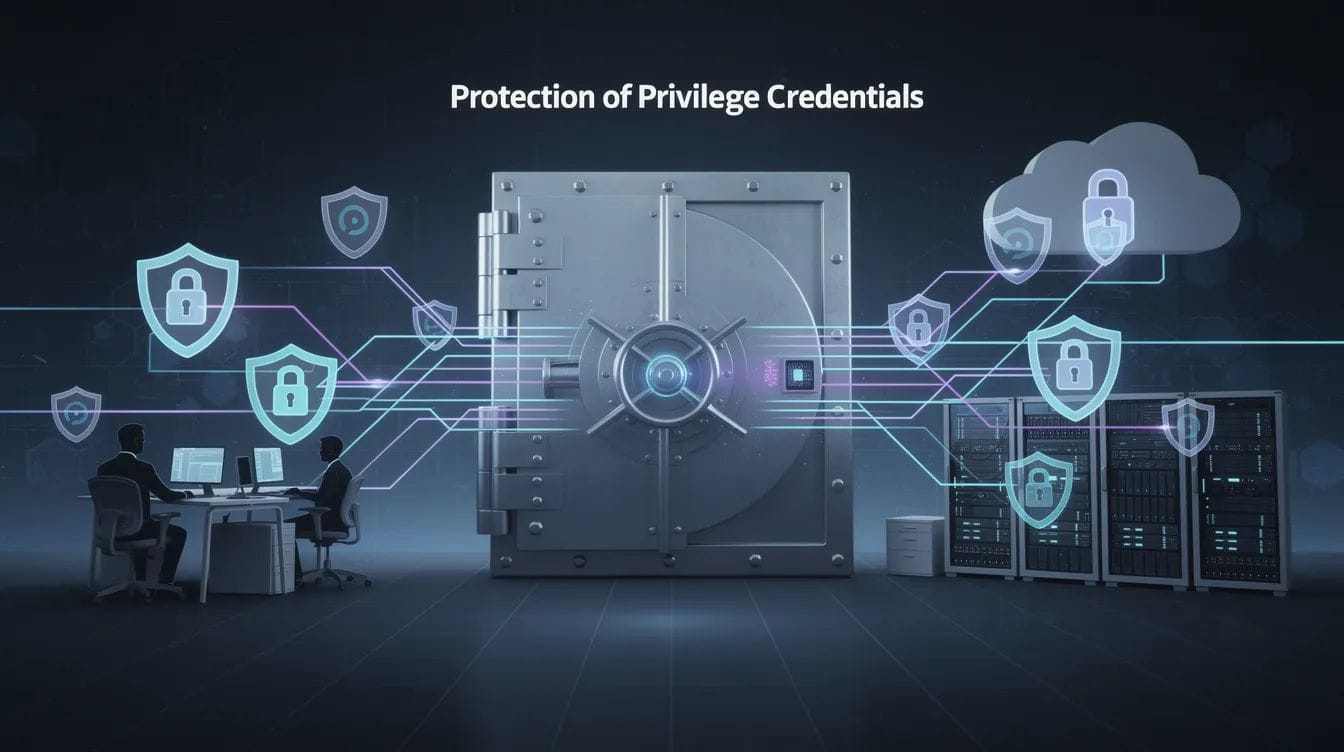
Risk-based authentication represents a significant advancement in this space, intelligently adapting security measures based on real-time analysis of user behavior patterns and contextual factors.
Beyond immediate security benefits, IAM solutions serve as a cornerstone for regulatory compliance efforts, delivering essential capabilities like access certifications, comprehensive audit trails, and prompt data breach notification systems that regulators increasingly demand.
When organizations integrate these IAM capabilities with their broader security ecosystem — incorporating threat intelligence feeds and incident response platforms — they create a more resilient and responsive security posture.
This strategic approach to security and compliance through IAM not only safeguards digital assets but also preserves organizational credibility and stakeholder trust in an era where cyber threats continue to grow in both sophistication and frequency.
With security and compliance addressed, organizations can explore modern approaches to access that further enhance user experience and security.
A Modern Approach to Access
As identity ecosystems grow more complex, organizations are increasingly looking beyond traditional authentication tools. Many teams now adopt proximity-based identity verification solutions to complement their IAM strategy.
For example, EveryKey provides passwordless access through proximity and presence detection, allowing users to securely unlock devices and applications when their trusted phone is nearby. This type of approach aligns with Zero Trust principles because identity is continuously confirmed rather than assumed.
When integrated alongside enterprise IAM platforms and a broader Zero Trust approach, technologies like EveryKey can help simplify authentication while improving access control across user devices and corporate applications.
With these modern approaches, organizations can further strengthen their IAM strategies and adapt to evolving security needs.
Conclusion
Identity and access management has become one of the most important components of modern cybersecurity infrastructure.
IAM tools provide centralized identity management, access governance, and authentication mechanisms that help organizations protect sensitive data while enabling employees to work efficiently across multiple applications.
Choosing the best IAM solution requires understanding your organization's infrastructure, cloud strategy, and integration requirements. With platforms such as Microsoft Entra ID, Okta, Ping Identity, CyberArk, SailPoint, JumpCloud, IBM Security Verify, Oracle IAM, AWS IAM, and OneLogin leading the market, businesses have a wide range of options to strengthen identity security and access management capabilities.
Organizations that invest in scalable IAM tools today will be better prepared to manage identities, enforce access policies, and protect critical systems in an increasingly complex digital environment.
FAQ
What is identity and access management (IAM)?
Identity and access management refers to technologies and processes that manage user identities and control access to systems, applications, and data. IAM platforms verify identities and ensure that only authorized users can access sensitive resources.
What are the best IAM solutions for businesses?
Top IAM solutions for businesses include Microsoft Entra ID, Okta, Ping Identity, CyberArk, SailPoint, JumpCloud, IBM Security Verify, Oracle Identity Management, AWS IAM, and OneLogin.
Why is multi-factor authentication important in IAM?
IAM tools provide multi-factor authentication (MFA) to enhance security by requiring additional verification beyond just a password. This greatly reduces the risk of compromised credentials leading to unauthorized access.
How does single sign-on improve user access?
Single sign-on allows users to access multiple applications with one login credential. This improves productivity while reducing password fatigue and security risks associated with managing multiple passwords.
How do IAM solutions help prevent data breaches?
IAM tools enforce security policies, control access privileges, and monitor user behavior across applications. These capabilities help prevent unauthorized access and reduce the likelihood of data breaches.