
Trust No One: The Ultimate Third-Party Vendor Security Evaluation Guide
Your vendors' security is now your security. This guide breaks down evaluating third-party risk in 2026 — from risk-based tiering and questionnaires to SOC 2 evidence, scoring, and continuous monitoring.

The Third-Party Vendor Problem Is Now Your Biggest Security Problem
Third-party vendor security evaluation is the structured process of assessing whether the external companies that access your systems, data, or infrastructure meet your security standards — before and after you let them in.
Here's the quick answer if you need it:
| What it covers | Why it matters |
|---|---|
| Technical controls (encryption, MFA, access management) | Vendors are now the #1 breach entry point |
| Data handling and classification | You're liable for what your vendors do with your data |
| Incident response and breach notification | Regulators expect documented accountability |
| Compliance posture (SOC 2, ISO 27001, HIPAA) | HIPAA, NYDFS, DORA, NIS2 all require it |
| Ongoing monitoring and reassessment | One-time reviews miss compliance drift |
The numbers are no longer theoretical. In 2024, 35.5% of all data breaches originated from third-party compromises — a 6.5% increase year over year. More than 41% of ransomware attacks began through third-party access points. And 54% of organizations still don't properly vet their vendors before granting access.
The MGM Resorts breach illustrated exactly how this plays out at scale. Attackers didn't break through a hardened perimeter — they exploited weaknesses in third-party access controls and MFA configurations, ultimately costing an estimated $100 million.
The pattern repeats: SolarWinds. Kaseya. MOVEit. In each case, the victim organization's own defenses were largely irrelevant. The attacker found a softer entry point through a trusted third party.
Your security posture is only as strong as the weakest vendor in your supply chain.
This guide walks through every layer of the evaluation process — from tiering vendors by risk, to the exact questions you should be asking, to the platforms that can automate the work at scale.
Important Third-party vendor security evaluation terms:
What is a Third-Party Vendor Security Evaluation?
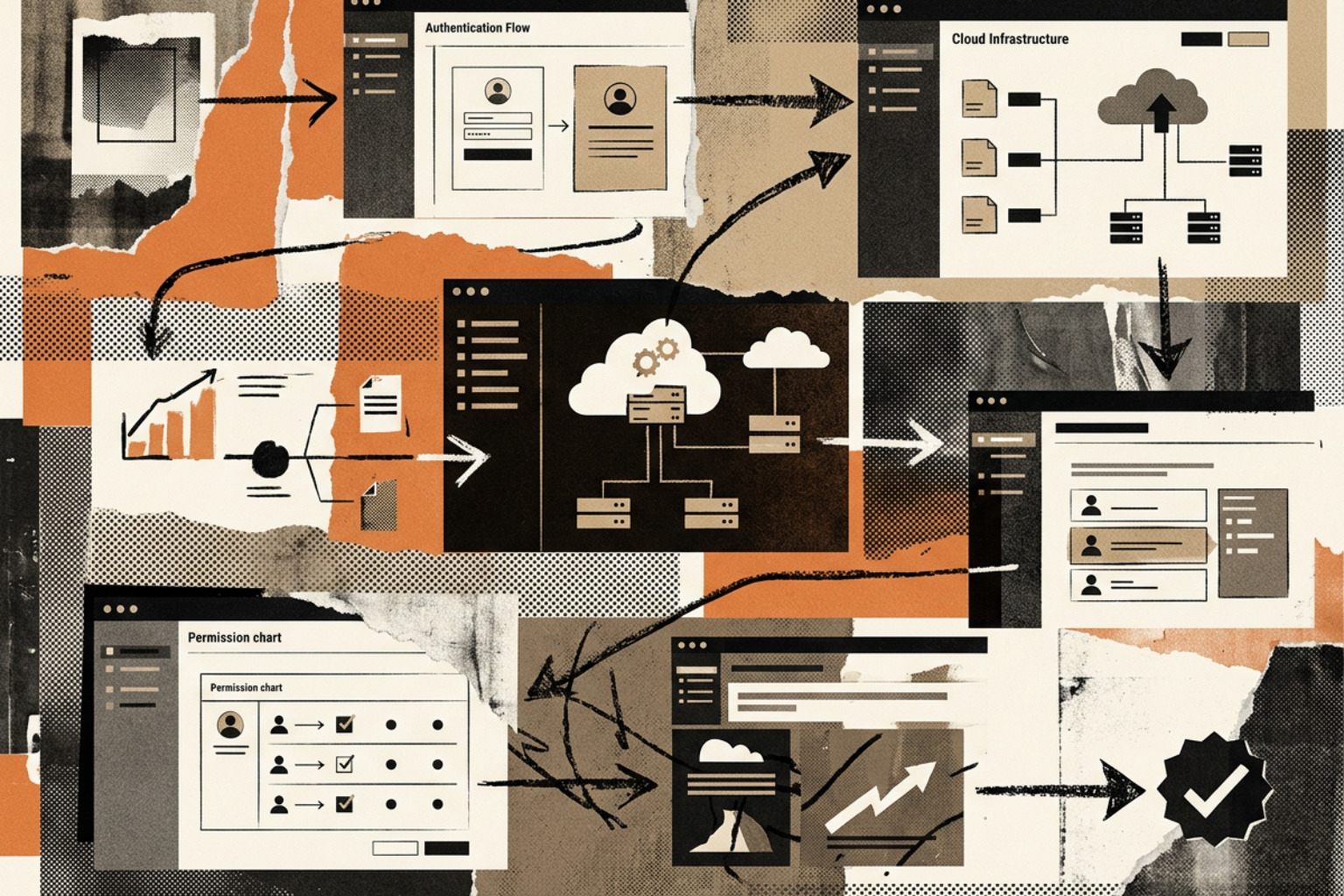
To protect your organization, you must first understand what a third-party vendor security evaluation actually is — and what it is not.
Many procurement and business teams use the terms Third-Party Risk Assessment (TPRA) and Vendor Security Assessment (VSA) interchangeably. However, for security practitioners, they represent distinct layers of defense.
| Feature | Third-Party Risk Assessment (TPRA) | Vendor Security Assessment / Evaluation (VSA) |
|---|---|---|
| Primary Focus | Broad business, operational, and financial risk | Deep cybersecurity posture and technical controls |
| Key Metrics | Financial stability, reputation, legal liability, SLA delivery | Encryption standards, MFA, patch cycles, API security |
| Data Scope | Business continuity, supply chain resilience, corporate governance | Data isolation, access controls, network security, IAM |
| Regulatory Drivers | General corporate compliance, ESG, financial regulations | HIPAA, PCI DSS, DORA, NIS2, SOC 2, ISO 27001 |
A TPRA answers the question: Will this vendor stay in business and deliver their service without exposing us to operational or legal liability?
A third-party vendor security evaluation, on the other hand, answers a far more critical technical question: If this vendor is compromised, will they become a gateway for attackers to exfiltrate our sensitive data or hijack our systems?
This distinction is crucial because a vendor can be financially healthy and operationally excellent while maintaining an abysmal cybersecurity posture.
When evaluating a vendor, you must calculate two types of risk:
- Inherent Risk: The raw risk level a vendor poses based solely on the access they require. If a SaaS provider handles your customer social security numbers, their inherent risk is maximum, regardless of how good their security team is.
- Residual Risk: The risk that remains after you evaluate and verify the vendor's security controls. Your goal is to apply rigorous vetting to bring residual risk down to an acceptable level.
Failing to properly isolate and evaluate these risks directly invites a Digital Supply Chain Compromise Your Security Is Only As Strong As Your Third Party Api. By treating vendor security as a checkbox exercise, you allow third-party integrations to act as unmonitored tunnels straight past your firewall.
Why Rigorous Evaluations are Critical in 2026
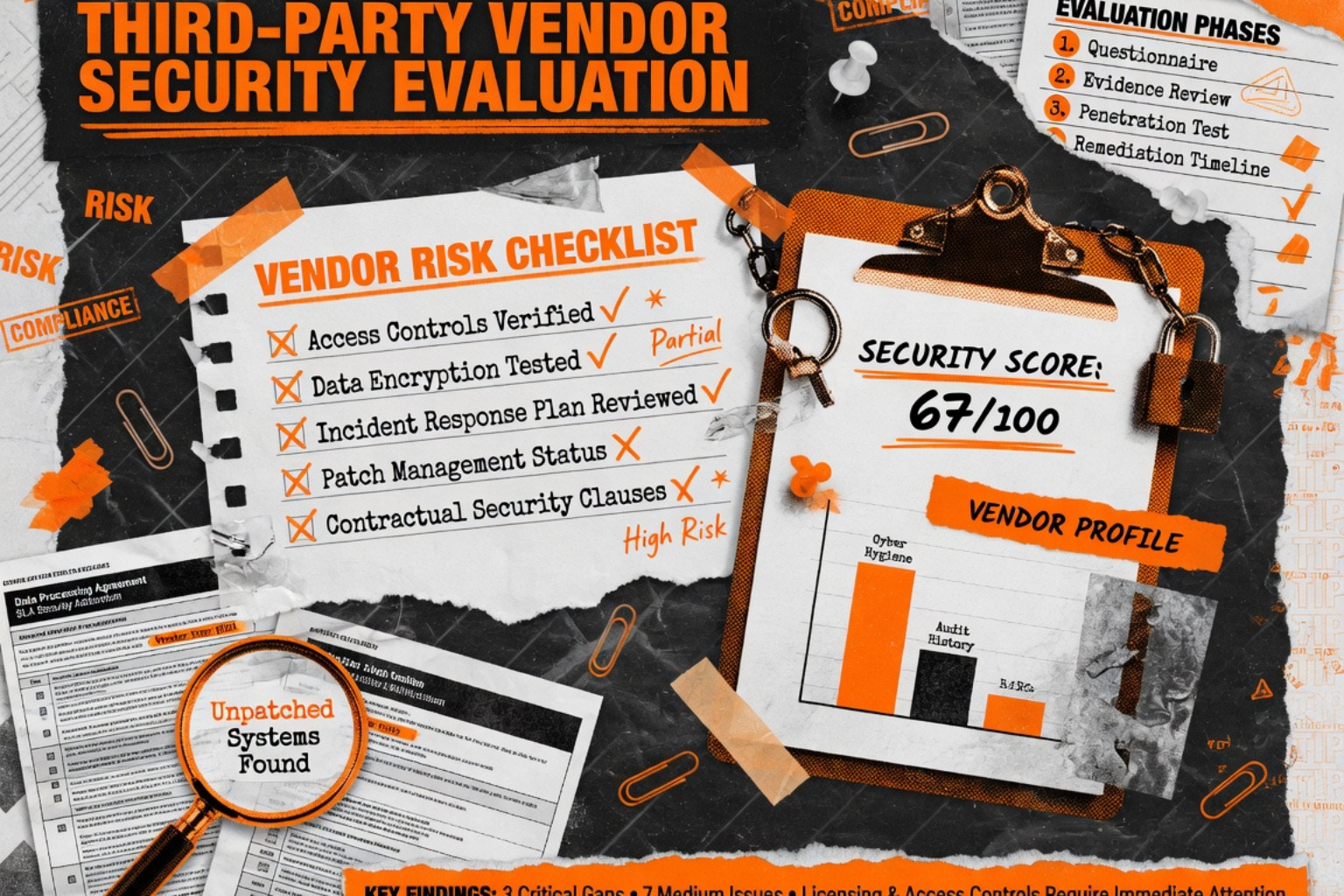
In June 2026, we are living in an era where the traditional enterprise perimeter is dead. Organizations rely on a massive web of cloud infrastructure, SaaS applications, and outsourced business processes. This hyper-connectivity has made third-party supply chains the primary target for modern threat actors.
Attackers have realized that breaching a Fortune 500 company directly is difficult. Why spend months trying to crack a heavily funded security operations center (SOC) when you can compromise a third-party file transfer utility or an outsourced IT helpdesk with direct, trusted access to the target network?
This shift in attacker behavior is documented in recent regulatory crackdowns. Regulators no longer accept the excuse of "it was our vendor's fault." If a vendor loses your data, you are legally and financially responsible.
Several key regulatory frameworks now mandate formal, continuous vendor evaluations:
- HIPAA / HITECH: Mandates that healthcare covered entities perform comprehensive due diligence on all Business Associates (vendors handling Protected Health Information).
- NYDFS Part 500: The New York State Department of Financial Services requires strict, written policies for third-party service providers, including mandatory multi-factor authentication (MFA) and encryption. In their latest guidance, they explicitly state that covered entities cannot delegate compliance responsibility to their vendors (see the NYDFS Industry Letter on Third-Party Risks).
- DORA (Digital Operational Resilience Act): This European framework forces financial entities to actively manage ICT third-party risk, including mapping fourth-party dependencies and conducting mandatory security testing.
- NIS2 Directive: Expands cybersecurity compliance requirements across European critical infrastructure, placing intense focus on supply chain security and vendor accountability.
Beyond regulatory fines, the operational impact of a third-party breach can be catastrophic. The 2023 MOVEit vulnerability exposed how a single zero-day in a widely used third-party tool can compromise hundreds of organizations simultaneously.
As highlighted in The Top Issues In Cybersecurity In 2025, supply chain security is no longer a secondary concern; it is a board-level issue that directly impacts business continuity and cyber insurance eligibility.
Key Components of a Vendor Security Evaluation
A comprehensive third-party vendor security evaluation must go beyond superficial compliance questionnaires. It requires a systematic investigation into the vendor's technical controls, data handling policies, and organizational security culture.
When evaluating a vendor, you must scrutinize their internal vulnerability management practices. Do they patch critical vulnerabilities within 24–48 hours, or do they operate on a relaxed monthly cycle? If they use open-source components, how do they track and remediate insecure dependencies, input validation flaws, and code injection risks?
Furthermore, you must evaluate:
- Fourth-Party Risk: Who are your vendor's vendors? If your SaaS provider outsources their database hosting to an unvetted subcontractor, your data is still at risk.
- Concentration Risk: Are too many of your critical business functions dependent on a single third-party provider or cloud region? If that provider goes down, does your business grind to a halt?
Technical Controls in a Third-Party Vendor Security Evaluation
The core of any evaluation lies in verifying the vendor's technical identity and access controls. You must demand proof of how they secure credentials and manage permissions.
- Identity and Access Management (IAM): Ensure the vendor enforces the principle of least privilege. What prevents a social engineering attack on their helpdesk from resulting in unauthorized access to your tenant? (For a deeper look, see Secure Iam Protecting Digital Identities And Access In A Zero Trust World).
- Multi-Factor Authentication (MFA): MFA must be mandatory and non-negotiable for all vendor employees, especially those with administrative access to your environment.
- Zero-Trust Network Access (ZTNA): Vendor access to your internal network should be restricted to isolated, session-recorded corridors rather than broad VPN tunnels.
- OAuth and API Security: Request a complete inventory of all OAuth integrations and privileged API relationships. How are these tokens rotated, monitored, and revoked? Broad, permanent tokens are an immediate red flag.
Data Protection and Incident Response in a Third-Party Vendor Security Evaluation
Once access controls are verified, you must evaluate how the vendor protects your data at rest and in transit, and how they respond when things go wrong.
- Data Encryption: Confirm the use of strong, modern encryption standards (such as AES-256 for data at rest and TLS 1.3 for data in transit).
- Data Isolation: In multi-tenant cloud environments, the vendor must prove logical segregation of customer data to prevent cross-tenant exposure.
- Incident Response Plans (IRP): Review the vendor's IRP. How do they detect breaches, and what are their communication protocols?
- Breach Notification SLAs: Your contract must contractually obligate the vendor to notify you of a security incident within a strict window (typically 24 to 72 hours of detection).
- Cyber Insurance: Verify that the vendor carries sufficient cyber liability insurance to cover the financial impact of a multi-customer data breach. The relationship between insurance and security operations is detailed in Cyber Insurance And Cybersecurity A New Era Of Shared Responsibility.
A Step-by-Step Framework for Conducting Vendor Evaluations
To build a scalable, repeatable evaluation program, your security team should implement a structured, phase-based framework. This prevents the security team from becoming a bottleneck during procurement while ensuring no risky vendors bypass review.
Phase 1: Vendor Inventory and Risk-Based Tiering
Do not treat all vendors equally. Assessing a local office supply vendor with the same rigor as a cloud-based EHR system is a waste of security resources. Instead, start by establishing a complete vendor inventory and categorizing them into risk tiers based on their inherent risk profile.
- Tier 1 (Critical Risk): Vendors with direct network access, hosting highly sensitive data (PHI, PII, financial records), or performing critical business functions. These require deep technical evaluations, manual evidence reviews, and continuous monitoring.
- Tier 2 (High/Medium Risk): Vendors with limited access to non-public data or secondary business systems. These require standard questionnaires and spot-check evidence verification.
- Tier 3 (Low Risk): Vendors with no access to sensitive systems or data (e.g., public marketing tools). These require basic screening and minimal ongoing oversight.
For a detailed breakdown of how to structure this initial phase, consult the vCSO.ai Third-Party Vendor Risk Assessment Guide.
Phase 2: Standardizing Questionnaires and Evidence Collection
Once a vendor is tiered, standardise your due diligence process. Do not rely on self-attestation alone; ask questions whose answers can be verified against independent, third-party evidence.
Utilize standardized industry frameworks to structure your questionnaires:
- SIG (Standardized Information Gathering): Managed by the Shared Assessments Group, SIG (or the condensed SIG Lite) covers 18 risk domains.
- CAIQ (Consensus Assessments Initiative Questionnaire): Developed by the Cloud Security Alliance, specifically tailored for evaluating cloud service providers.
In addition to questionnaires, collect and verify the following documentation:
- SOC 2 Type II Reports: Do not just look at the cover page. Read the actual report, check the scope of the audit (does it match the service you are buying?), and look for any noted exceptions in the testing of controls.
- ISO/IEC 27001 Certifications: Ensure the certification is current and covers the specific facilities and systems handling your data.
- Penetration Test Reports: Request executive summaries of recent independent penetration tests, verifying that high-risk findings have been remediated.
- Signed Attestations: Establish legal accountability by requiring a security executive to sign off on the accuracy of the questionnaire responses. For payment card environments, refer to the Third-Party Security Assurance guidelines to ensure compliance with PCI DSS Requirement 12.8.
Phase 3: Risk Scoring, Remediation, and Contractual Enforcement
After gathering evidence, calculate a formal risk score. A standard risk scoring formula multiplies the severity of a potential gap by its likelihood of exploitation:
Risk Score = Severity x Likelihood
If the vendor's risk score exceeds your organization's risk tolerance, do not immediately reject them. Instead, use a shared resolution console to track required remediations. For example, you might approve a vendor on the condition that they implement MFA for all administrative accounts within 30 days.
Finally, codify these requirements in the contract. Ensure your legal team includes essential security clauses:
- Right to Audit: The contractual right to perform annual security evaluations or on-site audits.
- Subcontractor Controls: Requiring your vendor to enforce the same security standards on any fourth-party subcontractors they engage.
- Termination and Data Return: Clear transition plans detailing how your data will be securely migrated or destroyed upon contract termination.
For a real-world example of how to structure this process, review the Google Vendor Security Assessment Process, which outlines how Alphabet manages supplier risk through a combination of external security ratings, targeted questionnaires, and mandatory design reviews.
Overcoming Common Challenges with Automation and Continuous Monitoring
Manual vendor management is fundamentally broken. Relying on spreadsheets and annual email check-ins creates a false sense of security. A SOC 2 report is a static, point-in-time snapshot; a vendor can pass an audit in January and completely degrade their security posture by June.
Furthermore, security teams face intense "questionnaire fatigue" from both sides, leading to rushed, inaccurate responses.
To scale your program, you must address these Overlooked Cybersecurity Threats by shifting from static, point-in-time assessments to continuous monitoring and automated workflows.
Leveraging Modern TPRM Platforms and AI
Modern Third-Party Risk Management (TPRM) and Vendor Risk Management (VRM) platforms can automate up to 80% of the evaluation lifecycle:
- Vanta & Panorays: Automate the collection of vendor security profiles, map controls to standard frameworks, and provide continuous external security ratings.
- Censinet RiskOps: Highly specialized for healthcare organizations, streamlining HIPAA and HITRUST compliance tracking across massive medical device and software vendor networks.
- Isora GRC: Provides centralized tracking, collaborative risk registers, and automated exception management workflows.
In 2026, the cutting edge of TPRM lies in AI-powered document analysis. Platforms like the VendorAuditAI GitHub Repository use advanced Retrieval-Augmented Generation (RAG) pipelines to ingest 200-page SOC 2 reports, instantly extract control implementations, and map them directly to compliance frameworks. This reduces manual review time from 8 hours to under 15 minutes.
For specialized platforms like autonomous pentesting operators, refer to the OWASP Vendor Evaluation Guide to evaluate them against strict scope enforcement and safety control standards.
Frequently Asked Questions about Third-Party Vendor Security Evaluations
How often should third-party vendor security evaluations be performed?
Reassessment frequency must be tied directly to the vendor's risk tier.
- Tier 1 (Critical): Evaluated continuously via automated external scanning tools, with a formal control review performed annually or quarterly.
- Tier 2 (Medium): Reassessed every 18 to 24 months.
- Tier 3 (Low): Reassessed only upon contract renewal or if there is a significant change in the scope of services provided.
Additionally, any major trigger event — such as a disclosed data breach, a change in the vendor's ownership, or the introduction of new AI-driven data processing features — should immediately trigger an out-of-cycle reassessment.
What is the difference between a vendor security evaluation and a vendor audit?
A vendor security evaluation is a collaborative, risk-focused assessment designed to identify potential security gaps and determine if a vendor meets your organization's risk tolerance before or during a relationship. It relies heavily on questionnaires, security ratings, and documentation reviews.
A vendor audit is a formal, evidence-based verification process. It is typically performed on-site or via direct system inspection to prove that the controls described in the evaluation are actually operating as intended. Audits are narrower in scope, highly structured, and usually reserved for critical Tier 1 vendors.
How do you handle a vendor that refuses to provide a SOC 2 report or complete a questionnaire?
If a critical vendor refuses to cooperate, you have three options:
- Request Alternative Evidence: Ask for an ISO 27001 certificate, an industry-specific attestation (like HITRUST or PCI AOC), or a recent external penetration test summary.
- Implement Compensating Controls: If you must use the vendor, isolate their access. For example, restrict their software to a dedicated, segmented network segment with zero access to your primary active directory.
- Risk Acceptance and Escalation: Document the unmitigated risks, calculate the potential business impact, and escalate the decision to your executive risk committee or CISO for formal sign-off. If the residual risk remains unacceptably high and no compensating controls are possible, you must be prepared to walk away from the contract.
Conclusion
Securing your organization in a highly interconnected digital ecosystem requires a shift from passive trust to active, continuous verification. A robust third-party vendor security evaluation program ensures that you maintain complete visibility over your external attack surface, protecting your data, your reputation, and your compliance posture.
While software and cloud integrations represent a major vector for third-party risk, physical access points are often overlooked.
This is where EveryKey bridges the gap. By integrating physical and digital access security, EveryKey's smart key technology ensures that zero-trust principles extend beyond cloud APIs to the physical endpoints and facilities your vendors interact with.
To learn more about modernizing your identity and access management architecture, read about A New Chapter for Access: Meet the New EveryKey on the Unlocked knowledge platform.