Comprehensive Guide to IT Security for MSPs
MSPs are prime targets because one breach unlocks dozens of clients. This guide covers IT security for MSPs—RMM hardening, Zero Trust, patching, backups, and framework alignment—to protect your clients and your business.

Why IT Security Tips for Managed Service Providers Matter More Than Ever in 2026
Here are the most critical IT security practices MSPs should implement right now:
- Enforce MFA on every account that touches client environments — treat all MSP accounts as privileged
- Apply least privilege access and review permissions regularly across all client systems
- Segment client networks from each other and from your internal MSP infrastructure
- Harden RMM and PSA tools with IP whitelisting, conditional access, and device trust requirements
- Maintain immutable, air-gapped backups and test recovery on a regular schedule
- Patch critical vulnerabilities within 14 days of disclosure — treat patching as a security control, not routine maintenance
- Retain logs for at least six months and centralize monitoring across all managed environments
- Document incident response plans and run tabletop exercises before you need them
- Define security roles clearly in contracts — ambiguity about who owns what creates dangerous gaps
- Don't reuse admin credentials across multiple clients — ever
Managed service providers sit at one of the most exposed positions in the modern IT supply chain. A single compromised MSP account doesn't just affect one business — it can cascade across every client environment that MSP manages simultaneously.
That exposure is exactly why attackers have made MSPs a primary target. Nine out of ten MSPs have suffered a successful cyberattack. State-sponsored groups like APT10 have specifically targeted MSP infrastructure to pivot into government and enterprise networks. Ransomware operators know that breaching one RMM platform can deploy payloads across dozens of SMBs in a single operation.
The challenge is compounded by a structural problem: many MSPs face the same resource constraints, talent shortages, and technology complexity as the small and medium-sized businesses they serve. They're expected to protect their clients while often running lean teams with limited security-specific expertise.
This guide cuts through that complexity. It covers the controls, frameworks, and operational practices that matter most — from Zero Trust architecture and identity threat detection to incident response, supply chain risk, and contractual transparency. Whether you're an IT administrator managing security alongside infrastructure duties or a CISO evaluating your MSP's security posture, the guidance here is grounded in NIST CSF 2.0, CIS Controls, and coordinated advisories from cybersecurity authorities across the US, UK, Australia, Canada, and New Zealand.
The Evolving Threat Landscape for Managed Service Providers
In May 2026, the threat landscape for Managed Service Providers has reached a point of high-velocity automation. According to the Protecting Against Cyber Threats to Managed Service Providers and their Customers | CISA advisory, threat actors increasingly view MSPs as "force multipliers" for their malicious activities. By compromising a single provider, they gain a gateway to dozens or hundreds of downstream victims.
The data supports this grim reality. Credential abuse remains the leading initial access vector, involved in roughly 22% of breaches. However, the nature of these attacks has shifted. We are seeing a massive surge in AI-driven phishing; 2025 data indicated that AI was involved in 16% of all breaches. Attackers now use Large Language Models (LLMs) to craft context-aware, hyper-personalized spear-phishing campaigns that bypass traditional signature-based email filters.
State-sponsored Advanced Persistent Threats (APTs), such as the notorious APT10 group, have historically targeted MSPs to steal intellectual property and sensitive government data. These groups don't just want to disrupt service; they want silent, persistent access to move laterally from the MSP’s management network into the client’s production environment. This makes the MSP a pivot point in the global supply chain, where a single vulnerability can have cascading effects across multiple industries.
For the small- and medium-sized businesses (SMBs) that rely on MSPs, the risk is existential. While a large enterprise might survive a ransomware event, many SMBs lack the capital to recover from the service disruption and reputational damage. To stay ahead, providers must internalize the Top Tips for Cybersecurity Pros: Practical Tips for Defending the Digital World in 2026, prioritizing fundamental hygiene over flashy, unproven tools.
Implementing Zero Trust: Essential IT Security Tips for Managed Service Providers
The "trust but verify" model is officially dead. In its place, MSPs must adopt a Zero Trust architecture. This means assuming that the network is already compromised and that every access request—whether it comes from inside the office or a remote technician—must be verified.
The foundation of Zero Trust for an MSP is FIDO2-based authentication. Traditional SMS or push-based MFA is no longer sufficient to stop sophisticated session hijacking or "MFA fatigue" attacks. By moving to hardware-backed or platform-based FIDO2 authenticators, MSPs can eliminate the risk of credential phishing.
Beyond authentication, MSPs should implement:
- Conditional Access: Access should only be granted if the device meets specific health requirements (e.g., encrypted disk, active EDR, current patch level).
- Micro-segmentation: Isolate client environments so that a breach in "Client A" cannot move laterally to "Client B."
- Identity Threat Detection and Response (ITDR): Modern stacks need to monitor for behavioral anomalies in identity providers (M365, Google Workspace, Okta). If a technician suddenly logs in from an unusual IP and begins exporting a global address list, the system should automatically revoke the session.
Offering these as part of a standard service package is no longer optional. Providers should review the Cybersecurity Solutions Every Managed Services Provider (MSP) Should Offer to ensure their stack aligns with 2026 expectations.
Core IT Security Tips for Managed Service Providers
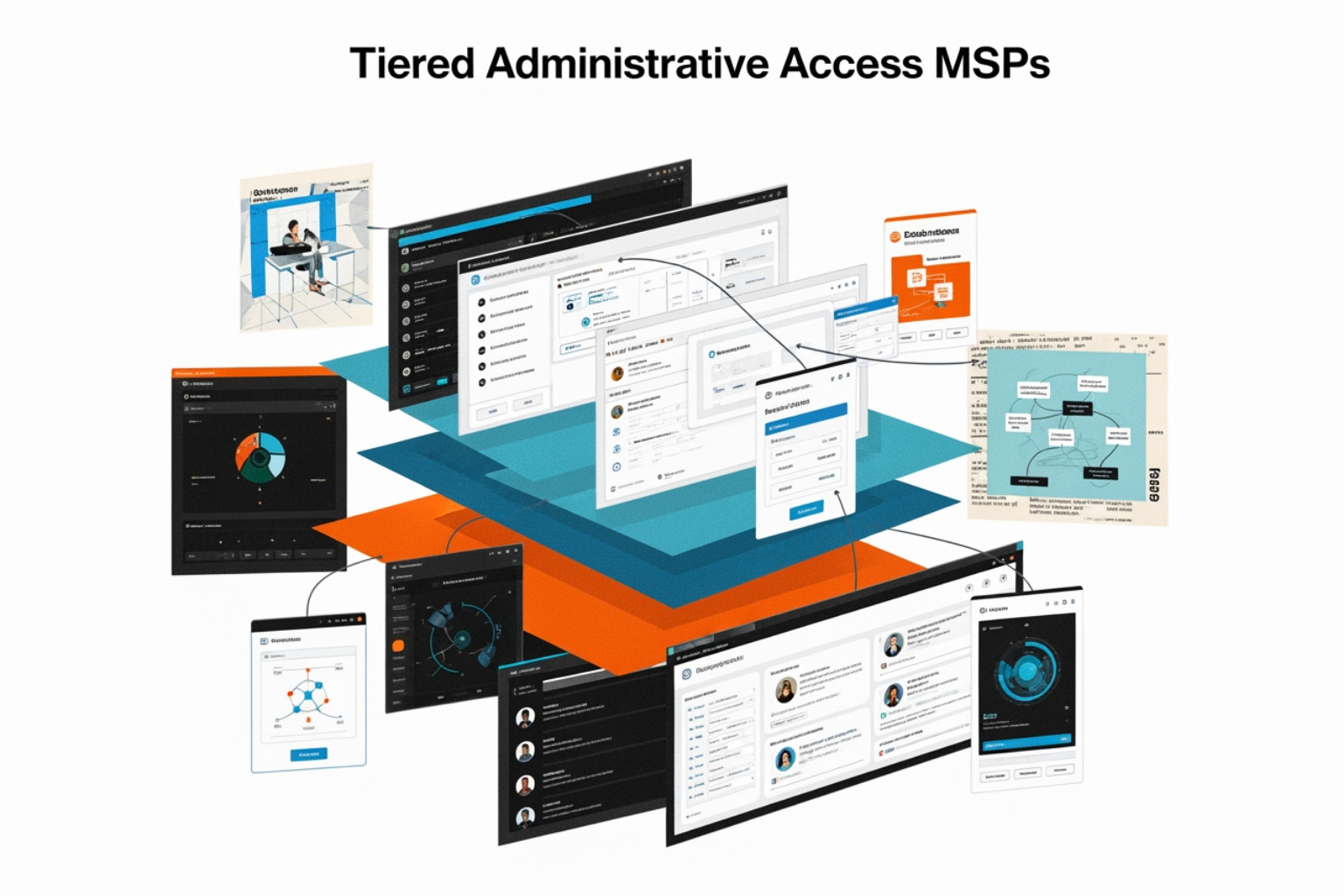
Securing an MSP requires a two-pronged approach: protecting the provider’s own infrastructure and securing the client’s environment. The most dangerous point of failure is often the provider’s toolset—specifically Remote Monitoring and Management (RMM) and Professional Services Automation (PSA) platforms.
RMM and PSA Hardening
RMM tools are effectively "legalized malware" if they fall into the wrong hands. They provide high-level administrative access to every managed endpoint. To harden these:
- IP Whitelisting: Restrict access to the RMM web console and API to known, trusted IP addresses (e.g., the MSP office or a dedicated VPN).
- Device Trust: Require that any device used by a technician to access management tools be a company-issued, managed device.
- Credential Tiering: Use a tiered model for administrative accounts. Domain admin credentials should never be stored or used within the RMM for routine tasks.
Automated Patch Management
Patching is a primary security control, not a background maintenance task. The MSP Cybersecurity Checklist: Protect Clients, Devices & Data recommends a 14-day window for critical patches. In 2026, with the speed of exploit development, waiting 30 days is an open invitation to attackers. Automation is key here; manual patching cannot scale across multiple clients without leaving gaps.
EDR/XDR and Vulnerability Scanning
Endpoint Detection and Response (EDR) or Extended Detection and Response (XDR) is now the baseline. Legacy antivirus is insufficient against fileless malware and living-off-the-land (LotL) attacks. Furthermore, MSPs must conduct regular vulnerability scans to identify "shadow IT"—unmanaged devices or unauthorized SaaS applications that clients have introduced to the network.
Investing in Cybersecurity Training: Building the Skills to Protect the Digital World ensures that staff can actually interpret the alerts these tools generate, rather than suffering from "alert fatigue."
Scaling Protection: Advanced IT Security Tips for Managed Service Providers
As an MSP grows, manual security processes become the biggest bottleneck. Scaling protection requires moving toward SaaS-based security platforms that offer multi-tenant visibility.
- Multi-tenant Visibility: A "single pane of glass" isn't just a marketing buzzword; it's a survival requirement. Technicians must be able to see the security posture of every client simultaneously to spot cross-client trends, such as a localized phishing wave.
- Automated Remediation: If an EDR detects ransomware on a client workstation at 3:00 AM, the system should automatically isolate that host and revoke the user's identity tokens before a human even wakes up.
- Configuration Drift Monitoring: Use automation to ensure that client environments stay compliant with the "Gold Image" or security baseline. If a client user disables MFA or opens a dangerous firewall port, the MSP should be alerted immediately.
By streamlining these processes, providers can demonstrate value more effectively. In fact, How MSPs Can Win More Clients by Offering Frictionless Access and Security highlights that the most successful MSPs are those that integrate security so deeply into the workflow that it feels invisible to the end-user.
Aligning with Frameworks: NIST CSF 2.0 and CIS Controls
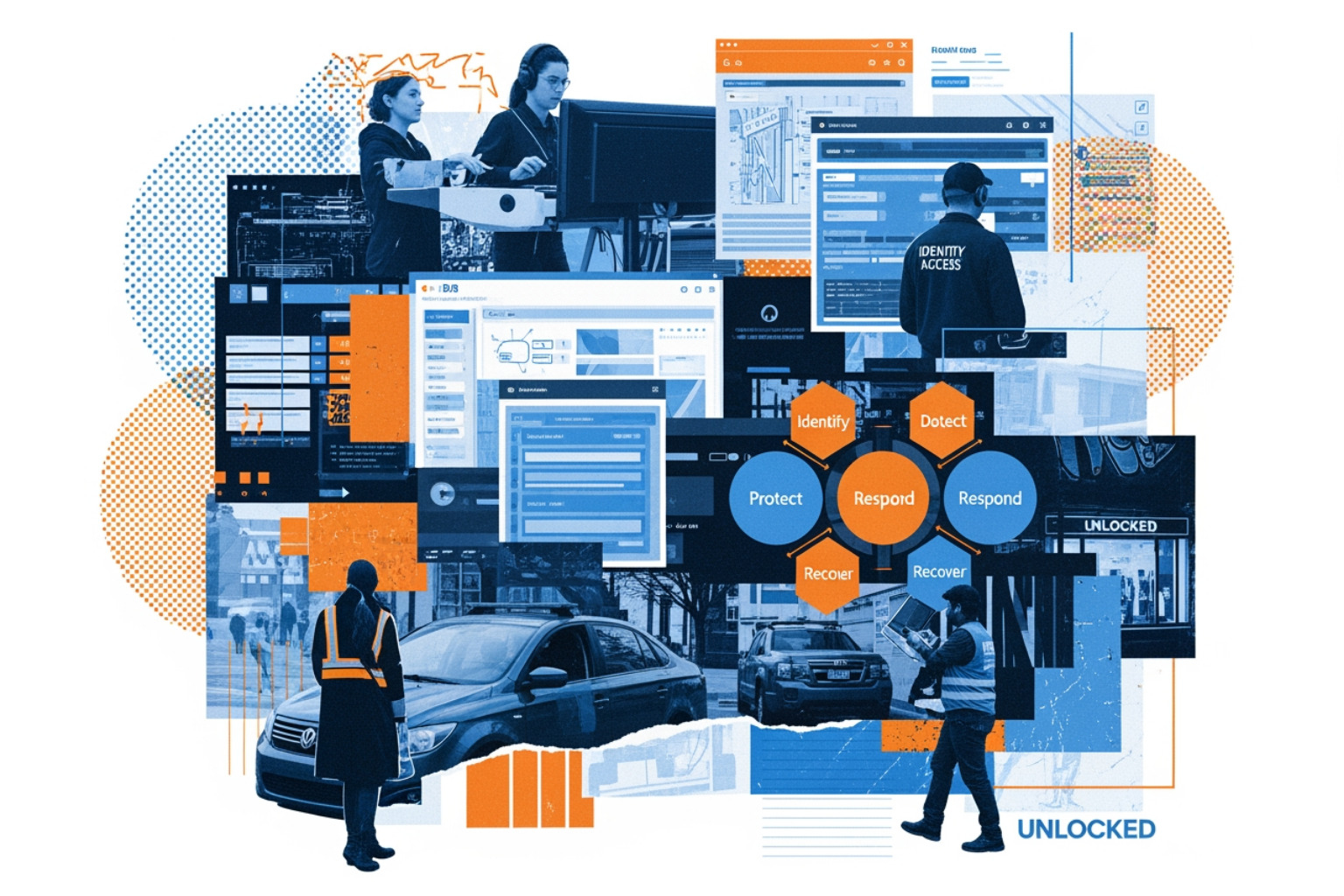
Ad-hoc security is no longer defensible. MSPs must align their operations with globally recognized frameworks like the NIST Cybersecurity Framework (CSF) 2.0 and the CIS Critical Security Controls.
NIST CSF 2.0 expanded the core functions to include "Govern," emphasizing that cybersecurity is a business risk, not just a technical one. For an MSP, this means:
- Identify: Maintain an accurate asset inventory for every client. You cannot protect what you don't know exists.
- Protect: Implement the identity and access controls discussed earlier.
- Detect: Ensure continuous monitoring and log aggregation.
- Respond: Have a documented, tested plan for when things go wrong.
- Recover: Focus on resilience and getting the business back online.
- Govern: Establish policies that dictate how risk is assessed and managed.
Mapping these controls to specific compliance requirements like HIPAA, GDPR, or ISO 27001 allows MSPs to provide "Compliance-as-a-Service," which is a high-margin offering. It also provides audit-ready evidence—a crucial asset when a client’s insurance provider asks for proof of security posture. Using a security posture scoring system can help translate technical jargon into a "letter grade" that business owners can easily understand and act upon.
Operationalizing Security: Incident Response and Supply Chain Risk
When an incident occurs, the difference between a minor hiccup and a total business collapse is the Incident Response Plan (IRP). MSPs must have an IRP for their own operations and a customized version for each client.
The 3-2-1-1-0 Backup Strategy
Backups are the ultimate safety net, but they are also a primary target for ransomware. The modern standard is the 3-2-1-1-0 rule:
- 3 copies of data.
- 2 different media types.
- 1 offsite copy.
- 1 immutable or air-gapped copy (cannot be changed or deleted).
- 0 errors after automated recovery testing.
| Backup Type | Recovery Time Objective (RTO) | Cost | Best For |
|---|---|---|---|
| Hot (Cloud Replication) | Minutes | High | Mission-critical databases |
| Warm (Disk-to-Disk) | Hours | Medium | File servers, application servers |
| Cold (Air-Gapped/Tape) | Days | Low | Long-term compliance, disaster recovery |
Forensic Readiness and Logging
Cybersecurity authorities recommend storing the most important logs for at least six months. This is because it often takes months for a breach to be detected. Without a historical log trail, it is impossible to determine the scope of the compromise or perform a proper forensic investigation.
Contractual Transparency
One of the most overlooked IT Security Tips for Managed Service Providers is the legal contract. The Choosing a managed service provider (MSP) | National Cyber Security Centre guidance emphasizes that contracts must clearly define roles and responsibilities. Use a RACI matrix (Responsible, Accountable, Consulted, Informed) to ensure there is no ambiguity about who is responsible for patching, who monitors the logs at 2:00 AM, and who pays for the forensic team in the event of a breach.
MSP vs MSSP: Strategic Differentiation in 2026
As security requirements grow, many traditional MSPs are evolving into—or partnering with—Managed Security Service Providers (MSSPs). The distinction is critical for resource allocation.
An MSP typically focuses on "keeping the lights on"—availability, performance, and general IT support. An MSSP focuses on "keeping the bad guys out"—security monitoring, threat hunting, and incident response.
The core of an MSSP is the 24/7/365 Security Operations Center (SOC). While an MSP might use a tool that sends an email alert when a virus is found, an MSSP has a team of analysts actively hunting for threats using a SIEM (Security Information and Event Management) platform. They integrate global threat intelligence to block emerging attack patterns before they hit the client's network.
For many providers, the best path forward is a hybrid model. By understanding the MSP vs MSSP: Understanding the Difference and Choosing the Right Partner, an MSP can decide whether to build a SOC in-house (which is incredibly expensive) or partner with a "Master MSSP" to provide those services to their clients. This allows the MSP to mitigate the talent shortage while still offering high-tier security value.
Frequently Asked Questions about MSP Security
Why are MSPs targeted by state-sponsored APT groups?
State-sponsored groups, such as those from Russia or China, target MSPs because they are high-value hubs. By breaching one provider, they gain access to a "supply chain" of victims. This allows them to conduct cyber espionage or deploy disruptive attacks across multiple sectors (government, defense, healthcare) simultaneously, all while using the MSP’s own legitimate administrative tools to hide their tracks.
How does network segmentation protect an MSP’s downstream clients?
Network segmentation (and specifically micro-segmentation) creates internal barriers within the network. If an attacker breaches the MSP’s internal office network, segmentation prevents them from "jumping" into the management plane that connects to client environments. Likewise, it ensures that a ransomware infection at one client site cannot travel through the MSP’s RMM tool to infect other clients.
What are the minimum security certifications an MSP should hold in 2026?
In 2026, the baseline "trust markers" are SOC 2 Type II and ISO 27001. These certifications prove that the MSP has had their internal security controls audited by an independent third party. For providers in the UK, Cyber Essentials Plus is often a mandatory requirement for government contracts. Holding these certifications is no longer just a "nice to have"—it is a prerequisite for working with mid-market and enterprise clients.
Conclusion
Securing a Managed Service Provider in 2026 is a continuous process of hardening, monitoring, and adapting. The transition from a "general IT" mindset to a "security-first" architecture is difficult, but it is the only way to survive in an era of AI-driven threats and sophisticated supply chain attacks.
By focusing on the fundamentals—FIDO2 authentication, Zero Trust principles, RMM hardening, and immutable backups—MSPs can protect both their own business and the clients who depend on them. As an independent knowledge resource, Unlocked is dedicated to providing the technical depth required to navigate this landscape.
For those looking to grow their business through better security, security is not a barrier to productivity—it is a facilitator of trust. As highlighted in How MSPs Can Win More Clients by Offering Frictionless Access and Security, the providers who can offer robust protection without hindering the client's workflow will be the ones who lead the market in the years to come.