
The Beginner's Guide to Cold Storage Security

How Cold Storage Authentication Protects Offline Crypto Keys
Cold storage authentication keeps private keys offline and requires a deliberate, verified signing process before assets can move. To protect high-value crypto keys:
- Generate and store the key on a device that does not connect to the internet.
- Build transactions on a separate online device.
- Transfer only the unsigned transaction by QR code or controlled removable media.
- Verify the recipient, amount, fees, and network on the offline device before signing.
- Keep encrypted backups and test recovery before storing significant funds.
This approach reduces the chance that malware, phishing, or a compromised browser can steal a private key remotely. It does not remove all risk: infected removable media, supply-chain compromise, physical theft, and side-channel attacks still matter.
Cold storage authentication combines key isolation with identity checks, transaction review, and recovery planning. For individuals, that may mean a hardware wallet and seed backup. For teams, it often means multi-signature approvals, defined signing roles, and an air-gapped vault workflow.
Essential Cold storage authentication terms:
- Hardware authentication
- Hardware security key for two factor authentication
- Modern authentication protocols
Current Threat Landscape Springboard
In May 2026, security researchers disclosed novel covert-channel exfiltration vectors targeting supposedly isolated signing environments. The findings demonstrated how acoustic signals generated by internal cooling fans (building on earlier proof-of-concept models like Fansmitter) and high-frequency power-line oscillations could leak 256-bit elliptic curve private keys from air-gapped endpoints in under thirty seconds once an initial staging malware compromise occurred via malicious USB firmware.
These attack techniques underscore a persistent defensive reality: severing a network cable does not create absolute immunity. Threat actors track high-value treasuries through supply-chain tampering, out-of-band side-channels, and physical interface exploitation. Protecting cryptographic assets requires moving beyond simplistic offline concepts toward rigorous authentication pipelines, deterministic memory handling, and formal physical security controls.
Fundamentals of Cold Storage Authentication and Threat Models
At its core, cold storage isolates secret key material from general-purpose computing environments. When keys reside on an internet-connected system, they inherit the vulnerability surface of the host operating system, network stack, active browser extensions, and background processes.
Offline systems mitigate these vectors by enforcing physical air gaps. In the context of MITRE ATT&CK, air gaps disrupt remote initial access (T1190) and command-and-control communication (TA0011). However, adversaries targeting cold storage shift their focus toward physical access (TA0009) and exfiltration over physical mediums.
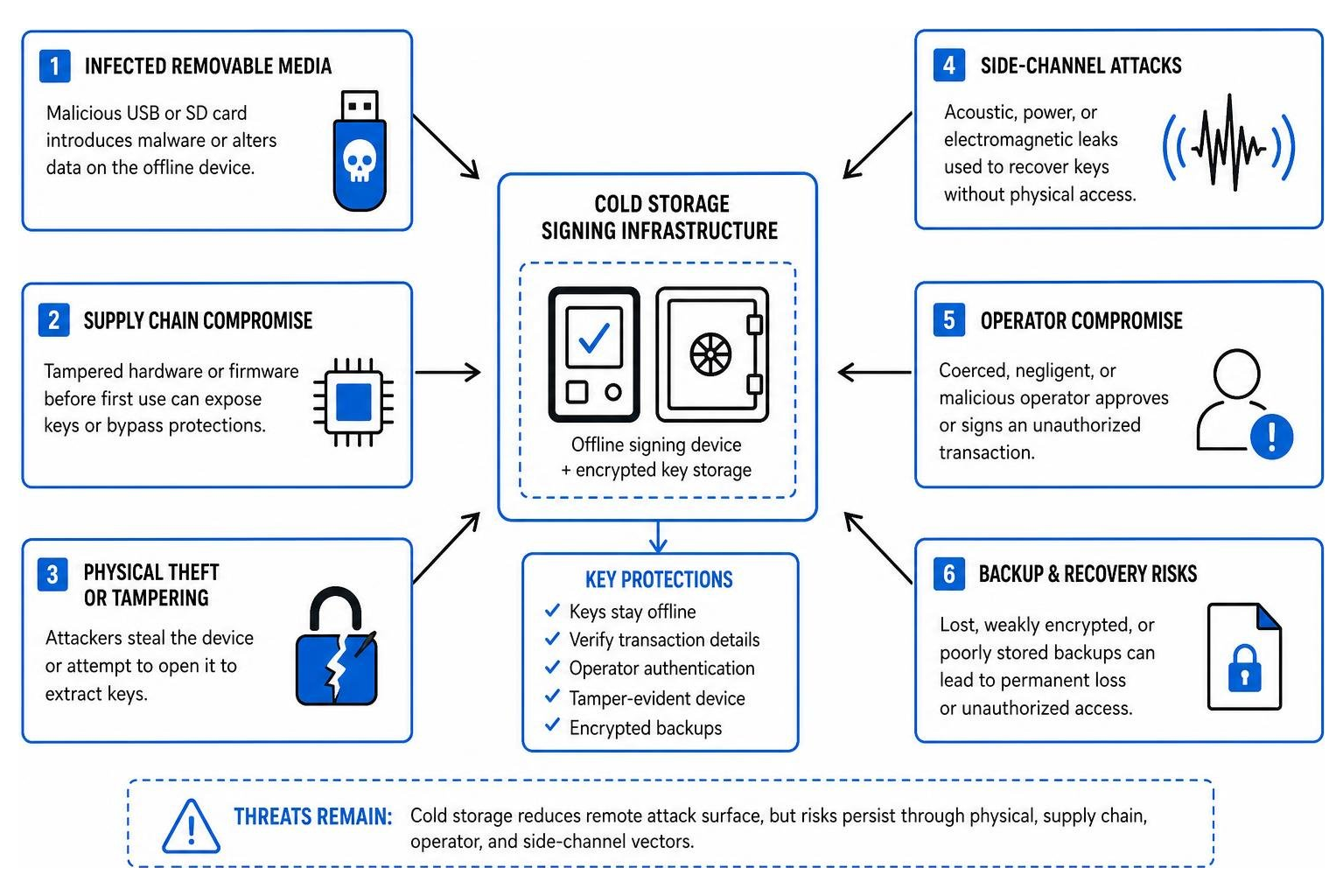
Robust security demands disciplined credential management strategies. Without verified operator authentication, tamper-evident hardware boundaries, and clean-room transaction preparation, an offline machine can still execute malicious payloads delivered via transient storage media.
Hot Wallets vs. Air-Gapped Cold Vaults
Hot wallets optimize for transaction throughput and programmatic access, making them standard for day-to-day liquidity and decentralized application interactions. Conversely, cold vaults and hardware security modules (HSMs) prioritize defense-in-depth and operational authorization, accepting manual latency to safeguard core reserves.
| Architecture Type | Network Connectivity | Attack Surface | Signing Latency | Key Exposure Profile | Primary Threat Vectors |
|---|---|---|---|---|---|
| Hot Wallet | Persistent (Broadband/5G) | High (Host OS, Memory Scraping, Web Exploits) | Sub-second | Continuous in system memory or software storage | Info-stealers, malicious smart contracts, session hijacking |
| Network HSM / Hot Vault | Restricted Private Subnet / VPN | Medium (API Gateway, Microcode vulnerabilities) | Milliseconds to seconds | Encrypted at rest, decrypted in tamper-resistant chip | Compromised API credentials, privilege escalation |
| Air-Gapped Cold Vault | Fully Isolated (Zero RF/NICs) | Low (Removable media, Covert physical channels) | Minutes to hours | Ephemeral RAM exposure or isolated Secure Element | Supply-chain interception, physical tampering, malicious USB media |
How Cold Storage Authentication Prevents Remote Key Exfiltration
By keeping non-volatile storage isolated from direct data networks, cold authentication systems force every inbound signing request and outbound cryptographic signature through a human-verifiable checkpoint.
Advanced hardware architectures mitigate physical and hardware-level exploits by implementing dual secure elements from independent silicon vendors, as seen in devices like the COLDCARD. This multi-vendor chip approach ensures that a zero-day hardware defect or microcode vulnerability in a single secure element is insufficient to extract the master root key.
Furthermore, dedicated cold-signing tools isolate key derivations completely within non-volatile secure enclaves or transient memory zones, blocking unauthorized write commands, preventing firmware overwrites without cryptographic developer signatures, and rendering conventional memory-dumping malware ineffective.
Core Cryptographic Protocols and Air-Gap Data Transfer Methods
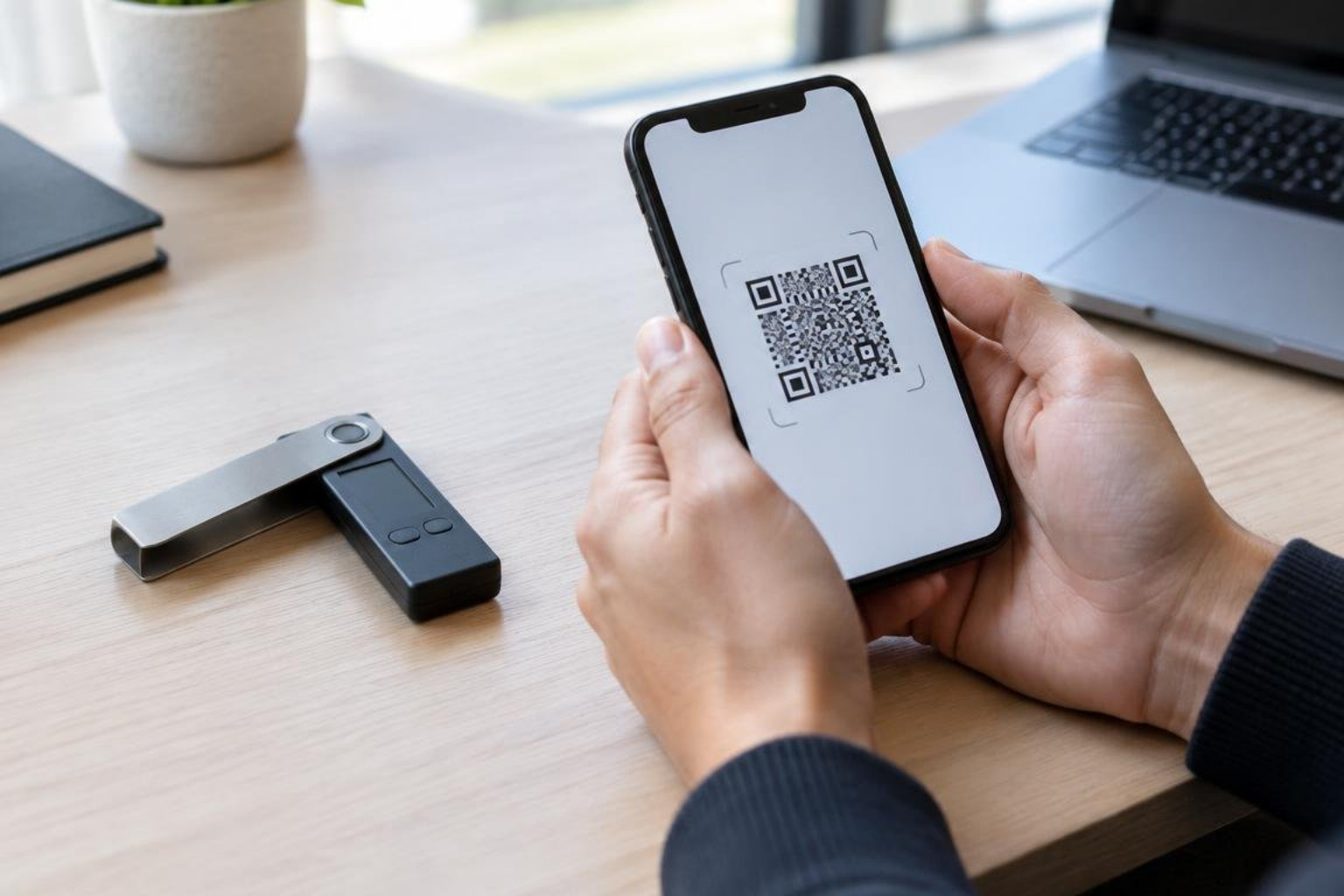
Maintaining the integrity of an air gap requires strict control over how data enters and exits the signing boundary. When organizations move payloads between systems using physical USB credential storage or optical links, the format and communication protocol must be minimal, parseable, and stateless.
Optical, QR, and Removable Media Transfer Protocols
Data transfer mechanisms across air gaps generally fall into two categories:
- Unidirectional Optical Transmission (QR Codes): Using integrated cameras and high-density dynamic QR codes eliminates all physical conductive pathways, preventing USB controller exploitation or malicious electrical signaling. Published patent research, such as US Patent 11451402, formalizes this mechanism by pairing an isolated cryptographic apparatus with an external interface via visual data hashes, ensuring the private key never traverses an electronic bus.
- Controlled Removable Media (MicroSD Sneaker-Net): Structured files (such as Partially Signed Bitcoin Transactions or serialized JSON manifests) are written to formatted flash media, transferred manually, and parsed by the isolated signer. Firmware on the offline device must strictly validate the file system structure to prevent parser exploits.
Memory Hardening and Microsecond Key Exposure
Software-based cold signing systems, such as the open-source Coldstar architecture, protect keys on standard computing hardware by minimizing the exposure window in volatile memory.
Keys are stored on an encrypted physical medium using symmetric ciphers like AES-256-GCM. Passphrases undergo key derivation through memory-hard algorithms such as Argon2id (configured with at least 64 MB of RAM and 3 processing iterations) to render specialized ASIC brute-force attacks computationally infeasible.
During execution, the private key is decrypted within an operating system memory region locked using the mlock() system call, preventing the OS kernel from writing sensitive memory pages to an unencrypted swap partition on disk.
The software decrypts the key only for the precise duration of the signature computation—often a window of roughly 100 microseconds—before actively scrubbing the allocated RAM with explicit zeroization routines (such as Rust's zeroize crate). This mitigates cold-boot and forensic memory acquisition attacks.
Step-by-Step Guide: Establishing an Offline Signing Workflow
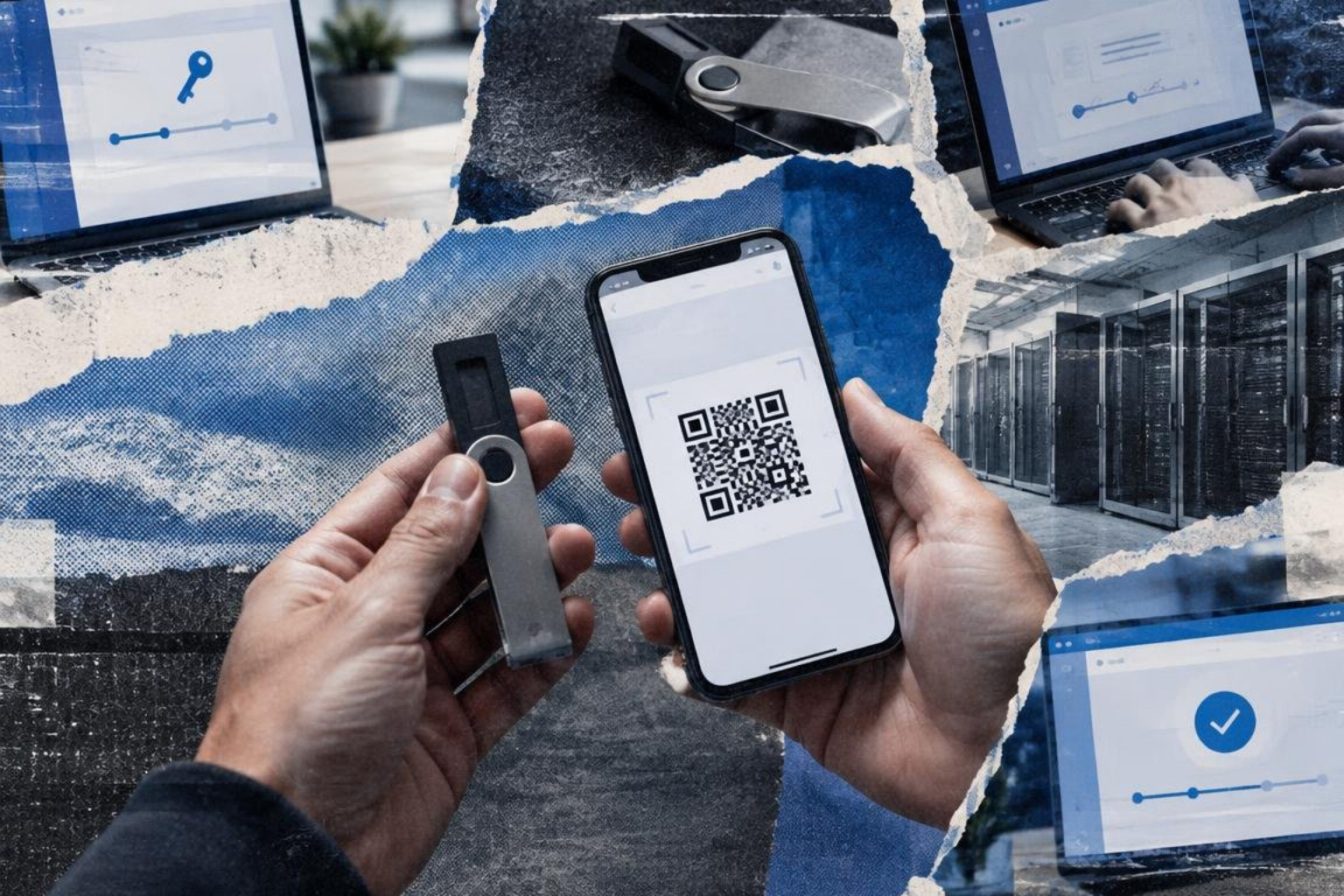
Implementing a resilient cold storage process requires following a structured four-stage transaction lifecycle. While enterprise environments use dedicated policy engines, the core operational sequence remains consistent across hardware signers and secure offline computers.
Step 1: Secure Key Generation and Physical Seed Isolation
- Initialize the signing device inside an offline, visually secure environment free from recording devices or RF transceivers.
- Generate entropy using verifiable physical methods (such as physical dice rolls) combined with hardware-grade true random number generators (TRNGs).
- Derive the master seed according to established standards (e.g., BIP-39), applying an optional high-entropy passphrase (often referred to as the 25th word) to protect against physical device theft.
- Record the backup phrase onto durable, non-corrosive metal plates rather than paper or digital text files, storing them across geographically dispersed, access-controlled locations.
- Execute a test recovery on an isolated staging setup with a negligible test balance before committing production assets.
Step 2: Unsigned Payload Construction and Offline Bridge Export
Transactions must never originate on the signing device itself because constructing network-compliant transactions requires querying blockchain state, checking gas/fee rates, and parsing unspent transaction outputs (UTXOs).
- Construct the transaction using an online watch-only wallet, coordinator application, or API interface.
- Compile the parameters into an unsigned payload, such as a Partially Signed Bitcoin Transaction (PSBT) or a structured
.datmanifest file. - Export the payload using an offline data bridge or save it onto an isolated, formatted transfer card.
Step 3: Biometric and Multi-Factor Identity Verification
Before the air-gapped environment signs the payload, the operator must authenticate locally to prevent unauthorized execution by a malicious physical possessor.
Organizations achieve this using a combination of local knowledge factors, hardware security key implementations, and biometric sensors:
- Biometric Identity Binding: On-device fingerprint or optical sensors hash local biometric scans, validating the user without leaking biometric templates outside the hardware boundary.
- Time-Based One-Time Passwords (TOTP): Systems operating in specialized administrative modes enforce RFC-6238-compliant TOTP codes generated on isolated devices, establishing strong multi-factor authentication protocols.
- Role Validation: Operational frameworks integrate strict identity verification policies, aligning with modern identification frameworks to verify that the individual holding the device possesses active operational authorization.
Step 4: Air-Gapped Signature Execution and Broadcast
- Ingest the unsigned payload into the isolated signing device via optical scan (QR) or the controlled media interface.
- Review the transaction parameters on the device's independent physical display, verifying:
- Output destination addresses match the authorized recipient character-by-character.
- The transacted value and network mining/gas fees match approved change values.
- The recipient chain ID and network protocol match intended destinations.
- Authorize the signing algorithm (e.g., Ed25519 or Secp256k1) to process the hash in secure memory.
- Export the resulting cryptographic signature back to the online interface via reverse optical QR scan or transfer media.
- Ingest the signed payload into the online node and broadcast it to the distributed network.
Enterprise Governance and HSM Policy Management
Managing institutional capital or sensitive master signing credentials requires replacing single-custodian configurations with multi-layered governance architectures. Enterprise password storage best practices emphasize that administrative credentials and cryptographic root seeds should never exist in a state where a single operator can compromise the treasury.
Implementing Enterprise-Grade Cold Storage Authentication Policies
Enterprise custody platforms, such as Ripple Custody cold vaults, decouple policy management from signature generation.
Air-gapped transaction verification is controlled through strict operational guardrails:
- Multi-Signature Quorums: Requiring M-of-N approvals (e.g., 3-of-5 independent cryptographic signers located in separate physical facilities) eliminates single points of failure.
- Granular Command Whitelisting: Operating hardware systems in dedicated HSM modes, such as the COLDCARD USB protocol for HSM mode, enforces deterministic command filters. The device programmatically drops arbitrary read/write requests, honoring only explicit commands like transaction signing (
stxn) or public key export (xpub). - Velocity Controls and Time-Locks: Cryptographic policies enforce strict volume limits per epoch (e.g., maximum transfers per 12-hour window) and mandate on-chain or smart-contract time-locks, providing security teams time to intervene if an unauthorized signing request occurs.
- Hardware-Level User Management: Managing authorized signers directly inside the hardware enclave—utilizing the COLDCARD user management framework—allows administrators to assign isolated credentials, PIN prefixes, and TOTP seeds for up to 30 unique operators without revealing the underlying master key.
Disaster Recovery and Master Key Backup Procedures
A secure storage design must ensure business continuity during hardware failure, physical destruction, or personnel changes.
- Cryptographic Seed Splitting: Implement Shamir’s Secret Sharing (or SLIP-39 standards) to break the master secret into multiple cryptographic shards. Reconstructing the seed requires reaching a predefined quorum threshold, ensuring no single backup location exposes the unencrypted phrase.
- HSM Master Key Management: For infrastructure backed by enterprise HSMs, securely store the Master Component Keys (MKCs) in smart cards protected by dual-custody PIN envelopes.
- Configuration Backups: Maintain encrypted, version-controlled backups of vault policy manifests, user whitelists, and derivation pathways, isolated from production network drives.
- Periodic Recovery Drills: Conduct scheduled, read-only disaster recovery simulations bi-annually to confirm that recovery shares are accessible, key shares have not degraded physically, and personnel understand their assigned roles.
Frequently Asked Questions About Cold Storage Security
How does optical communication enhance air-gapped security?
Optical communication transfers structured transaction payloads purely through visual light patterns (such as dynamic QR codes) parsed by an integrated camera module. This completely eliminates physical electrical contacts, USB data pins, Bluetooth stacks, and Wi-Fi chipsets.
Because optical links cannot carry electrical bus commands, malicious software cannot execute buffer overflow exploits against hardware controller chips or establish unauthorized two-way network tunnels.
What are the main covert-channel risks for offline storage?
Covert channels bypass standard physical security controls by using out-of-band physical mediums to exfiltrate bits of information.
The primary channels observed in offensive security research include:
- Electromagnetic Emissions: Malware modulating CPU or GPU load to generate radio frequency signals picked up by nearby software-defined radios (e.g., AirHopper).
- Acoustic Transmissions: Manipulating chassis cooling fans or internal speakers to transmit high-frequency audio signals to compromised recording devices.
- Optical Signaling: Modulating power indicator LEDs or screen backlight flickers to transmit data optically to line-of-sight cameras.
- Power Line Variations: Fluctuating CPU power consumption to send signals across shared electrical wiring (e.g., PowerHammer).
Mitigating these attacks requires physical shielding (such as Faraday enclosures), disabling unnecessary LEDs and audio hardware, and enforcing strict physical perimeters around sensitive signing systems.
How does memory zeroization protect cryptographic keys?
When software decrypts an encrypted private key into random-access memory (RAM) to sign a hash, that plain-text data remains in physical memory cells until overwritten. If the system crashes or an unhandled exception occurs, the operating system may write those memory pages to a crash dump or swap file on non-volatile storage.
Memory zeroization actively overwrites these memory addresses with zeros or pseudorandom bytes immediately after the signature calculation finishes. Using specialized primitives like Rust’s zeroize crate prevents the compiler from optimizing away memory-clearing operations, preventing both post-execution memory dump analysis and cold-boot physical attacks.
Conclusion
Protecting offline cryptographic credentials demands an end-to-end framework combining hardware isolation, disciplined payload transfer, and strict identity verification. As threat actors refine supply-chain attacks and covert-channel exfiltration techniques, organizations and individuals must match their defenses by treating transaction authorization as an auditable, multi-stage pipeline.
Whether deploying enterprise cold vaults or securing private digital holdings, long-term resilience relies on combining physical isolation with next-generation authentication and security keys. By enforcing rigorous verification checkpoints, limiting memory exposure to microsecond windows, and validating every payload independently, you ensure your private keys remain secure against both remote network intrusions and targeted physical attacks.