
Leading IAM Solutions 2025/2026: Identity and Access Platforms Shaping the Future of Enterprise Security
The leading IAM solutions of 2026 — a comparison of identity and access management platforms covering privileged access, identity governance, and the features enterprises need to enforce least-privilege at scale.


Identity and access management (IAM) solutions are essential for organizations striving to secure their digital environments and manage user identities effectively, ensuring that only authorized users have access to sensitive information and applications.
This guide is tailored for IT decision-makers, security professionals, and enterprise architects who need to stay ahead of evolving threats and regulatory demands. Understanding the leading IAM solutions for 2025/2026 is crucial for these audiences, as it empowers them to make informed choices that protect organizational assets, streamline compliance, and future-proof their security infrastructure.
The demand for identity and access management (IAM) solutions has grown essential for organizations as they scale and adopt multi-cloud architectures. By 2026, the IAM market is projected to grow to approximately $25.7 billion as enterprises invest in platforms that manage digital identities, automate user provisioning, and enforce access policies. According to latest analysis from Gartner, the integration of identity fabric into broader security operations is a primary driver for this market expansion.
Leading IAM solutions for 2025 and 2026 focus on Zero Trust architecture, AI-driven automation, passwordless authentication, and securing non-human identities. The market is shifting toward identity-centric security and Zero Trust architectures to combat cyber threats.
Key Concepts Defined:
- Zero Trust Architecture: A security model that assumes no user or device, inside or outside the organization, should be trusted by default. Instead, every access request must be continuously verified, minimizing the risk of unauthorized access and lateral movement within networks.
- AI-Driven Automation: The integration of artificial intelligence into IAM platforms to automate tasks such as onboarding, access provisioning, and real-time access decisions, reducing manual workloads and improving security responsiveness.
- Passwordless Authentication: A method of verifying user identity without traditional passwords, often using biometrics, passkeys, or device-based authentication. By 2026, passwordless authentication is expected to become mainstream, marking a significant shift in how organizations secure access.
- Non-Human Identities: Digital identities assigned to machines, applications, API keys, and service accounts. By 2026, these machine identities are projected to far outnumber human users, making their management and security a top priority for IAM solutions.
IAM tools help organizations keep control by scaling with the business and centralizing how access is granted, monitored, and secured. Identity management tools are essential for rapid deployment, seamless integration, and enhanced security in modern IAM strategies. Choosing the right IAM solution is important for securing your organization’s digital assets.
Introduction to Identity and Access Management
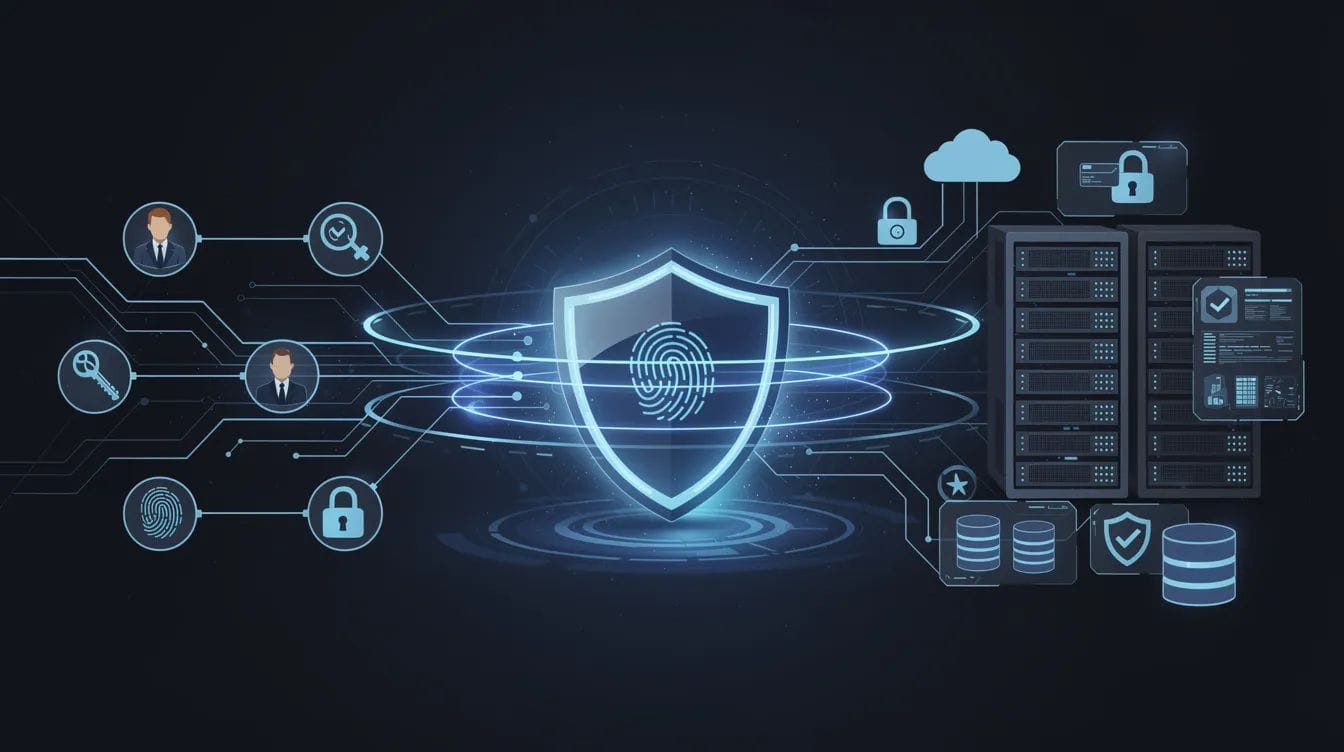
Identity and Access Management has emerged as the cornerstone of enterprise cybersecurity strategies, giving organizations essential capabilities to govern user identities and regulate access to mission-critical resources. Modern IAM platforms create a security foundation that ensures only legitimate users reach sensitive data, applications, and infrastructure — a critical defense against the escalating threats of data breaches and unauthorized access. These solutions merge access management, identity governance, and sophisticated access controls into unified platforms that streamline user identity oversight while enforcing security policies across complex, hybrid environments.
Core capabilities like role-based access control, multi-factor authentication, and access certification provide security teams with the tools needed to properly manage user identities, distribute access rights appropriately, and reduce attack surface exposure. With digital identities growing increasingly intricate across cloud and on-premises systems, IAM technologies have become indispensable for organizations seeking to maintain operational control, satisfy regulatory requirements, and safeguard their most critical digital assets.
Leading IAM Solutions 2025/2026
The leading IAM solutions 2025 & 2026 help organizations manage digital identities, enforce access control policies, and secure hybrid and cloud environments. Identity and access management (IAM) solutions are essential for organizations striving to secure their digital environments and manage user identities effectively. Modern IAM platforms combine identity governance and administration, privileged access management, and automated access lifecycle processes to ensure that only authorized users access sensitive data and enterprise systems.
By 2026, over 60% of enterprises are expected to adopt Zero Trust frameworks. Deploying advanced IAM platforms and Zero Trust frameworks may require significant technical expertise for initial setup and ongoing management. Zero trust frameworks demand continuous verification rather than one-time authentication, reshaping IAM practices. Organizations often look toward the National Institute of Standards and Technology (NIST) for the definitive standards on Zero Trust Architecture.
The next generation of IAM platforms includes features such as AI-based identity analytics, identity threat detection and response, and secure IAM frameworks for zero trust environments, along with automated access reviews. Identity Threat Detection and Response (ITDR) capabilities are being integrated into IAM platforms to autonomously respond to identity-based attacks.
Access Management
Access management ensures that organizations can regulate and monitor how user identities interact with enterprise systems. IAM solutions streamline access management processes, ensuring that only authorized users access sensitive data and tools through sophisticated role-based access controls. Organizations manage user identities and focus on managing user access through centralized identity manager platforms that control authentication, authorization, and access lifecycle tasks.
IAM tools ensure precise identity verification through advanced authentication methods, manage user information and organizational structures via comprehensive directory services, and enforce precise access controls through refined authorization policies, making a modern IAM tool for enterprise security a foundational requirement.
Multi-factor authentication (MFA) is a critical feature of modern IAM solutions to strengthen security. Comprehensive multi factor authentication use cases demonstrate how requiring additional verification beyond passwords reduces security risks across industries. Single sign on sso enables users to access multiple applications while maintaining secure identity verification. Modern IAM solutions must support passwordless authentication to enhance security and user experience. 2026 is viewed as the inflection point for passkeys and passwordless authentication.
Access Control
Access control ensures that organizations can regulate which users and systems interact with enterprise resources. Role based access control allows organizations to grant access privileges based on job functions, reducing unnecessary permissions and improving identity security. Organizations are moving from manual, static role-based access control to dynamic, policy-driven access control. Fine grained access control enables IT teams to define precise access policies that determine exactly which resources a user can access.
Just-in-time (JIT) access provisioning is a modern IAM feature that ensures users receive permissions only when needed. Just in time access is a secure access control approach that grants users temporary, needs-based permissions for specific resources, supporting least privilege and automating access workflows. Just-in-time (JIT) access ensures users and services only receive the permissions they need, exactly when they need them, and those permissions expire automatically. This approach significantly reduces the risks associated with excessive privileges and long-standing access rights.
Access Management IAM
Access management IAM platforms enable organizations to manage user access across diverse IT environments. IAM solutions can be deployed on-premises, in the cloud, or in hybrid environments, and a complete guide to IAM security and access management can help organizations choose the right approach. The integration of IAM tools with existing systems is crucial for ensuring seamless user experiences and maintaining security across diverse environments. Deep integration capabilities with existing systems and applications are crucial for modern IAM solutions.
Your chosen IAM solution must seamlessly integrate with existing systems and applications within your IT infrastructure. This integration allows organizations to manage user identities and access privileges across multiple applications, APIs, and infrastructure environments. Modern IAM platforms also include robust API access management to control and secure API interactions as part of their broader identity solutions. The Cybersecurity & Infrastructure Security Agency (CISA) provides extensive documentation on how these integrations secure critical infrastructure.
Compliance Reporting
Compliance reporting is a critical component of modern IAM platforms. IAM solutions help organizations comply with regulatory requirements by enforcing security policies and providing audit trails for user activities. Many industries have strict data security and privacy regulations, and IAM solutions make it easier to meet these standards by providing reliable access logs and controls. IAM solutions should provide automated access reviews and certifications to streamline compliance processes.
Organizations are increasingly focusing on automating access reviews and certifications to enhance compliance and reduce manual workloads. Compliance alignment with regulations such as GDPR, HIPAA, and SOX is a necessary feature of modern IAM solutions. Automated compliance reporting and audit trails provide visibility into user access requests, administrative tasks, and policy enforcement.
Cloud Environments
IAM platforms play a central role in securing modern cloud environments. IAM solutions can significantly reduce the likelihood of users relying on weak or default passwords, effectively minimizing the associated risks. IAM platforms are increasingly integrating AI to automate onboarding, access provisioning, and real-time access decisions. AI-driven governance and automation are expected to reduce the strain on help desks by automating onboarding and provisioning by 2026. Real-time access visibility is a key feature that allows organizations to monitor user identities and privileges effectively.
Cloud infrastructure entitlement management is increasingly important for managing access privileges across complex cloud environments, making disciplined user access management practices essential to prevent privilege sprawl.
Machine identities, including API keys and service accounts, are expected to far outnumber human users by 2026, amplifying the need for robust identity security strategies that cover both human and non-human accounts. Non-human identity (NHI) management is critical as service accounts, API keys, and tokens represent a significant attack surface in organizations. AI agents are becoming first-class identities in IAM, with non-human identities outnumbering human identities in many enterprises.
Access Management Tools
Modern access management tools combine authentication, authorization, and identity lifecycle management. Lifecycle management is essential in IAM solutions to automate user onboarding, role changes, and offboarding. Automated user provisioning enables organizations to grant access quickly while maintaining centralized control. Organizations are increasingly adopting self service access requests and automated approval workflows to simplify access management processes. These capabilities reduce routine tasks for IT teams and ensure access lifecycle tasks are handled efficiently.
Access management tools also support privileged access management to secure privileged accounts and administrative tasks. Modern solutions also include centralized password management, automating password-related workflows and enhancing security across the identity lifecycle, often by leveraging SCIM-based user provisioning automation to keep accounts and entitlements in sync. For those looking for technical specifics, the System for Cross-domain Identity Management (SCIM) official site offers deep dives into these automation standards.
Privileged identity management ensures that elevated permissions are granted only when required.
IAM Solutions
Several IAM solutions dominate the enterprise identity management landscape.
Okta
Okta is one of the leading providers of IAM solutions, focusing on simplifying user access and enhancing security across various applications and services.
Okta supports identity lifecycle management, single sign on, and automated user provisioning for organizations managing multiple SaaS applications.
Microsoft Entra
Microsoft Entra IAM is designed to address the complexities of modern digital environments and enhances security, streamlines user experiences, and facilitates compliance across various platforms.
If an organization is fully cloud-native, traditional Active Directory may play a smaller role in IAM solutions. However, many organizations still require robust Forefront Identity Manager and Microsoft Identity Manager integrations for active directory management, administrative tasks, workflow automation, and compliance within hybrid environments.
Microsoft Entra integrates identity verification, access governance, and hybrid identity capabilities.
CyberArk
CyberArk Workforce Identity provides secure, frictionless access to applications, endpoints, and critical infrastructure, focusing on access management, identity governance, and privileged access management.
CyberArk also delivers advanced privileged access management capabilities designed to secure privileged accounts.
SailPoint
SailPoint IdentityIQ is a solution designed for complex enterprises, focusing on identity governance, compliance, and security, providing a robust framework to manage user identities throughout their lifecycle.
SailPoint is considered the industry standard for Identity Governance and Administration (IGA), with a focus on compliance and auditing.
IBM
IBM offers a range of Identity and Access Management solutions, primarily through IBM Security Identity and Access Manager (ISAM) and IBM Verify, designed to help organizations manage user identities and control access to resources.
JumpCloud
JumpCloud serves mid-market, remote-first organizations looking for a unified cloud directory for identity and device management.
ConductorOne
ConductorOne is an AI-native identity security platform designed to streamline and secure access management processes in organizations, integrating seamlessly with existing identity providers and infrastructure. An identity provider (IdP) is responsible for verifying user identities and issuing authentication assertions, serving as a critical component within IAM architecture to enable secure user authentication and access.
Risotto
Risotto is an IAM solution that operates directly within existing tools like Slack, allowing employees to request access without leaving their workflow and deploying in hours instead of weeks or months.
Deel IT
Deel IT is designed for teams that hire and scale globally, blending HR-driven identity lifecycle with instant, secure access, ensuring the right access is granted from day one and revoked the moment someone leaves.
Ping Identity
Ping Identity is a flexible, API-driven IAM solution well-suited for hybrid environments. It offers adaptive authentication, extensive integration capabilities, and modern security features to support organizations with complex identity and access management needs.
Access Governance
Access governance helps organizations maintain visibility and control over identity permissions and access privileges. Organizations should assess their user base, which includes employees, customers, partners, and non-human entities, when selecting an IAM solution. Non-Human Identity governance is becoming a priority as NHIs are projected to outnumber human accounts in most enterprises.
AI-based identity analytics can enhance IAM solutions by detecting anomalies and recommending least privilege access. Modern IAM platforms are increasingly integrating AI-based identity analytics to detect anomalies and recommend least privilege access. Access governance platforms also support access certifications and automated access reviews. Real-time identity monitoring helps organizations identify abnormal user behavior and potential security threats.
Access Management Solutions
Choosing among access management solutions requires evaluating business requirements, infrastructure, and scalability. Understanding the scale of your enterprise is fundamental when selecting an IAM solution. Clearly outlining your security objectives will influence the complexity of the IAM solution you choose.
Evaluating features like lifecycle management and access controls is important to prevent unauthorized access and boost efficiency. Organizations should ensure users are granted only the access necessary for their roles — no more, no less — to maintain security and compliance.
Organizations should consider whether they have the necessary financial, human, and technical resources to implement and manage the IAM system effectively. Organizations aiming to enhance their security should adopt an IAM solution tailored to their specific needs. Deep integration capabilities, identity lifecycle processes, and compliance reporting features are essential for enterprise IAM solutions.
Device Management
Device management is increasingly integrated into IAM solutions as organizations seek unified identity and endpoint security. Unified endpoint management capabilities allow organizations to secure devices alongside user identities. Platforms like JumpCloud combine identity management with device management for distributed workforces. Managing device access helps ensure that only trusted endpoints can access corporate applications and sensitive data.
Enhance Security
IAM platforms play a major role in helping organizations enhance security and protect digital identities. IAM solutions can significantly reduce the likelihood of users relying on weak or default passwords, effectively minimizing the associated risks. IAM platforms enforce access policies, identity verification, and secure authentication to prevent unauthorized access.
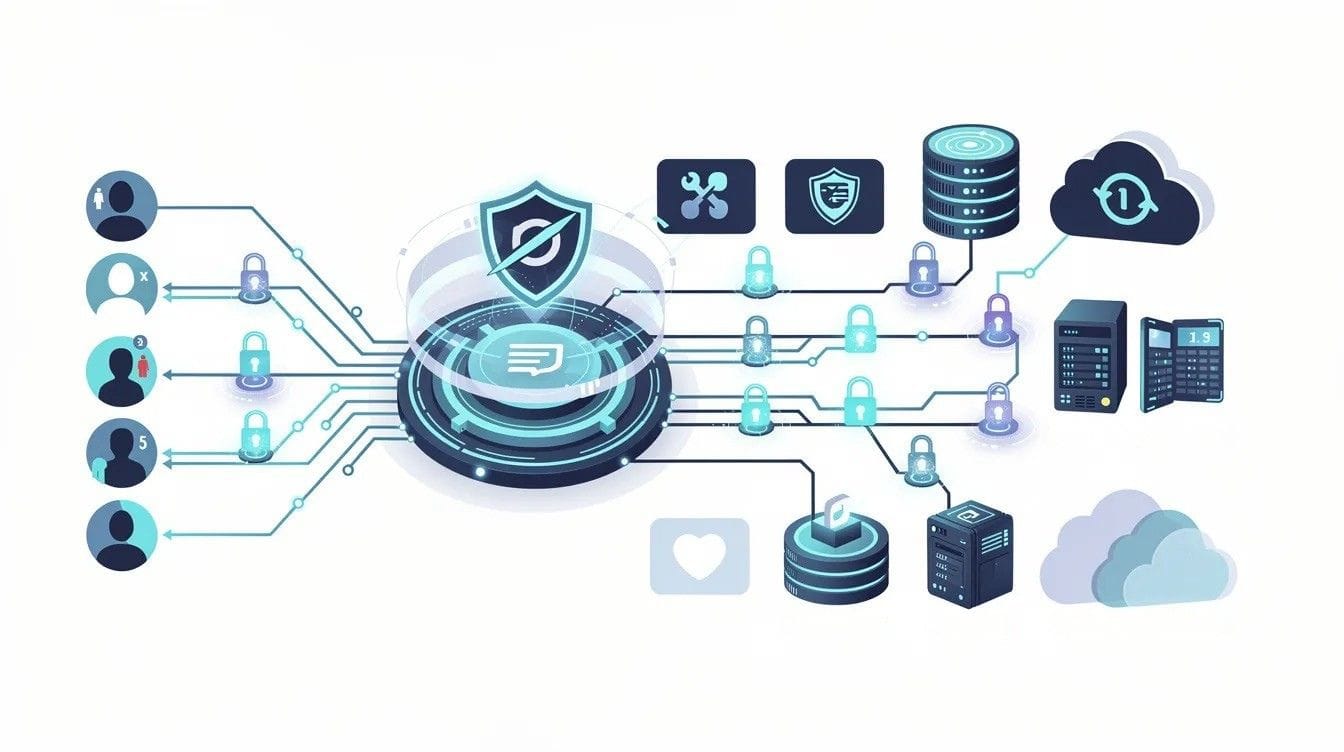
Organizations that invest in identity security tools gain stronger control over digital identities, access privileges, and access management processes. Many organizations also extend IAM strategies with passwordless authentication technologies that make secure access easier for employees.
For example, EveryKey enables passwordless authentication through proximity and presence detection, allowing users to access their devices and applications when their trusted phone is nearby. This type of approach aligns naturally with Zero Trust principles because identity is continuously confirmed rather than assumed. When integrated alongside enterprise IAM platforms, technologies like EveryKey can simplify authentication while maintaining strong identity verification.
IBM Security Identity
IBM Security Identity remains a major player in enterprise IAM. IBM offers a range of Identity and Access Management solutions, primarily through IBM Security Identity and Access Manager (ISAM) and IBM Verify, designed to help organizations manage user identities and control access to resources. These tools help organizations manage digital identities, enforce access policies, and maintain compliance with security and compliance requirements across complex enterprise environments. IBM platforms support identity governance, privileged access management, and access lifecycle tasks, making them well suited for organizations with diverse IT environments and complex enterprise environments.
Implementation and Integration
Building a robust IAM solution isn't just about deploying new software — it demands a strategic mindset that meshes seamlessly with an organization's existing tech stack and security posture. The real challenge lies in weaving IAM capabilities into established systems like Active Directory, HR platforms, and increasingly complex cloud environments, creating a unified approach to automated user provisioning and access governance.
Security teams know that the integration phase can make or break an IAM deployment, particularly when juggling legacy applications alongside modern cloud-native tools. When done right, automated provisioning eliminates the manual bottlenecks that plague IT departments while slashing the human error factor that often creates security gaps. The payoff extends beyond just tighter security controls — organizations that nail their IAM integration typically see dramatic improvements in user productivity and satisfaction, transforming what was once a security necessity into a genuine competitive advantage that justifies every dollar of the initial investment.
Security Objectives and Resource Needs
Assessing Security Priorities
Organizations grappling with today's expanding attack surface are discovering that IAM solution selection demands a strategic approach that goes far beyond checking feature boxes. The reality is stark: enterprises must first nail down their security priorities and honestly assess what they're working with before diving into deployment. Think about it — protecting sensitive data, locking down digital identities, and managing access privileges aren't just buzzword goals; they're the core drivers that should shape every IAM decision.
Understanding User Landscape
Smart organizations dig deep into their user landscape, examining who needs what level of access and just how sensitive their data really is.
Resource Allocation
But here's where many stumble: resource allocation. The skilled personnel, infrastructure investments, and budget commitments required don't end at go-live — they extend throughout the platform's operational lifetime. When enterprises properly match their IAM solutions to both security objectives and realistic resource capabilities, they build robust identity protection that actually works in the real world without grinding operations to a halt.
Selection Criteria
Selecting an effective IAM solution requires security teams to navigate a complex landscape of features, scalability demands, and integration challenges that can make or break an organization's security posture.
Core Functionality
The most successful deployments prioritize platforms that deliver comprehensive access management alongside robust identity governance capabilities and streamlined user provisioning workflows.
Compliance Capabilities
Multi-factor authentication support, access certification processes, and automated compliance reporting have become non-negotiable requirements — particularly as regulatory scrutiny intensifies across industries.
Integration Compatibility
Integration compatibility often determines success or failure, since even the most feature-rich IAM platform becomes a liability if it can't mesh seamlessly with existing infrastructure and legacy systems. Security leaders who apply a systematic evaluation framework — weighing core functionality against compliance capabilities and digital identity management requirements — position their organizations to deploy IAM solutions that strengthen security controls, optimize resource allocation, and support long-term strategic objectives, especially when aligning with modern Zero Trust best practices.
Best Practices for IAM
Security teams grappling with the complexity of modern digital environments increasingly recognize that robust IAM strategies form the backbone of effective cybersecurity defense. The implementation of role-based access control has emerged as a critical foundation, limiting user permissions to precisely what their job functions require — a principle that significantly reduces the attack surface when insider threats or compromised credentials come into play. Multi-factor authentication, once considered an optional security enhancement, now represents a non-negotiable layer of protection as threat actors continue to exploit weak authentication mechanisms across enterprise networks. Organizations that conduct regular access reviews and certification processes find themselves better positioned to maintain compliance standards while identifying dormant accounts and excessive privileges that could serve as entry points for malicious actors.
Clear governance policies around user provisioning and access management create the operational framework necessary for consistent security posture, particularly as remote work and cloud adoption expand the traditional network perimeter. Perhaps most critically, continuous monitoring and auditing capabilities enable security teams to detect anomalous behavior patterns and respond to potential breaches before they escalate into full-scale incidents. When executed comprehensively, these IAM practices collectively strengthen an organization's ability to protect digital identities while adapting to the constantly shifting threat landscape that defines contemporary cybersecurity.
Future-Proof Your Identity Infrastructure
Identity and access management has become the foundation of modern enterprise security architecture.
Leading IAM solutions for 2025 and 2026 are evolving rapidly to support Zero Trust security architectures, AI-driven identity governance, passwordless authentication, and the growing need to manage non-human identities.
Organizations that invest in scalable IAM platforms gain centralized control over user identities, access privileges, and access management processes. These tools help organizations secure sensitive data, meet compliance requirements, and manage digital identities across increasingly complex IT environments.
As the IAM market continues to expand, selecting the right platform will remain one of the most important decisions for organizations seeking to strengthen identity security and enable seamless access across their infrastructure.
FAQ
What are the leading IAM solutions for 2025 and 2026?
- Okta
- Microsoft Entra
- CyberArk
- SailPoint IdentityIQ
- IBM Security Identity
- JumpCloud
- ConductorOne
- Risotto
- Deel IT
Why are IAM solutions important for enterprises?
IAM solutions help organizations manage digital identities, enforce access control policies, and ensure that only authorized users can access sensitive data and applications.
What features should organizations look for in IAM platforms?
Key features include identity lifecycle management, automated user provisioning, multi factor authentication, single sign on, access governance, compliance reporting, and privileged access management.
What is identity governance and administration?
Identity governance and administration focuses on controlling and auditing user access through access reviews, certifications, and compliance reporting.
What trends are shaping IAM in 2025 and 2026?
Major trends include AI-driven identity analytics, passwordless authentication, non-human identity governance, identity threat detection and response, and the adoption of Zero Trust architectures.