Cybersecurity Offerings Defining Enterprise Protection in 2026
Network security, cloud security, endpoint protection, threat intelligence, and managed services — a guide to cybersecurity offerings for enterprise in 2026.

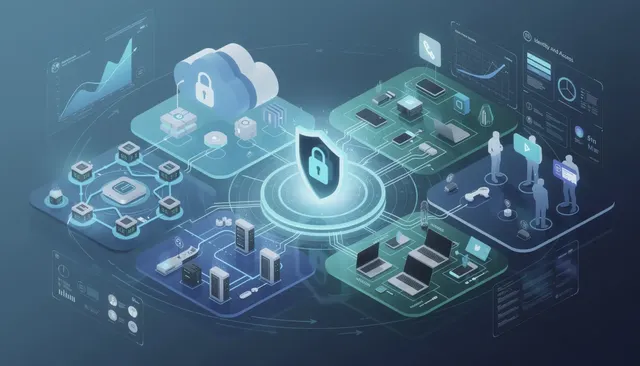
Cybersecurity Offerings
Cybersecurity offerings span several key areas including Network Security, Cloud Security, Endpoint Security, Application Security, and Information Security. These core offerings form the foundation of a comprehensive cybersecurity strategy for modern enterprises:
- Network Security: Network Security secures communication infrastructure using firewalls, VPNs, IDS/IPS, and network segmentation to block unauthorized access and malware.
- Cloud Security: Cloud Security protects data, applications, and infrastructure in cloud environments using specialized tools.
- Endpoint Security: Endpoint Security guards user devices like laptops and phones with antivirus, Endpoint Detection and Response (EDR), and Mobile Device Management (MDM).
- Application Security: Application Security secures software from vulnerabilities through secure coding practices, Web Application Firewalls (WAFs), and vulnerability scanning.
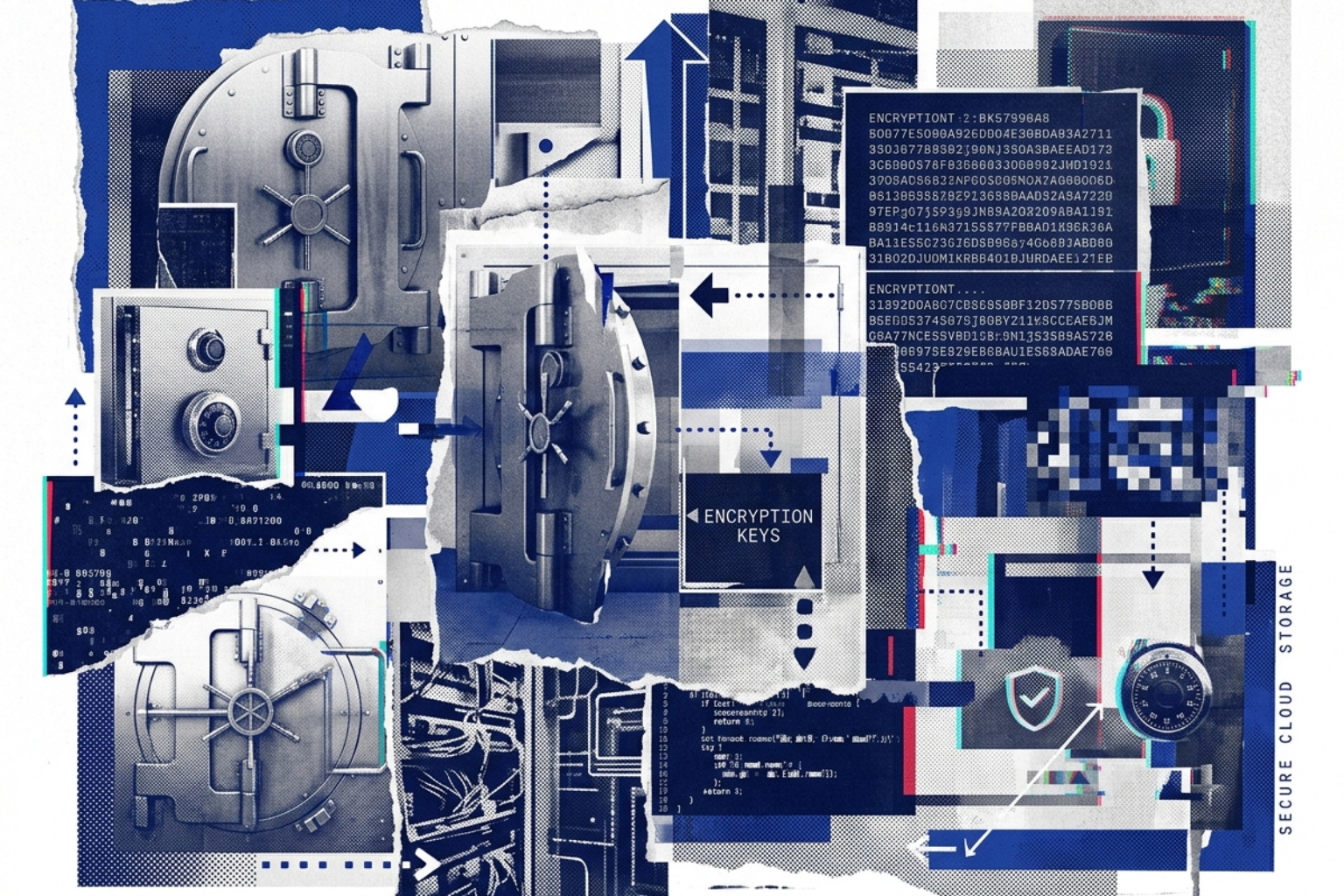
- Information/Data Security: Information/Data Security ensures the confidentiality, integrity, and availability of data through Data Loss Prevention (DLP), encryption, and access controls.
Cisco is recognized as a leader in the cybersecurity industry and has expanded its capabilities in network detection and response, cloud security, and zero-trust architectures through strategic acquisitions.
Modern cybersecurity offerings emphasize cyber resilience, focusing on the ability to quickly detect, contain, and recover from breaches. Organizations are moving away from isolated tools toward integrated security capabilities that reduce complexity and improve response.
These foundational offerings set the stage for understanding the broader context and importance of cybersecurity in today’s enterprise landscape.
Introduction
Cybersecurity offerings have expanded rapidly as organizations face a growing range of threats across cloud, network, identity, and endpoint environments. This article is for enterprise IT leaders, security professionals, and decision-makers seeking to understand the cybersecurity offerings shaping enterprise protection in 2026. Understanding these offerings is critical for building resilient, future-proof security strategies.
The cybersecurity industry is a broad and dynamic field, marked by its complexity and various categories, and the market is booming — offering many options for organizations. However, selecting the right mix of cybersecurity services has become more complex than ever.
Cybersecurity threats are continuously evolving, necessitating an expansion of security measures. Failing to keep pace with the evolving nature of cybersecurity threats can have dire consequences for organizations. In 2026, enterprise leaders are prioritizing cybersecurity offerings that support resilience, detection, and response while integrating cleanly with existing infrastructure.
This article explores the cybersecurity services and security solutions shaping enterprise protection in 2026, with a focus on access, detection, response, and operational effectiveness.
Cybersecurity Services
Cybersecurity services address various aspects of data, systems, or network security. Cybersecurity services are used to assess, identify, and remediate risks to data security and business operations. Experience working with clients across multiple industries is crucial for delivering effective cybersecurity offerings, as it enables providers to tailor solutions to diverse needs and challenges.
Cybersecurity services are designed to assess, identify, and remediate risks to business operations. These services help organizations fortify their defenses and optimize threat response, especially when internal security resources are limited. For example, Tenable focuses on reducing the attack surface for clients through solutions that include vulnerability management and cloud security.
Managed and advisory services play a growing role as organizations seek expertise to keep pace with emerging threats.
These services are complemented by ongoing security operations, which are discussed in the next section.
Security Services
Security services provide ongoing protection, monitoring, and response across environments. Implementing robust cybersecurity practices helps reduce vulnerability to data breaches and unauthorized access.
These security services are specifically designed to keep customers' businesses safe from evolving threats, ensuring that organizations remain business safe and resilient in the face of cyber risks.
A proactive approach to security is essential for businesses to defend against modern security challenges. Organizations must take a proactive approach to security to avoid dire consequences from security breaches.
Transitioning from security services, organizations can further enhance their defenses by leveraging threat intelligence, which is explored in the following section.
Threat Intelligence

Threat intelligence enables organizations to understand known vulnerabilities, attacker behavior, and emerging risks. Effective threat intelligence feeds detection and response systems and improves decision making across security operations.
Dark web monitoring, vulnerability intelligence, and attack pattern analysis allow security teams to prioritize defenses and remediation.
As organizations gather and act on threat intelligence, many turn to managed security services for continuous protection, which is detailed next.
Managed Security Services
Managed Security Services (MSSP) outsource security operations, monitoring, and incident response. For many enterprises, managed security services provide 24 by 7 coverage, threat detection, and rapid response capabilities.
MSSPs are increasingly integrated with SIEM, SOAR, and XDR platforms to centralize visibility and accelerate response.
Understanding the impact of security breaches underscores the importance of these managed services, as discussed in the next section.
Security Breach Impact
A security breach can lead to financial loss, a damaged reputation, and legal ramifications for businesses. Cybersecurity is essential for maintaining business operations during cyber incidents.
Developing a business continuity plan is crucial to keep operations running in case of a cyber attack. Proactive cybersecurity measures help organizations mitigate risks and protect against various cyber threats.
To address these risks, enterprises must adopt comprehensive security strategies, as outlined in the following section on enterprise security.
Enterprise Security
Enterprise security focuses on protecting users, systems, and data across complex environments. Enterprise security strategies must support growth, innovation, and hybrid operations without slowing the business.
Centralized control and continuous protection across branches, devices, and hybrid users enhance security and operational efficiency.
A key component of enterprise security is secure access, which is explored in the next section.
Secure Access
Secure access has become a cornerstone of modern cybersecurity offerings. Identity and Access Management (IAM) manages user identities and controls their access to resources, incorporating Multi Factor Authentication and Single Sign On.
Zero Trust is a security model that assumes no user or device is trusted by default and requires continuous verification. Zero Trust Architecture has evolved into Continuous Identity Verification, which leverages behavioral biometrics for user verification throughout a session.
This shift toward identity centric access is where solutions like EveryKey quietly fit. By confirming identity through presence and proximity rather than repeated prompts, access becomes simpler while remaining dependable.
With secure access in place, organizations must also focus on the operational side of security, as detailed in the next section.
Security Operations
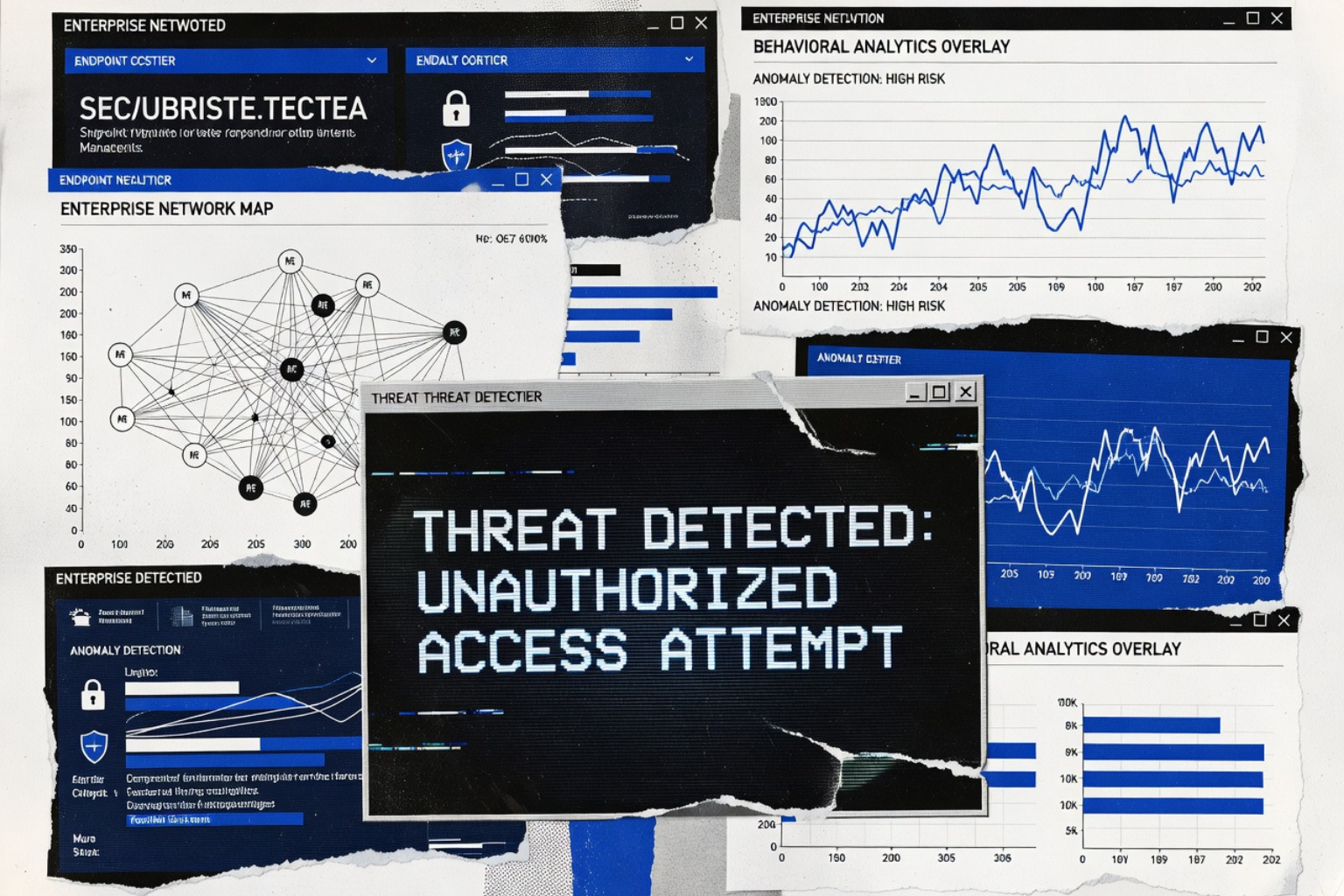
Security operations teams rely on centralized visibility and automation. SIEM centralizes logs and utilizes AI driven analytics for anomaly detection and compliance fulfillment.
SOAR automates repetitive security tasks using playbooks, improving response speed and reducing analyst fatigue. XDR unifies telemetry from various sources to streamline investigation processes.
Security operations are closely linked to network security, which is the next area of focus.
Network Security
Network Security secures communication infrastructure using firewalls, VPNs, IDS/IPS, and network segmentation to block unauthorized access and malware.
Palo Alto Networks is known for its strong next generation firewalls and endpoint detection and response products. Fortinet is recognized for its leadership in next generation firewalls and unified threat management.
Cisco provides a hybrid mesh firewall that applies distributed, optimized enforcement with unified management across hybrid enterprises.
Check Point is a pioneer in firewall technology and offers a complete security portfolio that ranks highly in independent security tests. Check Point offers a unified cybersecurity platform called Quantum Titan that provides AI enhanced network security and advanced threat prevention.
AT&T Dynamic Defense is an automated cybersecurity tool designed to detect and block threats before they reach the firewall.
Network security is just one layer; organizations must also consider endpoint and application security, as discussed in the following sections.
Cybersecurity Solutions
Cybersecurity solutions combine multiple layers of defense against threats such as malware and unauthorized access, enhanced by AI and machine learning for improved detection.
Endpoint Security guards user devices like laptops and phones with antivirus, Endpoint Detection and Response (EDR), and Mobile Device Management (MDM).
Bitdefender
Bitdefender offers a unified solution for enterprise security that includes advanced endpoint protection and cloud workload security. Bitdefender offers the GravityZone platform, which includes advanced endpoint protection and cloud workload security.
CrowdStrike
CrowdStrike is known for its strength in endpoint protection and offers solutions for extended detection and response. CrowdStrike provides solutions for extended detection and response, vulnerability management as a service, and cloud security posture management.
Trend Micro
Trend Micro is noted for its high value and ease of use across a portfolio of security tools. Trend Micro offers a portfolio of tools including antivirus, full disk encryption, and cloud workload protection platforms.
IBM
IBM is recognized for its research depth, particularly in areas like homomorphic encryption and unified endpoint management. IBM is recognized for its advanced encryption solutions and unified endpoint management.
Darktrace
Darktrace is recognized for its AI powered security solutions and is trusted by organizations worldwide.
When evaluating vendor recognition and credibility, it is important to note that Gartner is a registered service mark, which adds legal standing and authority to its vendor assessments.
With these solutions in place, organizations can further strengthen their security posture by adopting a Zero Trust approach, as described next.
Zero Trust
Zero Trust continues to influence cybersecurity offerings in 2026. Identity, device posture, and behavior are evaluated continuously rather than assumed.
This approach aligns with modern access models that emphasize verification without friction, especially for distributed teams and cloud environments.
Detection and response capabilities are essential in a Zero Trust environment, as detailed in the next section.
Security Solutions for Detection and Response
Detection and response remain core capabilities.
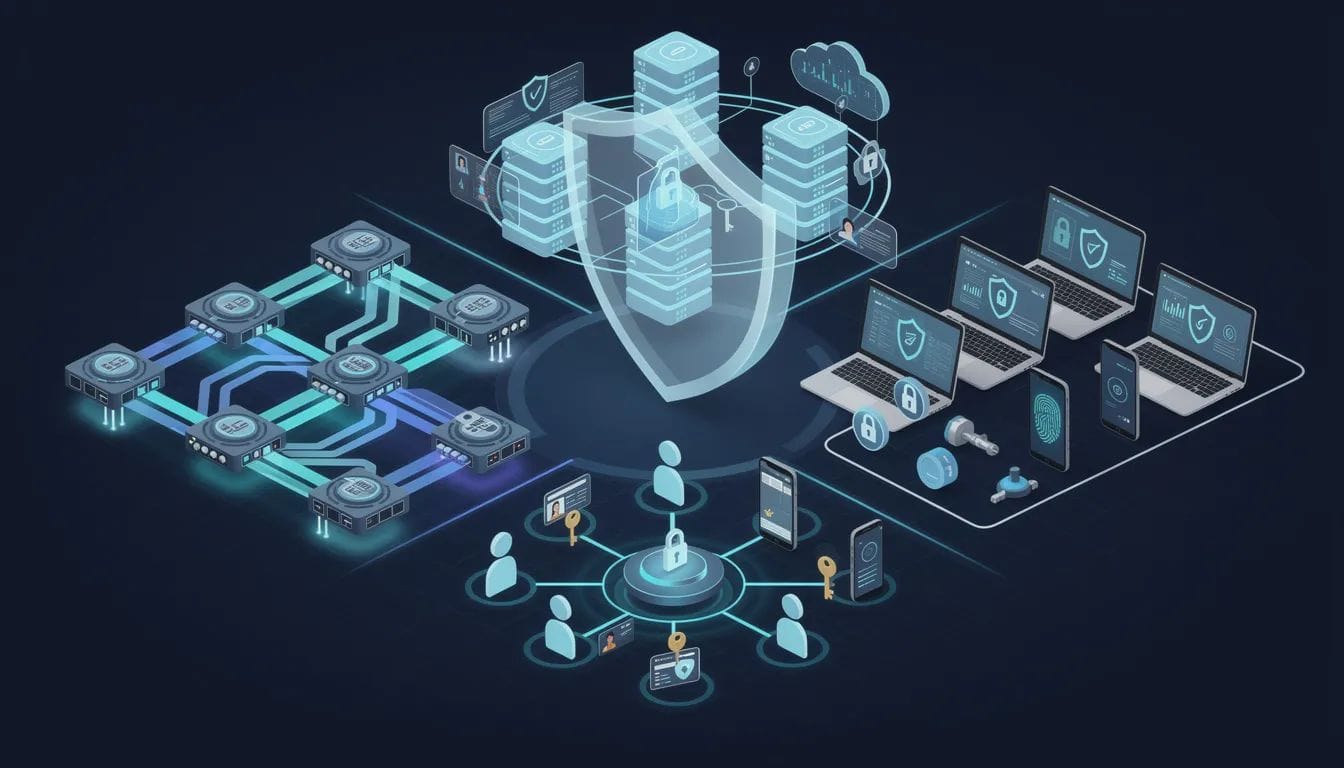
Endpoint Protection includes systems such as:
- CrowdStrike Falcon
- SentinelOne Singularity
These solutions use machine learning to identify and isolate threats.
Endpoint Security guards user devices like laptops and phones with antivirus, Endpoint Detection and Response, and Mobile Device Management.
Penetration Testing simulates attacks to identify and address vulnerabilities in a system. Vulnerability scanning identifies known vulnerabilities before attackers exploit them.
Security Awareness Training programs aim to reduce human error, a major source of vulnerabilities, using simulations and behavioral analytics.
Detection and response are closely tied to cloud and application protection, which is discussed in the next section.
Cloud and Application Protection
Cloud Security protects data, applications, and infrastructure in cloud environments using specialized tools.
Application Security secures software from vulnerabilities through secure coding practices, Web Application Firewalls (WAFs), and vulnerability scanning.
SASE is a cloud native model that combines networking and security functions to protect remote workforces.
With cloud and application protection in place, organizations should also focus on best practices for implementing cybersecurity, as outlined below.
Best Practices for Cybersecurity Implementation
Implementing a comprehensive cybersecurity strategy is essential for organizations aiming to safeguard their systems, data, and operations from evolving cyber threats. As the threat landscape grows more complex, adopting proven cybersecurity practices ensures that organizations can protect their critical assets and maintain business continuity.
1. Conduct Regular Risk Assessments
Begin by evaluating your organization’s unique risk profile. Identify potential threats, vulnerabilities, and the impact of a security breach on your systems and data. Regular risk assessments help prioritize security investments and inform your overall cybersecurity strategy.
2. Establish Clear Security Policies
Develop and enforce security policies that outline acceptable use, data handling, and incident response procedures. Well-defined policies set expectations for employees and provide a framework for consistent security practices across the organization.
3. Implement Layered Security Controls
Adopt a defense-in-depth approach by deploying multiple layers of security controls across networks, endpoints, and applications. This includes firewalls, intrusion detection systems, strong authentication, and encryption to safeguard data at every stage.
4. Prioritize Employee Training and Awareness
Human error remains a leading cause of security incidents. Regular cybersecurity training empowers employees to recognize phishing attempts, use strong passwords, and follow best practices to protect sensitive information.
5. Keep Systems and Software Updated
Timely patching and updates are critical to address known vulnerabilities. Establish automated processes to ensure all systems, applications, and devices are running the latest security updates.
6. Monitor and Respond to Threats Continuously
Leverage security monitoring tools to detect suspicious activity in real time. Establish an incident response plan to quickly contain and remediate threats, minimizing potential damage to your organization.
7. Secure Access and Manage Privileges
Limit access to sensitive data and systems based on user roles. Implement strong access management practices, including multi factor authentication and regular reviews of user privileges, to reduce the risk of unauthorized access.
8. Test and Refine Security Practices
Regularly test your security controls through vulnerability scanning and simulated attacks. Use the results to refine your cybersecurity strategy and strengthen your organization’s overall security posture.
By following these best practices, organizations can build a resilient cybersecurity foundation that not only protects against current threats but also adapts to future challenges. A proactive, well-implemented cybersecurity strategy is key to safeguarding business operations and maintaining trust in an increasingly digital world.
With best practices in place, organizations can maximize the value of cybersecurity services, as discussed in the next section.
Cybersecurity Services and the Business
Cybersecurity services can help organizations fortify their defenses and optimize threat response. Cybersecurity services address both prevention and recovery, enabling organizations to respond effectively to incidents.
Deloitte's cybersecurity solutions aim to help organizations operate securely and grow successfully by providing tools to respond to changing markets and threats.
As organizations invest in these services, the role of innovation and growth in cybersecurity becomes increasingly important, as explored below.
The Role of Investment and Growth
Demand for cybersecurity offerings continues to grow as threats increase. Organizations are increasing investment in automation, AI driven defense, and access focused security capabilities.
Agentic AI Defense employs autonomous AI agents to proactively identify vulnerabilities and coordinate responses. Quantum Ready Security is focused on transitioning to post quantum cryptography to secure sensitive data against future quantum decryption threats.
These innovations are shaping the future of enterprise protection, leading to the concluding insights of this article.
Conclusion
The best cybersecurity offerings of 2026 reflect a shift toward resilience, visibility, and access driven protection. Organizations must align cybersecurity services, security operations, and identity centered access to protect systems, users, and data.
By combining strong detection and response, secure access, and proactive security practices, enterprises can defend against modern threats while enabling growth and innovation.
FAQ: Cybersecurity Offerings
What are cybersecurity offerings?
Cybersecurity offerings include products and services designed to protect systems, networks, users, and data from cyber threats.
What defines enterprise cybersecurity in 2026?
Enterprise cybersecurity emphasizes identity-first security and strong access control. Protecting users and credentials is central to modern defense strategies.
Why are legacy security tools no longer enough?
Enterprise cybersecurity emphasizes identity-first security and strong access control. Protecting users and credentials is central to modern defense strategies.
Why are managed security services important?
Managed services provide continuous monitoring, detection, and response, especially for organizations with limited internal resources.
What role does Zero Trust play in cybersecurity?
Zero Trust ensures continuous verification of identity and access, reducing reliance on perimeter defenses.
How do enterprises choose cybersecurity solutions?
Enterprises evaluate risk, infrastructure compatibility, scalability, and response capabilities.
Why is secure access critical in 2026?
Identity based attacks dominate modern breaches, making secure and frictionless access essential.